


Introduction: A Window Into Ancient Catastrophes
Surviving Earth stands as NBC’s bold attempt to chronicle our planet’s most tumultuous chapters through an eight-part documentary miniseries that premiered on June 11, 2026. Executive produced by the renowned Tim Haines and directed by Duncan Singh, this program represents a significant leap forward in bringing prehistoric worlds to life through cutting-edge computer-generated imagery. The series invites audiences to travel backward through millions of years, bearing witness to the catastrophic events that shaped—and occasionally nearly destroyed—life on Earth.
What distinguishes this documentary from conventional nature programming is its unflinching focus on extinction rather than adaptation. While many documentaries celebrate survival and evolution, Surviving Earth confronts the reality that most species that ever existed have vanished from the fossil record. This approach transforms what could be a dry scientific lecture into emotionally resonant storytelling that speaks to contemporary climate concerns without resorting to heavy-handed messaging.
Narrative Structure and Episode Breakdown
The series employs a dynamic narrative framework that refuses to settle into comfortable predictability. Rather than focusing on a single era or beloved dinosaur species, Surviving Earth propels viewers through multiple planetary crises, each representing a different catastrophic threshold in Earth’s history.
The opening episodes establish this ambitious scope with remarkable clarity. “When the Earth Burned” transports audiences to the Permian-Triassic extinction event, colloquially known as the “Great Dying,” occurring approximately 252 million years ago. This episode depicts a world transformed by massive volcanic activity that fundamentally altered the planet’s atmospheric composition. Following this catastrophic introduction, “When the Climate Broke” shifts focus to the Carnian Pluvial Event around 234 million years ago, presenting a dramatically different environmental challenge characterized by prolonged rainfall and ecosystem upheaval.
The series frames volcanic eruptions, extreme weather patterns, drought, heat waves, famine, and ecological collapse as its primary antagonists—not through personification, but through meticulous depiction of how these environmental forces reshape landscapes and eliminate species. This approach maintains scientific credibility while delivering the dramatic tension that keeps viewers returning week after week.
Visual Excellence and Technical Achievement
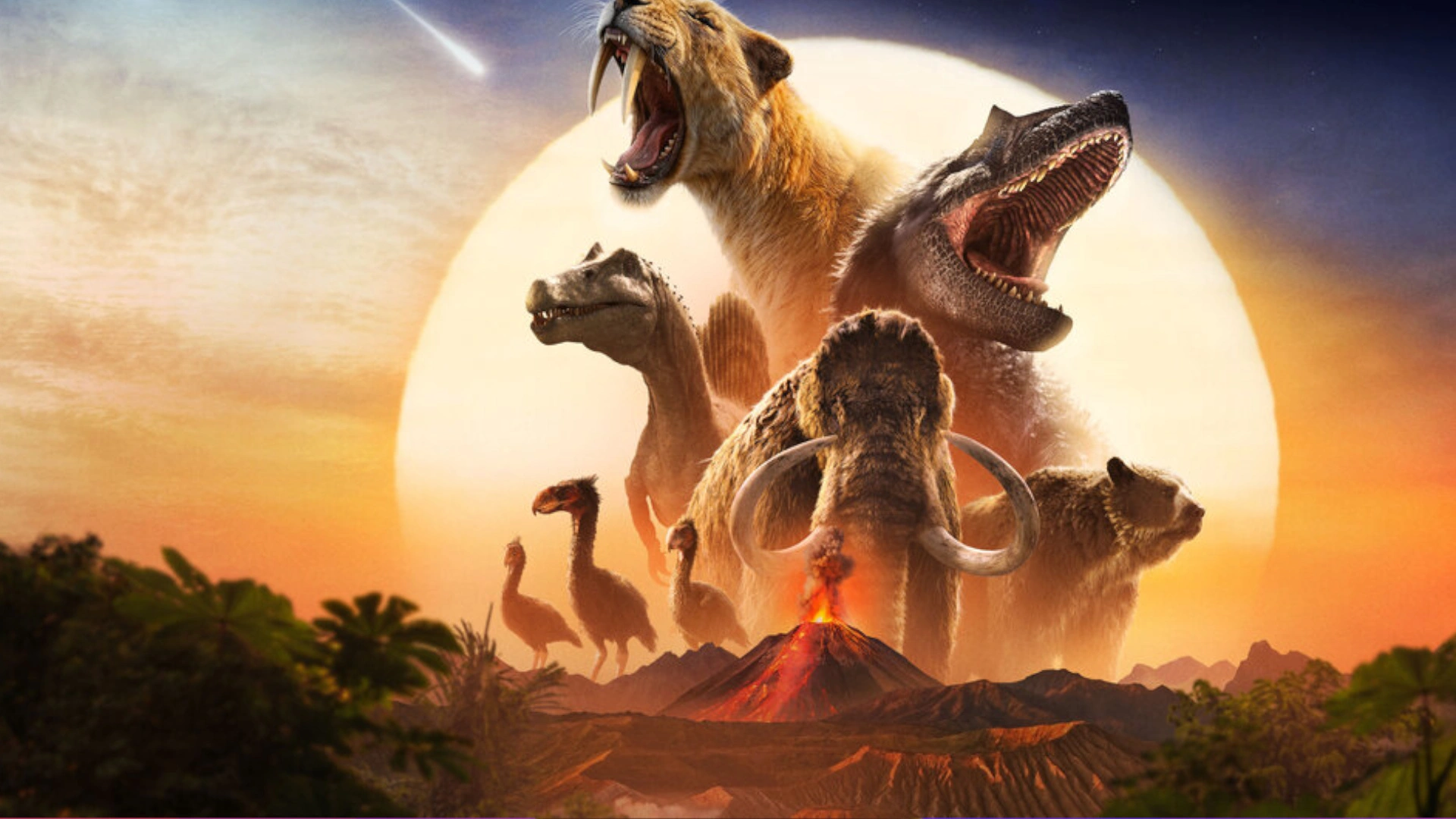
From a production standpoint, Surviving Earth demonstrates remarkable technical sophistication. The combination of live-action landscape photography with digitally rendered prehistoric creatures creates visually arresting imagery that balances scientific accuracy with entertainment value. Wide shots of volcanic horizons, burning skies, flooded forests, and scorched plains establish a vivid sense of planetary hostility that positions Earth itself as an active participant in these extinction events rather than a passive backdrop.
The creature designs merit particular commendation. Rather than relying on the familiar dinosaur iconography that dominates popular culture, the series explores lesser-known prehistoric species that expand audience understanding of ancient life. Viewers encounter Inostrancevia, gorgonopsian predators, the rhinoceros-like Ischigualastia, early reptiles, giant sea scorpions, mammoths, and sabertooths throughout the series. This commitment to diversity beyond traditional dinosaur representations freshens the material and challenges assumptions about prehistoric life.
The CGI proves most effective in environmental sequences and wide establishing shots. While some close-up animal movements exhibit the characteristic smoothness of digital reconstruction, and occasional behavioral sequences prioritize dramatic impact over strict naturalism, the overall visual presentation remains convincing and immersive.
Scientific Integrity and Educational Value
The production team’s collaboration with paleontologists and paleoclimatologists lends Surviving Earth a foundation of scientific credibility that elevates it above mere entertainment. The creature designs draw from fossil evidence and expert interpretation, providing viewers with representations grounded in current scientific understanding rather than speculative fantasy.
However, the series might benefit from greater transparency regarding the scientific process itself. Fossils require interpretation, argument, and revision—showing more of this detective work would add intellectual depth to the spectacle. Demonstrating how scientists reconstruct these vanished worlds could transform the educational component from implicit to explicit, giving viewers appreciation for the uncertainty and creativity inherent in paleontological research.
Emotional Resonance and Contemporary Relevance
Surviving Earth achieves its most profound impact by connecting ancient extinction events to contemporary environmental concerns. The series acknowledges climate anxiety without sermonizing, allowing viewers to draw their own connections between past catastrophes and present-day ecological challenges. The planet has experienced conditions far more severe than anything humans have witnessed—yet this reality offers no comfort, as survival never guarantees preservation of specific species.
The show’s optimism, when it emerges, rests on awareness rather than denial. Surviving Earth suggests that humans might represent the first species capable of recognizing environmental damage and actively changing course. This hopeful current remains nuanced, never naïve, acknowledging the genuine gravity of current ecological challenges while leaving space for constructive response.
Conclusion: Essential Viewing for Modern Audiences
Surviving Earth succeeds as both entertainment and education, delivering spectacle while prompting genuine reflection on humanity’s place within planetary history. The series transforms extinction science into accessible drama, making immense timescales emotionally legible through individual creatures facing existential pressure. Its commitment to unusual species, scientific integrity, and contemporary relevance positions it as essential viewing for anyone interested in understanding Earth’s past—and considering its future.
The weekly broadcast schedule on Thursday evenings at 8:00 PM Eastern Time, followed by immediate streaming availability on Peacock, ensures accessibility for diverse viewing preferences. Whether approached as entertainment, education, or cultural commentary, Surviving Earth delivers a compelling argument that understanding extinction might be crucial to surviving it.