

Netflix’s latest German offering, My Best Friend His Girlfriend and Me, attempts to mine humor and heartache from the classic tension that arises when a long‑standing friendship is tested by a new romantic partnership. Directed by Marco Petry, the film stars Kostja Ullmann, David Kross, and Janina Uhse in a story that promises to explore the shifting dynamics of adulthood, loyalty, and personal growth. While the premise holds promise, the execution leans heavily on repetitive conflict and broad‑stroke comedy, leaving viewers questioning whether the film truly captures the nuance it set out to portray.
Synopsis
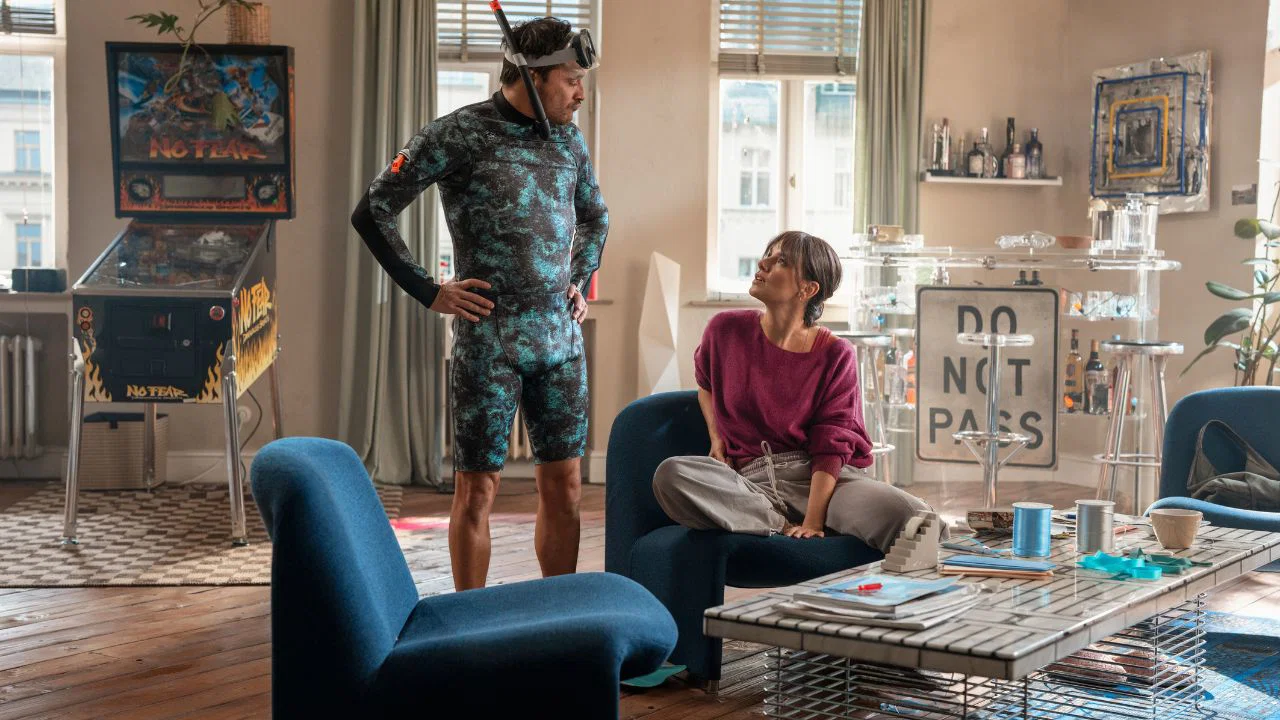
Olli and Matze are inseparable childhood friends who have built their adult lives around a shared dream of an epic world tour. Their routine is disrupted when Matze falls for Rebecca, a woman whose presence forces Olli to confront his fear of being left behind. As Rebecca moves into the communal apartment, a subtle rivalry erupts—each side striving to protect what they value most: Olli clings to the familiarity of his bond with Matze, while Rebecca seeks a mature, stable environment for her budding relationship. The narrative follows their attempts to negotiate space, affection, and the inevitable changes that accompany growing up, all set against a backdrop of light‑hearted mishaps and earnest conversations.
Performances
Kostja Ullmann injects Olli with a restless, child‑like energy that makes his insecurity palpable, though the script often leans on his immaturity as a blunt source of comedy rather than a nuanced character trait. David Kross portrays Matze with a quiet steadiness, capturing the friend who is torn between two important people without overt melodrama; his subtlety grounds the film’s more farcical moments. Janina Uhse delivers Rebecca as a woman whose frustration is understandable, yet her escalating attempts to control the friend group tip her into antagonistic territory, limiting audience sympathy. Supporting turns by Ferdinand Hofer (Schmitti) and Mira Huber (Antje) provide occasional comic relief, but their arcs feel underdeveloped, serving mainly to highlight the central trio’s struggles.
Behind the Lens
Director Marco Petry adopts a brisk pacing, attempting to balance slapstick set pieces—such as exploding toasters and oddly colored teeth—with quieter, introspective scenes that hint at deeper themes of maturation and loss. The cinematography favours close‑ups during dialogue-heavy exchanges, emphasizing facial expressions that convey the characters’ inner turmoil. However, the film’s reliance on exaggerated physical gags often undercuts the sincerity of those quieter moments, resulting in a tonal mismatch. The screenplay, while clear in its premise, leans on repetitive argument cycles that fail to evolve the conflict meaningfully, leaving the resolution feeling more like a cease‑fire than a genuine emotional breakthrough.
Final Verdict
My Best Friend His Girlfriend and Me presents an intriguing premise about the friction between enduring friendship and new love, yet it struggles to translate that idea into a consistently engaging experience. The cast delivers commendable performances, particularly Ullmann’s earnest portrayal of insecurity and Kross’s understated steadiness, but the script’s reliance on immature humor and repetitive squabbles dulls the film’s emotional impact. Viewers hoping for a thoughtful exploration of growing up may find themselves irritated rather than entertained, appreciating the concept more than its execution. Ultimately, the film earns a middling rating: a worthwhile watch for fans of German indie comedies, but one that falls short of delivering the balanced, heartfelt narrative it promises.