

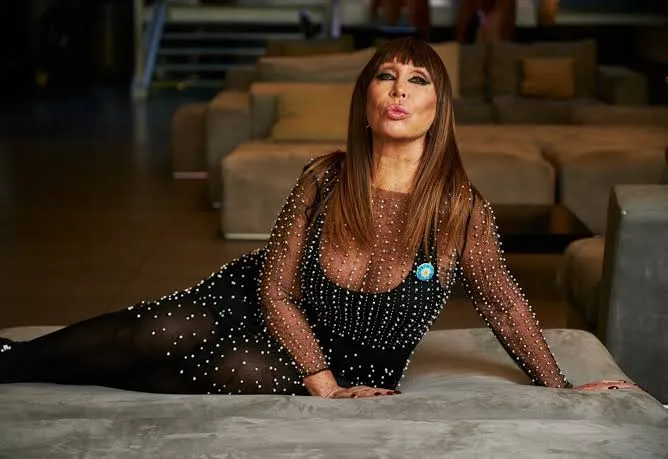
Netflix’s latest limited series takes a daring leap into the surreal, presenting the life of Argentine show‑business legend Moria Casán as a glittering, interstellar fantasy. Rather than a straight‑laced biography, the show frames her story inside a metaphorical snow‑globe where reality and imagination collide. Created by Javier Van de Couter, the miniseries debuted on August 14 and immediately sparked conversation for its flamboyant style, queer‑centric viewpoint, and the way it lets the subject become the puppeteer of her own myth.
Synopsis
The series follows Moria’s ascent from humble beginnings to national fame, highlighting her flair for reinvention, her savvy navigation of fame’s pressures, and her deep bond with marginalized communities. Using stylized sets, vivid costumes, and a playful tone, the narrative moves through key chapters—early stage work, television breakthroughs, personal upheavals, and her emergence as a social‑media‑era icon—without revealing any major plot twists. The core idea remains constant: Moria controls her own narrative, shaping it with the same boldness she brought to every spotlight.
Performances
Three distinct actresses embody different eras of Moria’s life, each bringing a fresh perspective while honoring the subject’s larger‑than‑life essence.Sofía Gala Castiglione steps into the role of her real‑life mother for the opening chapters. Her portrayal is less imitation and more a transmutation, capturing gestures, rhythm, and a provocative intensity that feels both intimate and voyeuristic. Griselda Siciliani takes over for the mid‑series television years, delivering a voluptuous, media‑savvy version that leans into gossip‑show culture and the complexities of motherhood. Cecilia Roth closes the arc with a portrayal that nods to Almodóvar‑infused flair, embodying the meme‑ready, socially‑connected Moria who commands new generations of fans.
The casting choice underscores the series’ refusal to settle on a single mimicry; instead, it showcases how the icon’s spirit can be refracted through varied artistic lenses.
Behind the Lens
Visually, the series is a feast of camp, kitsch, and trash aesthetics, drawing inspiration from the palettes of Todd Haynes, Pedro Almodóvar, Federico Fellini, and John Waters. Production design constructs her world almost entirely on soundstages, with period cues conveyed through makeup, wardrobe, and set dressing rather than location shoots. This approach reinforces the premise that the show exists inside a self‑crafted universe where Moria pulls the strings like an extraterrestrial DJ directing light, sound, and narrative.
Director Javier Van de Couter balances excess with coherence, allowing the series to flirt with melodrama while maintaining a clear point of view that celebrates queer and fringe audiences. The soundtrack, choreography, and lighting all serve the heightened fantasy, ensuring that even moments grounded in Argentina’s sociopolitical history feel like stylized interludes rather than documentary interruptions.
Final Verdict
Moria succeeds where a conventional biopic might falter: it transforms a legendary figure into a living, breathing myth that feels both personal and universally resonant. The miniseries’ bold aesthetic, fearless queer perspective, and triple‑layered performances create a viewing experience that is as exhilarating as it is thoughtful. While some episodes dip into darker, more introspective terrain, the overall tone remains celebratory, inviting viewers to revel in the spectacle of a woman who rewrote her own story on her own terms.
For anyone interested in innovative storytelling, camp‑infused visual drama, or the cultural impact of LGBTQ+ icons, Moria is a must‑watch addition to your Netflix queue.