


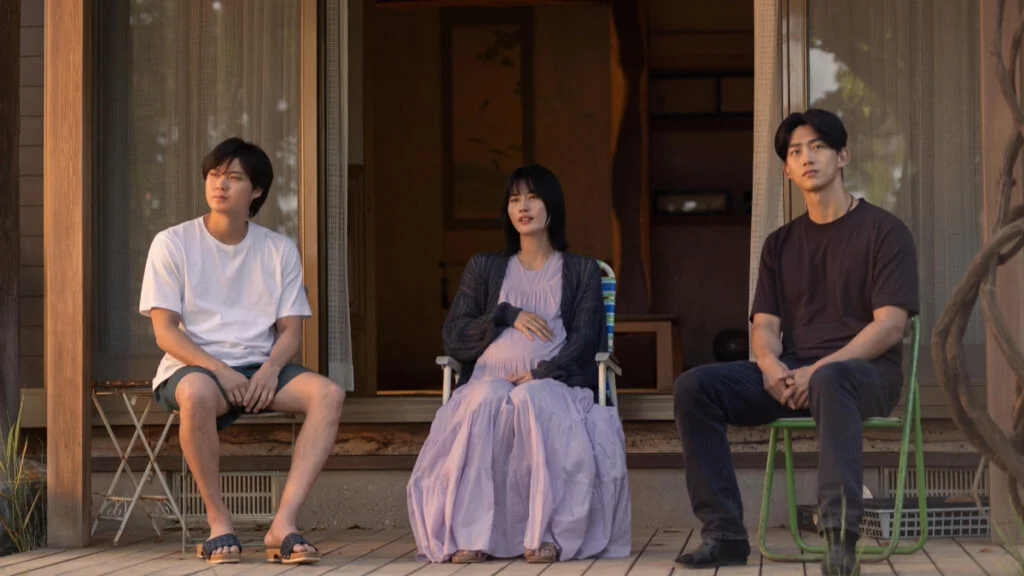
There are certain stories that arrive in our cultural landscape and remind us why we invest our time in narratives about human connection. Soul Mate is precisely that kind of work—a masterfully crafted Japanese drama that unfolds across a decade, three vibrant cities, and the deeply personal journeys of individuals grappling with loss, loneliness, and the transformative power of meaningful relationships. This eight-episode series, which makes its debut on Netflix, represents the creative vision of writer and director Shunki Hashizume, who has delivered something remarkably special in an industry often saturated with formulaic storytelling.
What sets this series apart is its unwavering commitment to authenticity. Rather than relying on genre conventions or predictable emotional beats, Soul Mate presents a raw, honest portrait of how lives can intersect in the most unexpected ways and how genuine connection can serve as a catalyst for profound personal healing. The narrative spans from Berlin to Seoul to Tokyo, creating a rich tapestry that reflects the global nature of human experience while remaining grounded in specificity and emotional truth.
Synopsis
The story centers on Ryu Narutaki, portrayed by Hayato Isomura, a young man whose promising future in ice hockey at university was irrevocably altered by a tragic incident involving his closest friend, Arata. This devastating event sets Ryu on a path of self-imposed exile, leading him to leave behind everything familiar and relocate to Berlin, where he seeks refuge with his childhood companion, Sumiko Shinonome, played by Ai Hashimoto. However, as so often happens when we run from our pain, Ryu discovers that geography cannot heal deep psychological wounds.
Parallel to RYu’s narrative is the story of Johan Hwang, portrayed by Ok Taec-yeon, a Korean boxer who has also found himself in Berlin, carrying his own heavy burden of struggles. The convergence of these two individuals feels less like coincidence and more like fate taking an active role in their lives. Their initial meeting sets in motion a relationship that will fundamentally alter the trajectory of both their existences.
The series deliberately resists categorization. While the setup might suggest a particular genre trajectory, Soul Mate charts its own course, focusing instead on the depth of human connection without relying on romanticized or stereotypical portrayals. The relationship between Ryu and Johan evolves organically—not as a predetermined outcome but as something that emerges from mutual recognition of shared pain and the silent understanding that can exist between two souls who have walked through fire.
What makes this narrative so compelling is its scope. By tracking these characters across ten years, the series allows us to witness genuine transformation. We see them not as static figures but as dynamic humans who grow, stumble, learn, and become more complete versions of themselves through their association with one another. Their bond transcends physical proximity; when circumstances pull them apart, the connection remains unbroken, an invisible thread that draws them back together no matter where life leads them.
Performances
The emotional resonance of Soul Mate owes much of its power to the exceptional performances delivered by its leads. Hayato Isomura embodies RYu Narutaki with a nuanced intensity that makes the character’s journey deeply felt. He captures the weight of guilt, the struggle for redemption, and the gradual thawing of a heart hardened by grief with remarkable subtlety. There is never a moment where his performance feels calculated or false; instead, we witness authentic human pain and gradual healing.
Ok Taec-yeon matches this intensity with a performance that balances vulnerability and quiet strength. As Johan, he portrays a man fighting battles both in and out of the ring, dealing with his own demons while remaining open enough to form a connection that promises something beyond his current reality. His on-screen chemistry with Isomura feels genuine and earned, growing stronger as their characters’ bond deepens throughout the series.
Ai Hashimoto deserves particular recognition for her portrayal of Sumiko, who serves as more than just a supporting character. Her performance brings depth to a woman navigating societal expectations while trying to maintain her own identity and sense of purpose. Hashimoto infuses the character with a quiet dignity and emotional complexity that elevates her arcs beyond what might have been a stereotypical portrayal in less capable hands.
Behind the Lens
Shunki Hashizume’s directorial approach demonstrates sophisticated understanding of how to tell a story that spans both extensive time and multiple locations. The series makes judicious use of its international settings, allowing the distinct atmospheres of Berlin, Seoul, and Tokyo to become characters in their own right. While the majority of the narrative unfolds in Japan, the visual palette shifts intelligently to reflect the emotional landscape of each scene and moment in the characters’ development.
The cinematography captures both the grandeur of urban environments and the intimacy of quieter moments with equal skill. The decision to track the characters over a decade allows for natural exploration of how places and people change over time—the series never rushes this evolution, instead letting it unfold at a pace that mirrors actual human development.
The thematic soundtrack, featuring “Our Hearts” by STUTS & butaji with vocals by Aina, serves as the emotional anchor of the series. This song perfectly encapsulates the essence of Ryu and Johan’s relationship—its beauty, its complexity, and its enduring nature. Listeners will find themselves lingering through the end credits, not out of obligation but out of a genuine desire to savor the musical conclusion to each episode.
Final Verdict
Soul Mate is that rare piece of entertainment that manages to be both dramatically compelling and emotionally honest without falling into the trap of melodrama. It treats its audience with respect, trusting viewers to appreciate nuanced storytelling that focuses on character and relationship rather than sensationalism or genre formula. The series tackles profound themes—grief, healing, identity, the nature of friendship and love—with a gentle but persistent intelligence that rewards patient viewing.
What ultimately makes this series special is its universality despite its specificity. While the characters navigate distinctly Japanese and Korean cultural contexts, the emotional truths they embody transcend any single culture or experience. Anyone who has ever felt lost, who has yearned for connection, or who has wondered whether healing is possible after profound loss will find something to recognize in this story.
The eight-episode format proves ideal, providing enough space to develop these characters fully without overstaying its welcome. Each installment serves a purpose in the larger narrative arc, building toward a conclusion that feels both earned and emotionally satisfying.
Soul Mate premieres May 14th exclusively on Netflix and deserves to be experienced by anyone who appreciates thoughtful, emotionally resonant storytelling. It stands as a testament to what television can achieve when creativity and authenticity are allowed to flourish.