

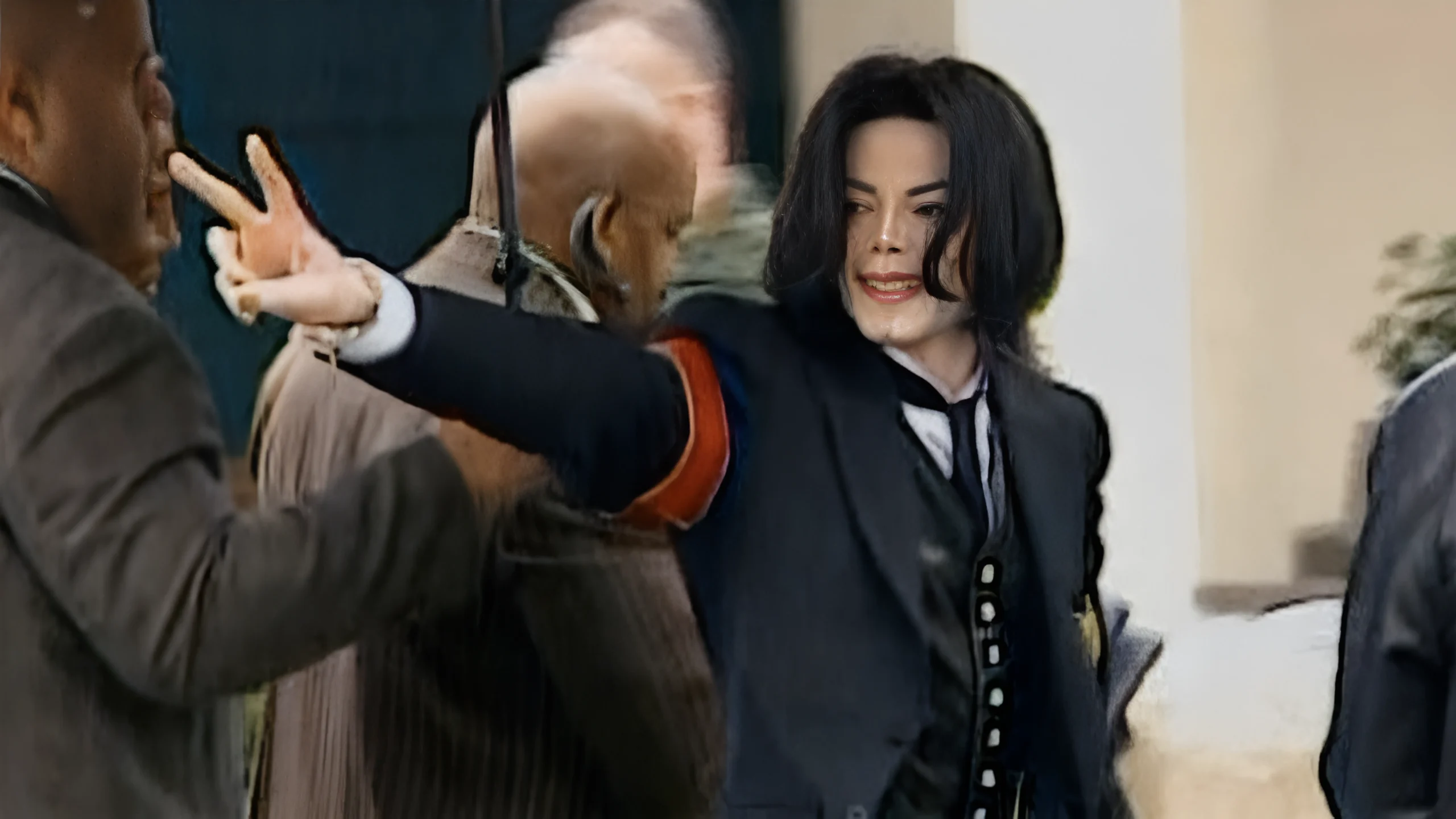
A Trial the World Judged Without Watching
For months in 2005, the most talked-about criminal case of the decade played out behind closed doors. The public saw fragments: courtroom sketches with distorted features, a fleeting glimpse of a dark SUV passing through iron gates, and television commentators narrating proceedings they had never actually witnessed. Cameras were strictly prohibited inside the Santa Maria courthouse, meaning Americans formed their opinions about Michael Jackson’s legal battle through second-hand interpretations rather than direct observation.
Michael Jackson: The Verdict, premiering June 3, 2026, on Netflix, confronts this unsettling reality head-on. This three-part documentary directed by Nick Green and produced by Candle True Stories asks a provocative question: How could an entire nation reach firm conclusions about a trial they never actually saw?
The Documentary’s Central Premise
The series operates on a fascinating dual narrative structure. It places side-by-side two distinct versions of courtroom proceedings: the actual sealed courtroom where evidence was presented and analyzed, and the living rooms across America where viewers constructed their own verdicts based on rumor, speculation, and media coverage.
The documentary makes no attempts to declare which interpretation was correct. Instead, it meticulously documents how millions formed lasting opinions without witnessing the core evidence. The jury spent months in Santa Barbara County considering testimony before ultimately acquitting Jackson on all charges. Simultaneously, cable news outlets and tabloid publications conducted their own parallel proceedings, often reaching dramatically different conclusions.
Visual History: When Re-Enactments Became Reality
Perhaps the most remarkable aspect of this era was how the absence of cameras created an entirely artificial visual record. Because no filming was permitted inside the courtroom, one cable network took the unprecedented step of hiring actors to re-enact daily testimony, broadcasting these dramatizations on the same evening they occurred. Viewers across the country watched performances of the trial rather than the trial itself.
These re-enactments—the famously late-arriving figure in pajama bottoms, the brief courthouse drama captured on an SUV rooftop—became the defining images precisely because no authentic footage existed. The documentary treats this substitution as its foundational issue: an entire nation rendered lasting judgment from re-enactors, sound bites, and sketches, then clung to those convictions long after the original sources faded from memory.
Nick Green’s Investigative Approach
Director Nick Green reconstructs the 2005 proceedings with the precision of a forensic investigator. Rather than relying on memory or dramatic montage techniques, Green returns to primary source materials—case files, courtroom transcripts, and contemporaneous news footage.
The documentary follows jurors as they revisit evidence in the precise sequence it was presented during the original trial. Eyewitnesses, accusers, and defense attorneys each share their perspectives from their respective positions, with accounts left to naturally intersect rather than being artificially smoothed into a single narrative.
The visual approach deliberately avoids glamour. Flat institutional lighting from mid-2000s news broadcasts, mundane case files, and straightforward transcripts create an intentionally unpolished texture. This plainness serves a deliberate purpose: the series aims to present raw evidence the public never actually held, rather than delivering a convenient conclusion.
The Jurors: America’s Unheard Voices
Perhaps the documentary’s most compelling element involves the jurors themselves. These twelve individuals represent the only people who witnessed every exhibit, every cross-examination, and every witness—both those who held steadfastly to their accounts and those who crumbled under intensive questioning.
For two decades, the public has second-guessed these jurors while operating from significantly less information than what was actually available in the courtroom. The documentary allows jurors to describe, in their own unhurried words, the precise moments when their perspective shifted. This reframes the acquittal entirely—it transforms from a verdict the public merely suspects into a decision made by people who paid far closer attention than almost anyone who has subsequently debated the case.
Documentary Lineage and Comparisons
Michael Jackson: The Verdict occupies a specific category within true crime documentary filmmaking. Viewers will immediately compare it to Leaving Neverland, the 2019 documentary that centered on two accusers’ accounts and treated their testimony as its narrative foundation.
However, Michael Jackson: The Verdict operates on the opposite instinct. It draws closer to works like O.J.: Made in America or The Jinx—films using trials as windows into entire social systems—rather than singular testimonial narratives. The approach also echoes Making a Murderer, which reopened a closed case by deliberately refusing to settle questions on viewers’ behalf.
This choice carries inherent costs the filmmakers clearly understood. A documentary declining to adjudicate satisfies neither those certain of guilt nor those confident in innocence, and the series has already drawn criticism from both camps.
Cultural Timing and Modern Verdicts
What gives this documentary particular urgency involves shifts in how public verdicts function culturally. A unanimous acquittal once closed a question permanently; today, it barely dents the hardened online consensus. Two decades of subsequent lawsuits, estate battles, accusations, and counter-documentaries have kept this case open specifically because the original answer was delivered to a public incapable of seeing how it was reached.
The documentary also arrives within a broader contemporary reflex—sharpened considerably over the past decade—to interpret famous individuals’ acquittals as postponements rather than clearances. For substantial portions of the audience, “not guilty” has quietly transformed into “not yet proven.” A film returning to actual evidence represents provocation regardless of how even-handedly it’s edited.
The Backlash: Cancel Culture Meets Streaming
This tension explains the immediate backlash. Even before public release, a Change.org petition and #CancelNetflix campaign have emerged, demanding the series be pulled before a single frame streams. Critics interpret the documentary’s attempt to present both sides as cover for relitigating a case involving a man no longer living to defend himself.
The timing amplifies every dimension of this conflict. Michael Jackson: The Verdict arrives mere weeks after director Antoine Fuqua’s biopic Michael cleared over $700 million at the global box office while carefully sidestepping the 2005 trial entirely.
These two projects represent competing claims on the same legacy: one transforms the life into a stadium spectacle and sells the music, while the other walks directly into the room the spectacle consistently declined to enter. For streaming platforms, unsettled cultural wounds represent renewable resources—presenting both sides serves simultaneously as journalistic posture and engagement strategy, with backlash serving as an integral component rather than a glitch.
The Real Subject: A Verdict That Never Ended
Beneath all this noise runs a fundamentally important argument—precisely what the title promises to explore. A verdict should end something. This particular verdict never did.
The acquittal represented clear legal fact the afternoon it was announced, yet it has never functioned as a cultural one in the years since. The documentary treats this failure to achieve closure as its genuine subject—not the question of what actually occurred at Neverland, which the court answered within its own framework, but rather why an entire generation’s certainty rests on a trial they monitored only in outline.
Thin Pictures and Lasting Convictions
The documentary cannot resolve this central tension because the legal system already resolved it—while the broader culture simply declined to accept that resolution. Reconstructing the complete proceedings delivers neither side the closure they desperately seek.
Instead, it accomplishes something smaller yet far more disquieting: it reveals how extraordinarily thin the public’s view always was, how much widely-shared conviction rests on testimony never actually heard and a room never entered. The verdict, handed back to the people who originally rendered it, turns out to explain the legal system more clearly than it explains the rest of society.
Michael Jackson: The Verdict premieres June 3, 2026, exclusively on Netflix.
Also Read:
Michael Jackson Trial Revisited: New Docuseries Explores 2005 Courtroom Drama That Shocked the World