

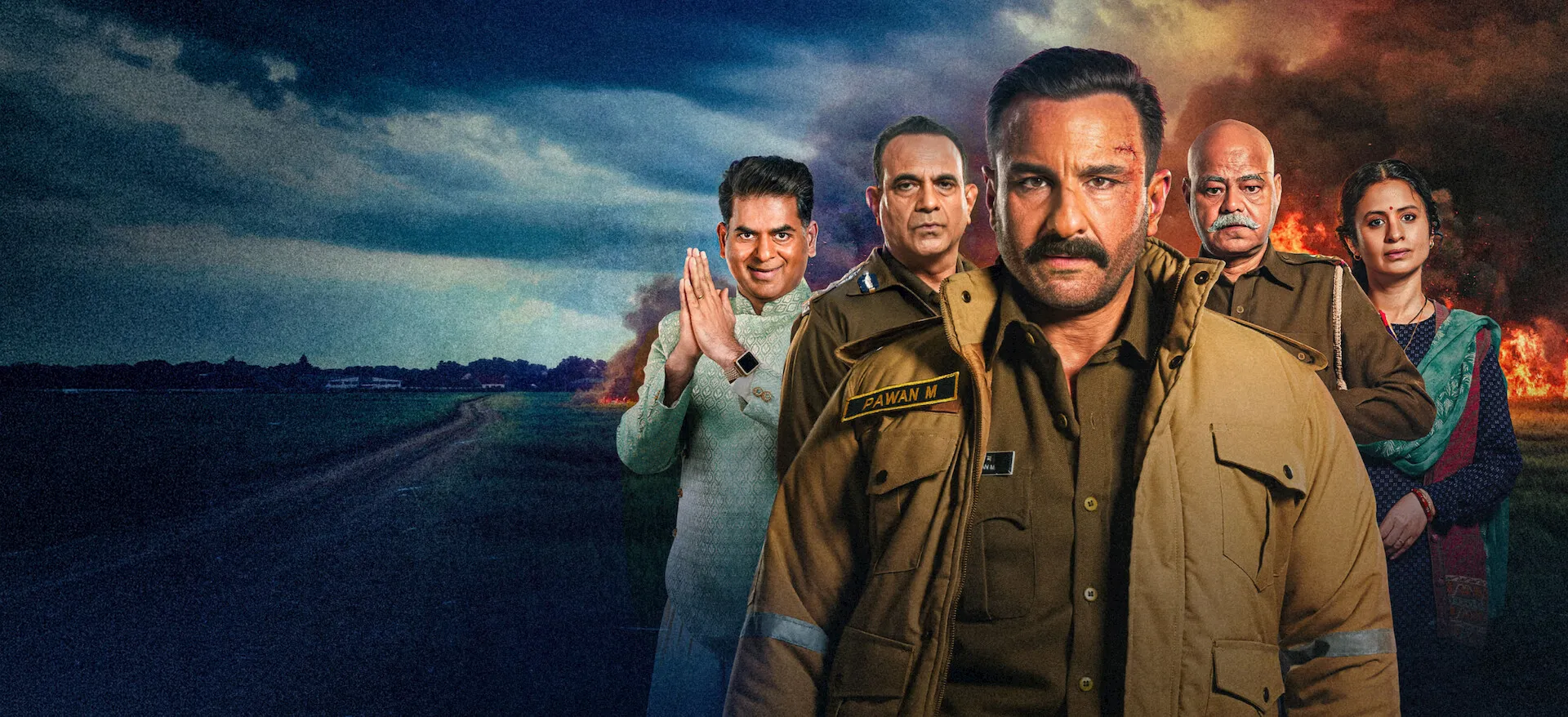
Netflix’s latest psychological thriller Kartavya from the renowned Red Chillies Entertainment emerges as a thought-provoking examination of duty, morality, and social hierarchy, headlined by Saif Ali Khan in a role that reminds audiences of his considerable dramatic range. Set against the backdrop of Haryana’s conservative landscape, this film attempts to weave a complex narrative involving caste discrimination, investigative procedural, and personal conscience. While the movie successfully raises urgent conversations about societal evils, it unfortunately retreats from its own provocative potential, resulting in a thriller that entertains despite itself rather than because of its boldest impulses.
The title itself—encompassing concepts like duty, responsibility, purpose, and sacrifice—serves as the philosophical anchor of this narrative. Director Pulkit has crafted a film that refuses to remain a simple whodunit, instead evolving into a meditation on what individuals owe to themselves, their families, and society at large. The ambition is admirable, and occasionally, the execution reaches heights that make you believe this could have been a landmark film.
Synopsis
The story unfolds in Jhamli, Haryana, where we encounter Pawan, a principled police officer respected by his subordinates but increasingly disenchanted by the monotony of his vocation. His world consists of meaningful work searching for purpose and deep affection for his wife, creating a portrait of a man who has found personal happiness but longs for professional fulfillment.
That fulfillment arrives in disturbing form when a journalist named Anand Shri arrives in town under Pawan’s protection. The investigative reporter has been probing the controversial godman’s activities, but before he can uncover the full extent of the exploitation, he is murdered. What follows is a labyrinthine investigation revealing interconnected evils festering beneath the village’s placid surface.
Performances
Saif Ali Khan delivers what might be his most compelling performance in years, embodying Pawan with a nuanced balance of strength and vulnerability. His portrayal of a traditionally masculine hero who openly adores his wife feels refreshing in an entertainment landscape obsessed with hyper-masculine archetypes. Khan brilliantly conveys the quiet frustration of a man who perceives injustice clearly but feels immobilized by his positions as both a dutiful son and subordinate officer. The internal conflict registers authentically, making Pawan a character audiences can root for despite his limitations.
The supporting ensemble proves equally valuable. Sanjay Mishra continues demonstrating why he remains one of Hindi cinema’s most reliable character artists, while Manish Chaudhary and Zakir Hussain contribute understated menace that lingers beyond their screen time. Rasika Dugal, despite limited appearances, provides emotional grounding, her scenes with Khan injecting warmth into an otherwise bleak narrative.
Behind the Lens
Director Pulkit deserves considerable credit for maintaining narrative momentum while juggling multiple storylines and heavyweight themes. The film never stagnates, consistently moving forward even when exploring emotionally exhausting territory. His vision is apparent in every frame, and he successfully prevents the various plot threads from tangling into incoherence.
Yet the technical presentation undermines the story’s raw power. The over-polished color grading represents a significant misstep that directors working on socially charged material seem unable to escape. When depicting a world of caste violence, exploitation, and honor killings, the visual palette should reflect darkness and grit which was found missing in the film.The sets achieve authenticity, and the world-building proves effective, but this glossy treatment prevents the rawness that such material genuinely requires.
The background score by Anurag Saikia functions effectively without drawing attention to itself, which in this context represents a subtle achievement. Music supports rather than overwhelms, allowing performances and narrative to occupy center stage.
The film’s greatest technical weakness lies in its thriller construction. Predictable plot developments defuse tension, and whenever narrative momentum builds toward confrontation, the story pulls back from explosive potential. Whether this represents studio intervention to avoid controversy or directorial caution remains unclear, but the result is a thriller that rarely thrills the audiences effectively.
Final Verdict
Kartavya represents a frustrating contradiction—a film containing powerful ideas and brave intentions that ultimately retreats from its own potential impact. The themes of caste discrimination, institutional corruption, and moral duty deserve filmmaking that screams rather than whispers. Had the creative team embraced messiness and anger, this might have emerged as a significant work addressing systemic issues.
As it stands, the movie succeeds primarily through its performances, with Saif Ali Khan delivering a career-highlight role that warrants attention. The supporting cast elevates material that sometimes seems unworthy of their talents. The philosophical undercurrents provide depth beyond typical genre exercise, making Kartavya worth watching despite its considerable flaws.
The gap between this film’s potential and its final form will leave many viewers with a sense of squandered opportunity. Nevertheless, for audiences seeking substantive entertainment that engages with contemporary social issues—however gently—Netflix’s Kartavya delivers enough to justify its runtime, even if it never achieves the paradigm-shifting impact it seemed capable of reaching.