

Nicolas Winding Refn returns to the director’s chair after a decade‑long hiatus, delivering Her Private Hell under the banner of indie powerhouse NEON. The film arrives as a bold statement of his unchanged artistic fervor, blending surreal imagery, a fragmented narrative, and a striking audiovisual palate. For audiences willing to embrace its esoteric tone, the film offers a transportive experience that feels both challenging and rewarding.
Synopsis
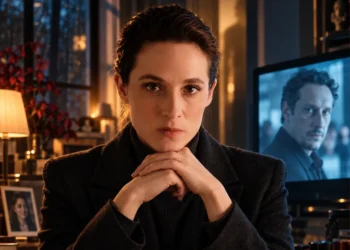
Set in a neon‑drenched metropolis shrouded by an encroaching fog, Her Private Hell follows Elle (Sophie Thatcher), an actress compelled to work on a perplexing in‑universe film alongside her former best friend turned mother‑in‑law Dominique (Havana Rose Liu) and the whimsical Hunter (Kristine Froseth). As the mysterious fog looms, the legend of the Leather Man—a vengeful figure who targets young women reminiscent of his lost daughter—adds an ominous undercurrent. Parallel to Elle’s unsettling shoot, Private K (Charles Melton) patrols the haze searching for his own missing child. The narrative intertwines these threads through a series of stylized vignettes that prioritize mood over conventional plot progression, inviting viewers to piece together meaning from atmosphere and symbolism rather than linear exposition.
Performances
The cast leans into Refn’s taste for heightened, almost theatrical expression. Sophie Thatcher delivers a restrained yet piercing portrayal of Elle, her dead‑pan stares and terse lines amplifying the film’s unsettling vibe. Havana Rose Liu shifts from dead‑pan to outright bizarre, most memorably barking like a dog during a prolonged metafictional scene that blurs the line between reality and the film‑within‑a‑film.
Kristine Froseth injects a playful, almost manic energy that provides occasional levity amidst the gloom. Charles Melton embodies the stoic, lethal protector archetype familiar from Refn’s earlier works, his quiet intensity heightened by saturated blues and reds that echo the director’s signature style. Together, the ensemble creates a tapestry of contrasting temperaments that keeps the audience off‑balance, a deliberate tactic that reinforces the picture’s avant‑garde intent.
Behind the Lens
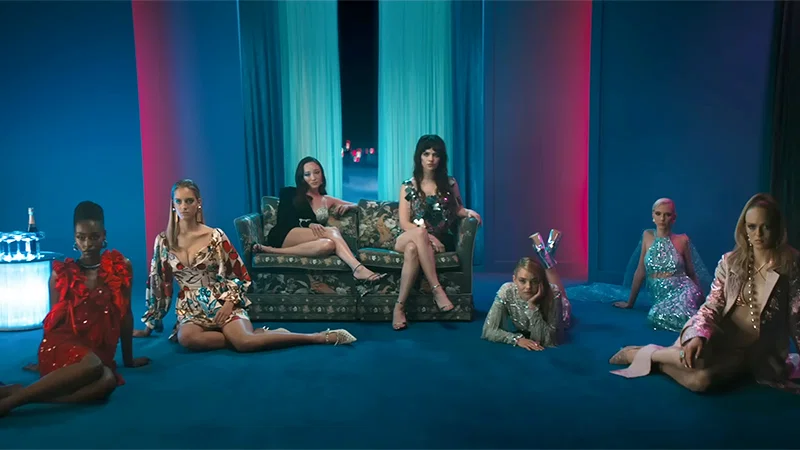
Visually, Her Private Hell is a triumph. Cinematographer Magnus Nordenhof Jønck bathes the frame in pink‑kissed neon, persistent fog, and opulent interior lighting, crafting images that feel both dreamlike and hyper‑real. Production design leans into an eclectic mash‑up of opera, noir, giallo, and fairy‑tale aesthetics, while costuming highlights textures like leather and diamond‑encrusted gloves that become recurring motifs.
Pino Donaggio’s score weaves orchestral swells with dissonant motifs, underscoring the film’s shifts from quiet dread to frenetic spectacle. The editing embraces a fragmented rhythm, often lingering on abstract shots before snapping to jarring action sequences—mirroring Refn’s description of the work as a social‑media “scroll” of ideas. These technical choices coalesce into an audiovisual experience that feels immaculate yet deliberately disorienting, rewarding viewers who appreciate style as substance.
Final Verdict
Her Private Hell is not a film for those seeking straightforward storytelling; it is an immersive, sensory‑driven piece that asks audiences to surrender to its mood and symbolism. Refn’s return proves that his distinctive voice remains undiminished, offering a work that is as provocative as it is beautiful.
While the unconventional structure may alienate some, those who meet it on its own terms will find an overwhelmingly beautiful, peerlessly curated vibe that lingers long after the credits roll. In a year crowded with releases, this film stands out as a singular artistic statement—one that may not be universally “gotten,” but whose pure creative vigor is impossible to ignore.
Her Private Hell hits the big screen on July 25.