

The life of a celebrated filmmaker is often a double-edged sword. When a director reaches the heights of global acclaim, they become a permanent fixture at prestigious events like the Cannes Film Festival. However, this status brings a heavy burden: the weight of audience expectations. Hirokazu Koreeda, the visionary behind acclaimed masterpieces such as Shoplifters and Monster, currently finds himself grappling with this exact challenge.
His newest cinematic offering, Sheep in the Box, debuted in competition at Cannes earlier this year to a notably divided reception. Some critics labeled the work as unoriginal, comparing it unfavorably to existing science fiction staples like A.I. or the more recent After Yang. Yet, to dismiss this film as a mere retread of familiar tropes is to miss the subtle, surgical precision with which the director dissects the human heart. While the setting may be futuristic, the soul of the film remains rooted in the messy, uncomfortable realities of contemporary existence.
Synopsis
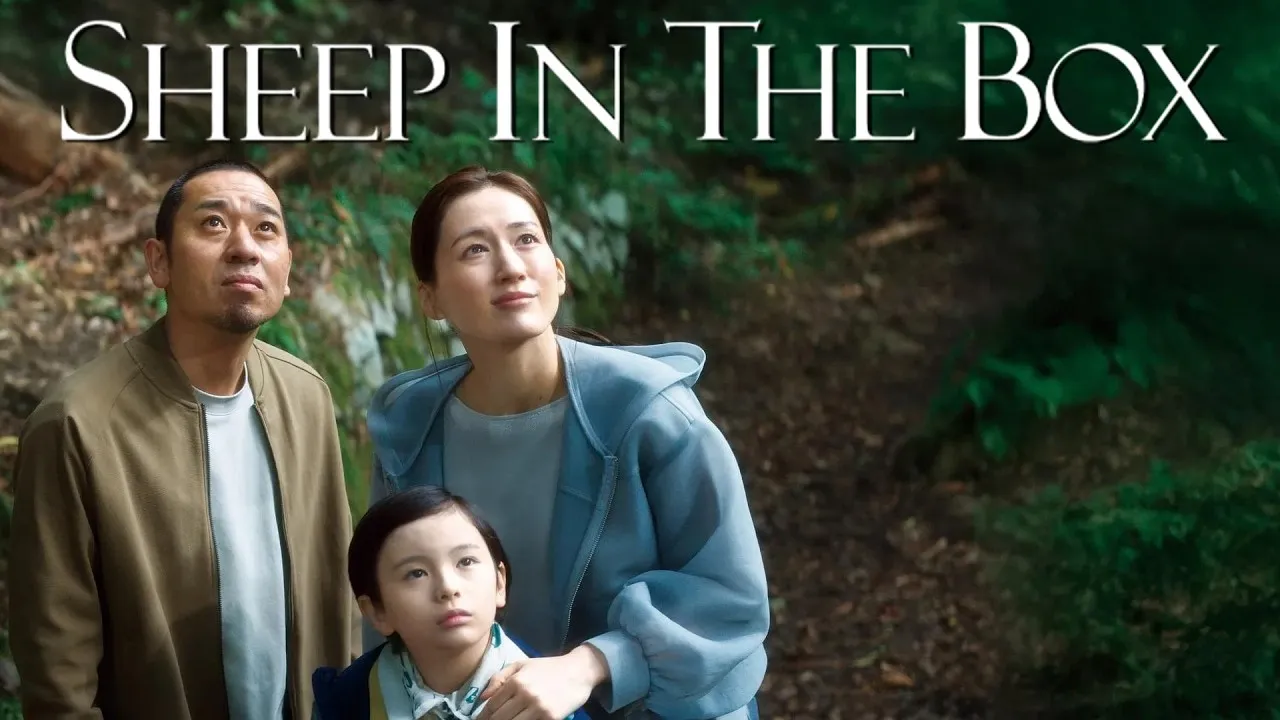
Set in a near-future where synthetic humanoids have become a luxury commodity, the story follows the Komoto family. Following the tragic passing of their young son, Kakeru, Otone and Kensuke are offered a unique technological solution: a robotic replica of their child. While Otone, played by Haruka Ayase, clings to the humanoid as a means of emotional survival, Kensuke, portrayed by Daigo Yamamoto, remains a distant and passive observer. The narrative tracks their domestic life as they attempt to integrate this artificial entity into their home, using it as a vessel for their unresolved mourning.
Performances
The strength of Sheep in the Box lies in its intentionally restrained acting. Haruka Ayase delivers a haunting performance as Otone, capturing the desperation of a mother willing to suspend disbelief for the sake of comfort. Beside her, Daigo Yamamoto provides a stark contrast as Kensuke, embodying a quiet, simmering detachment that highlights the growing rift between the couple.
Special mention must be made of Rimu Kuwaki, who portrays the humanoid Kakeru. Rather than attempting to mimic a “real” boy, the performance is purposefully stiff, reminding the audience—and the parents—of the character’s mechanical nature. This creates a fascinating dynamic where the “sentient” beings are the ones acting out of programmed grief, while the robot remains the most honest presence on screen, fully aware of his role in this fabricated family structure.
Behind the Lens
Hirokazu Koreeda departs from the gritty realism of his previous works to embrace a sterile, aesthetically polished version of the future. The cinematography captures a world that is beautiful but numbing, reflecting the emotional paralysis of the protagonists. As both the director and screenwriter, he chooses not to focus on the technical ethics of artificial intelligence, but rather on the selfish nature of human loss.
The film makes overt references to the literary classic The Little Prince, even borrowing from its themes for the title. However, Koreeda twists these references to offer a sharper critique. He suggests that our relationship with technology—much like our relationship with those we love—is often driven by our own needs rather than the well-being of others. By placing flawed characters in a vacuum of grief, the film examines how mourning can turn people into tools. The director avoids grand revelations or thriller twists, choosing instead to linger on the quiet, often ugly ways humans use technology to avoid facing the finality of death.
Final Verdict
Sheep in the Box may not provide the high-concept thrills or the warm sentimentality that some viewers expect from the science fiction genre. However, it is a profound observation of the human condition. It suggests that despite our technological advancements and our reliance on digital companions, we remain remarkably primitive in how we handle pain.
The film serves as a sobering reminder that grief is not a journey toward a destination, but a process that can inadvertently damage everyone involved. It is an invitation to look past the “electric sheep” and recognize the very real, very human selfishness that defines our darkest hours. For those willing to engage with its slow-burning, clinical approach, Sheep in the Box offers a unique and lingering perspective on the cost of holding on.
The film opened Friday, July 24, only in movie theaters.