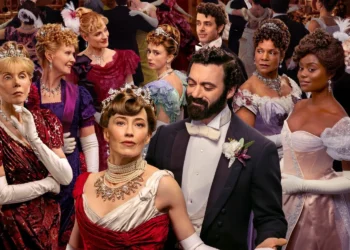


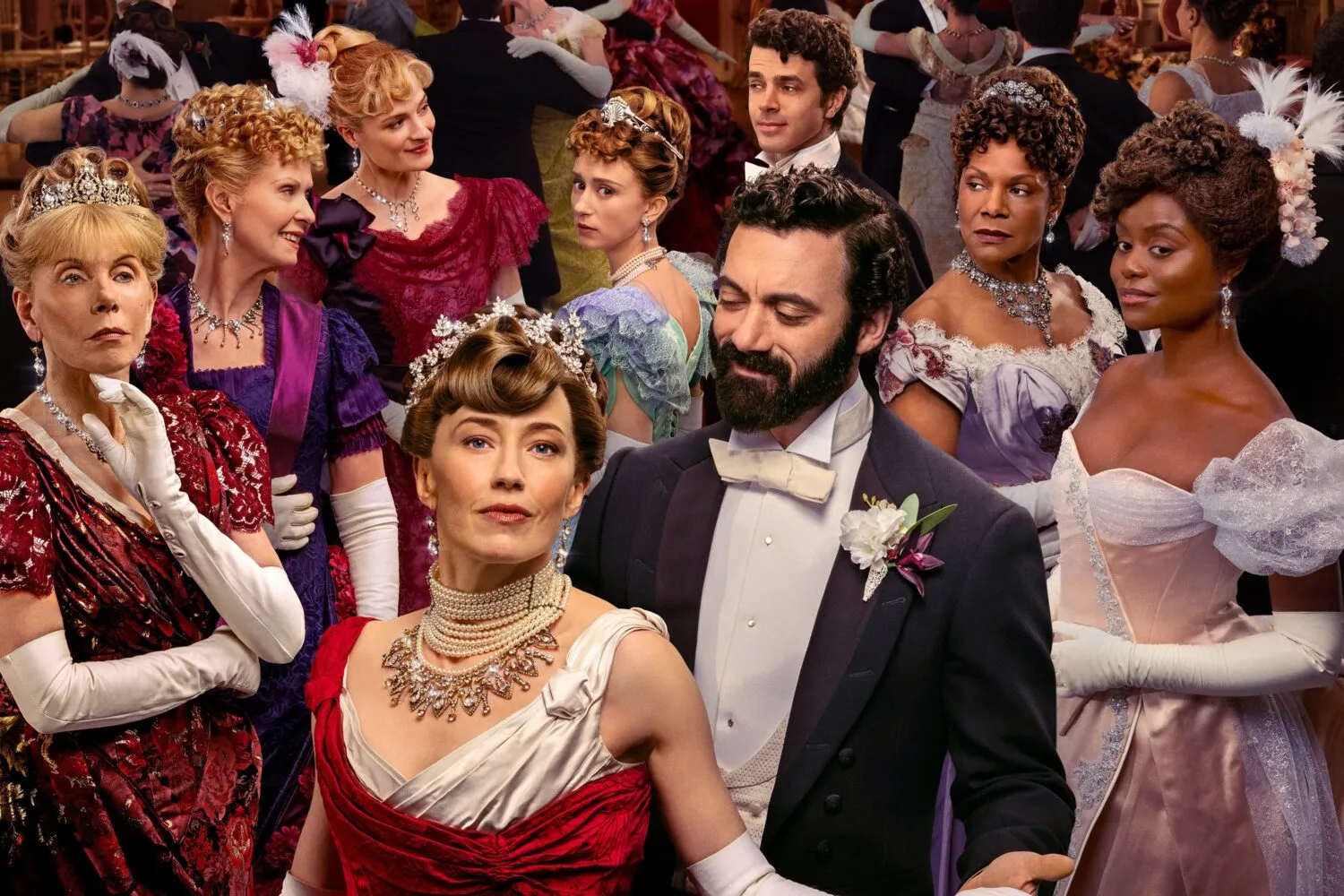
Julian Fellowes returns to the glittering world of late‑19th‑century Manhattan with The Gilded Age’s fourth installment on HBO Max. This season ups the stakes by inviting the President of the United States to the Van Rhijn dining room, turning a battle of old‑money versus new‑money into a direct confrontation with Washington power brokers. With lavish costumes, intricate scheming, and a roster of star‑studded performances, the show promises another sumptuous chapter in its ongoing exploration of ambition, legacy, and the price of social ascent.
Synopsis
Agnes Van Rhijn (Christine Baranski) sees an opportunity to reclaim her family’s fading influence when President Grover Cleveland (Jim Gaffigan) accepts an invitation to dine at her townhouse. The evening becomes a litmus test for the Van Rhijns, whose fortunes now hinge on the president’s favor and the financial backing of Ada’s (Cynthia Nixon) resources. Across the street, Bertha Russell (Carrie Coon) struggles to mend a fractured marriage amid pressure from industrial titan John D. Rockefeller (Neal Huff). Meanwhile, younger characters—Peggy Scott (Denée Benton) and Marian Brook (Louisa Jacobson)—navigate engagements that test personal ambition against familial expectations. The season weaves these threads together as the characters confront what it truly means to win a seat at society’s table when the rules are written by others.
Performances
The ensemble delivers work that matches the series’ visual grandeur. Christine Baranski commands every scene as Agnes, balancing regal poise with a simmering desperation to protect her name. Cynthia Nixon offers a sharp, witty counterpoint as Ada, whose pragmatic humor cuts through the family’s pretensions. Jim Gaffigan surprises in a restrained turn as President Cleveland, lending gravitas without sacrificing the character’s political savvy. Carrie Coon continues to embody Bertha’s steel‑clad ambition, while Neal Huff’s Rockefeller exudes quiet menace that reshapes the Russells’ calculus. The younger leads—Denée Benton, Louisa Jacobson, Jordan Donica, and Taissa Farmiga—bring fresh energy, their romantic and professional dilemmas feeling both intimate and emblematic of the era’s shifting gender dynamics.
Behind the Lens
Fellowes’ signature blend of meticulous period detail and melodramatic tension shines under the direction of Salli Richardson‑Whitfield. Production design recreates 1880s New York with painstaking accuracy, from the gilded façades of Fifth Avenue to the bustling workshops of the Lower East Side. Costume designer Kasia Walicka-Maimone dresses the cast in fabrics that signal status—silk for the Van Rhijns, heavy wool for the Russells, and utilitarian garb for the settlement‑house staff.
Cinematography uses warm, amber lighting during the presidential dinner to underscore the occasion’s gravity, while cooler tones illuminate the streets where ambition meets reality. The score, a subtle blend of orchestral motifs and period‑appropriate motifs, underscores both the opulence and the undercurrents of betrayal.
Final Verdict
The Gilded Age Season 4 succeeds in raising the narrative’s political stakes without sacrificing the soap‑opera allure that has defined the series. By placing a real‑world president at the heart of Van Rhijn intrigue, Fellowes transforms a battle of etiquette into a contest of power that feels both timeless and urgently relevant. The performances are uniformly strong, the production values remain impeccable, and the storytelling manages to balance multiple interlocking plots while hinting at larger thematic questions about ownership, legacy, and the cost of borrowing influence. For fans of lush period dramas and newcomers alike, this season is a worthy continuation—elegant, engaging, and unmistakably HBO.
Also Read:
High Stakes and Haute Couture: HBO Unveils Official Trailer of “The Gilded Age” Season 4