

Peter Berg’s latest effort, The Mosquito Bowl, arrives with the promise of weaving together two powerful American narratives—college football glory and the brutal reality of World War II combat. The filmmaker, known for his heartfelt sports drama Friday Night Lights, returns to the well‑known source material of Buzz Bissinger with the hope of delivering another resonant tribute. Unfortunately, the film stumbles under the weight of its own ambition, presenting a collage of lofty ideas that never quite coalesce into a cohesive statement. For viewers seeking a straightforward war picture or a heartfelt homage to the sport, the result feels more like a noisy rehearsal than a polished performance. This review unpacks where the movie succeeds, where it falters, and why it ultimately leaves audiences wanting a clearer vision.
Synopsis
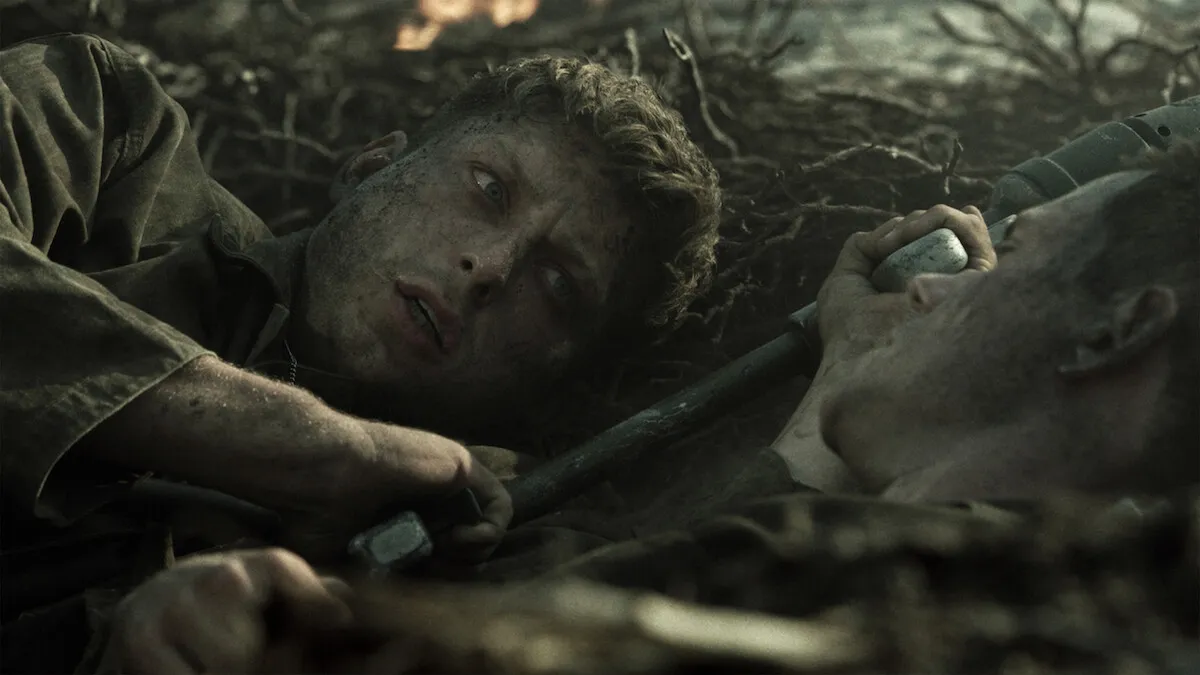
Set shortly after the attack on Pearl Harbor, the story follows four standout college football players who enlist in the Marine Corps. Their journey leads them to the Pacific theater, where, on the eve of the infamous Okinawa invasion, they take part in a legendary exhibition game dubbed the Mosquito Bowl. The contest pits Marine regiments against each other, featuring many of the era’s top collegiate athletes who have traded helmets for rifles. While the game itself serves as a symbolic beacon of camaraderie and normalcy amidst chaos, the film splits its attention between the soldiers’ battlefield experiences, fragmented philosophical dialogues, and occasional archival interludes that attempt to bridge past and present.
Performances
Nicholas Galitzine delivers a restrained portrayal of the earnest quarterback whose internal conflict mirrors the larger tension between duty and love of the game. Bill Skarsgård brings a brooding intensity to the role of a hardened sergeant, though his moments of introspection often veer into awkward exposition. Ray Nicholson, as the wide‑receiver‑turned‑rifleman, offers flashes of genuine vulnerability that hint at a deeper emotional core, yet the script frequently undercuts these beats with stilted dialogue. Supporting turns from Dominic Bogart as the company sergeant and brief appearances by archival footage figures (including a cameo‑style nod to Bob Hope USO shows) provide texture, but none rise above the material’s uneven tone. Overall, the cast commits sincerely, but the screenplay’s lack of direction prevents any single performance from anchoring the film.
Behind the Lens
Berg, collaborating with co‑writer Mark L. Smith, attempts to elevate a straightforward historical anecdote into a meditation on humanity, mortality, and the redemptive power of sport. The cinematography toggles between gritty, handheld war sequences and polished, almost nostalgic shots of the football field—a visual dichotomy that underscores the film’s thematic tug‑of‑war. Editing choices, however, feel choppy; scenes often end abruptly, only to jump to the next with little narrative bridge, leaving viewers disoriented.
The inclusion of genuine archival clips—such as actual Friday Night Lights‑era footage and the real Bob Hope USO performance—aims to lend authenticity, yet their insertion feels more like a decorative flourish than an integral storytelling tool. The score oscillates between martial drums and sweeping strings, never settling on a motif that unifies the disparate tones.
Final Verdict
The Mosquito Bowl aspires to be a profound commentary on how a simple game can rekindle the human spirit amid the horrors of war, but it instead becomes a cacophony of half‑formed ideas that never find a clear resolution. The film’s strongest moments—those centered on the actual Mosquito Bowl competition and the fleeting camaraderie among the players—are overshadowed by overextended philosophical tangents and a disjointed narrative structure. While the production values are respectable and the cast shows commitment, the ultimate effect is one of missed potential: a story that could have been a stirring tribute to resilience ends up feeling like a collection of impressive parts that fail to compose a satisfying whole.
For enthusiasts of war dramas or sports sagas, this title may prove a frustrating exercise; for others, it serves as a cautionary tale about the perils of over‑ambition without a unifying vision.