

The Toy Story series has always carried a special burden: each new entry must justify reopening a toy box that seemed complete after Toy Story 3 delivered a near‑perfect finale. While Toy Story 4 offered mild pleasures, it never fully escaped the feeling of an aimless epilogue. Enter Toy Story 5, a film that finally gives the franchise a contemporary reason to exist. This review of Toy Story 5 examines how Pixar uses the familiar toys to interrogate modern childhood, screen addiction, and the fear of being left behind.
Synopsis
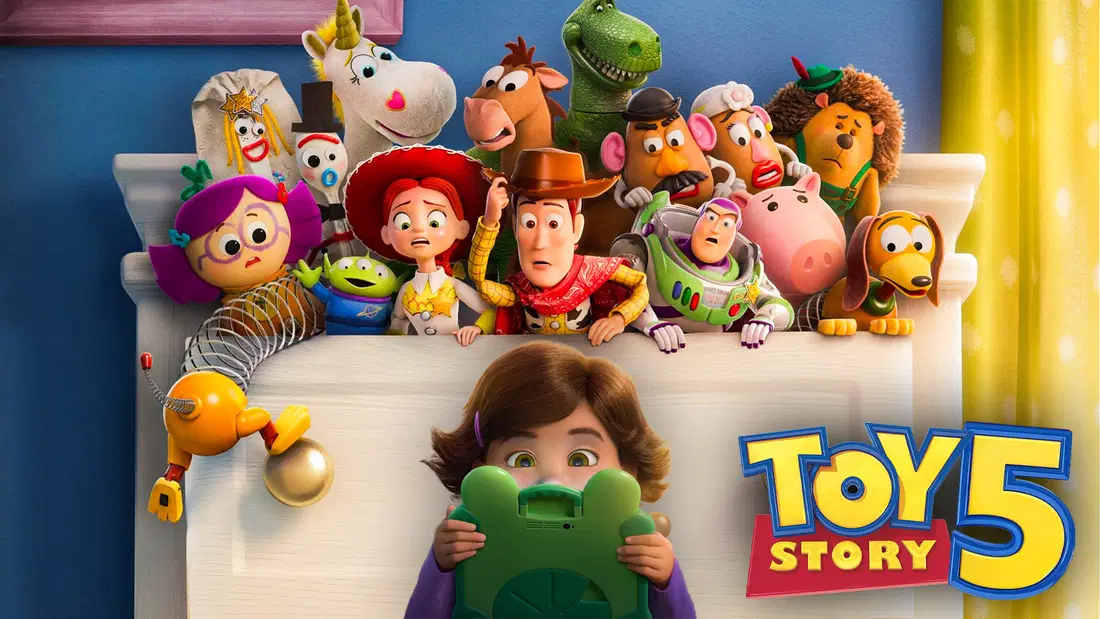
After Woody departs Bonnie’s room to stay with Bo Peep and help abandoned toys find new homes, Jessie assumes the role of leader in Bonnie’s bedroom. Buzz Lightyear serves as her trusted second‑in‑command. The narrative kicks into gear when Bonnie becomes fixated on Lily, a frog‑like tablet (Lilypad) that functions as a gateway to a shallow, screen‑obsessed social world. The toys have spent the summer trying to foster friendship for Bonnie, notably introducing her to Blaze Manoukian, a potential new playmate. However, Lily’s arrival disrupts this fragile progress, pulling Bonnie deeper into a digital orbit and threatening the emotional work the toys have nurtured.
The central crisis is not that Lily is inherently malicious; rather, the device reshapes how children connect, leaving traditional toys feeling obsolete. Woody is drawn back into the fold, and together the toys must confront the reality that their purpose—helping a child grow—is being challenged by the rise of interactive screens. The story wrestles with themes of technological isolation, the value of imaginative play, and the bittersweet acceptance that childhood evolves.
Characters
- Jessie (voiced by Joan Cusack): The film shifts its emotional core to Jessie, whose history of abandonment makes the anxiety about screen time feel personal rather than gimmicky. Her fear of being discarded gives the narrative a poignant, character‑driven edge.
- Woody (Tom Hanks): Now a supporting presence, Woody remains a comforting anchor, offering sage advice without dominating the plot.
- Buzz Lightyear (Tim Allen): Buzz takes on more responsibilities, including dealing with high‑tech Buzz Lightyear units stuck in demo mode, adding both humor and depth.
- Forky (Tony Hale): The idiosyncratic Forky continues to provide comic relief with his oddball existential musings.
- Lily (Greta Lee): Rather than a villain, Lily acts as a catalyst, representing the new digital companions that compete for children’s attention.
- Atlas (Craig Robinson): A cheerful GPS hippo toy who brings a dose of optimism and exposition.
- Snappy (Shelby Rabara): An excitable camera toy that adds visual gag potential.
- Smarty Pants (Conan O’Brien): The standout new addition, an outdated 2000s potty‑training toy whose desperate smugness and wounded dignity steal nearly every scene.
The ensemble retains the warmth fans expect, even as many familiar faces recede into supporting roles.
Behind the Lens
Directed by Andrew Stanton and co‑written with Kenna Harris, Toy Story 5 leverages the franchise’s legacy while steering the thematic focus toward contemporary issues. The decision to place Jessie at the forefront allows the film to explore abandonment and purpose through a more emotionally direct lens. The voice cast—Tom Hanks, Joan Cusack, Tim Allen, Scarlett Spears, Annie Potts, and newcomer Greta Lee—deliver performances that balance humor with genuine feeling.
Pixar’s animation remains top‑tier, rendering the toys’ tactile world against the sleek, glowing interface of Lily with visual contrast that underscores the clash between analog imagination and digital immersion. The screenplay cleverly avoids a simplistic anti‑technology stance, instead portraying how technology can both isolate and, when used thoughtfully, facilitate connection.
Final Verdict
Toy Story 5 succeeds where its predecessor faltered by grounding its narrative in a clear, modern concern: the impact of screens on childhood relationships. The film’s strongest moments arise from Jessie’s leadership and the existential questions about obsolescence and parental purpose. The third act, a tense race to help Bonnie reconnect with Blaze, delivers comic urgency and emotional payoff, rescuing the slower first two acts.
While the opening act takes time to find its momentum and the middle section occasionally circles its themes, the concluding stretch is thrilling, funny, and moving. The result is a mostly satisfying return to form that justifies the franchise’s continuation. It may not reach the heights of Toy Story 3, but unlike Toy Story 4, it offers a contemporary reason for these beloved characters to ask what they mean to the children who love them.
Overall, Toy Story 5 is a heartfelt, thematically rich entry that resonates with today’s digital parenting debates—recommended for fans, families, and anyone curious about the evolving nature of play.
Also Read:
Taylor Swift Brings Musical Magic to “Toy Story 5” With Original Soundtrack Track
Pixar Drops “Toy Story 5” Teaser – New Character Lilypad Joins Woody & Buzz for June 2026 Release