

The haunted house genre has become increasingly saturated in recent years, with filmmakers repeatedly exploring the concept of inherited trauma made tangible through supernatural elements. From the groundbreaking Hereditary to the overlooked Australian gem Relic, audiences have been treated to numerous interpretations of this chilling premise. The Voices of Our Mother enters this crowded space with ambitions of adding something meaningful to the conversation, and while it occasionally succeeds, it ultimately falls short of its potential by losing confidence in its own atmosphere of dread.
Mark O’Brien crafted this film from his own screenplay, taking on the role of William, the eldest son whose desperation for his comatose mother’s inheritance raises troubling questions about his character motivations. The actor’s decision to cast himself in such an unsympathetic role demonstrates either remarkable artistic commitment or simple reluctance to surrender the most challenging part to another performer.
Synopsis
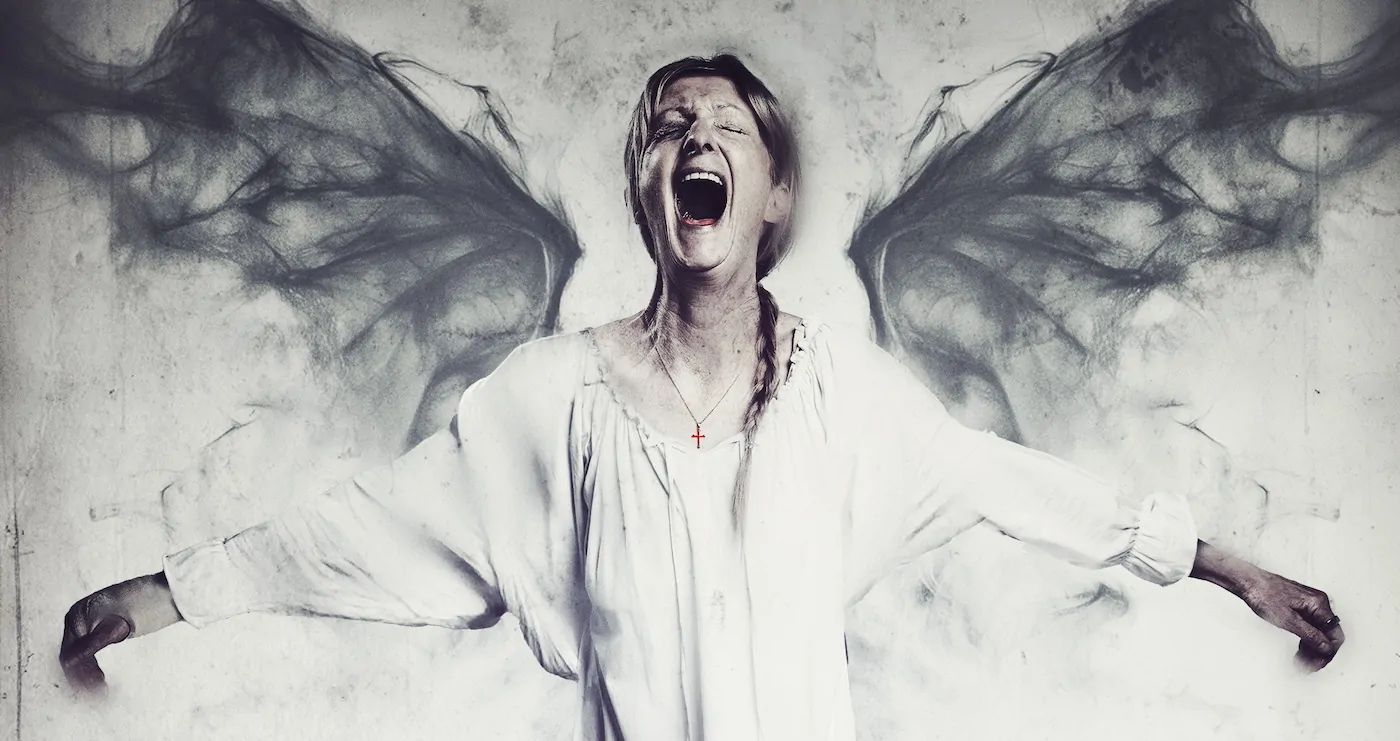
Following the death of her mother, Harriet Scaflen, portrayed by Sheila McCarthy, undergoes a disturbing physical transformation that defies medical explanation. Her body appears to reverse aging, becoming impossibly healthy and youthful—strangely resembling that of a ten-year-old child. This supernatural occurrence prompts her four children to return to the family home, a place haunted by past traumas inflicted by their father while their mother passively witnessed the abuse.
William seeks the inheritance primarily to settle an overwhelming gambling debt. His twin sister, Therese (Carolina Bartczak), harbors years of suspicion that William may have contributed to her wife’s death. Martin, the youngest sibling and recovering addict, serves as the family’s most vulnerable member—the Roman Roy figure, if you will. Annika (Georgina Reilly) escaped this dysfunctional environment by seeking refuge in a convent.
The demon work in the shadows, manipulating family tensions long before any supernatural manifestation becomes visible. The film’s most unsettling quality lies in how seamlessly its influence blends with the family’s existing capacity for mutual destruction.
Performances
Sheila McCarthy delivers the film’s most remarkable performance, carrying the weight of Harriet’s transformation entirely on her shoulders. She rejects every cliché associated with possession cinema—there’s no twisted spine or rolling eyes, no overacted convulsions or eerie vocal distortions. Instead, McCarthy offers something far more disturbing: a face that becomes momentarily alien, suggesting a being from another world attempting to mimic humanity with unsettling imperfection.
The ensemble cast demonstrates considerable chemistry, particularly during the first hour where the four siblings surgically re-open thirty-year-old emotional wounds. The dialogue feels authentically brutal, capturing the specific cruelty that family members can inflict upon one another. Their conversations prove more disturbing than any special effects could achieve.
Behind the Lens
Mark O’Brien attempts to juggle two distinct films simultaneously: an unflinching family drama and a 1970s-style possession horror. While both elements demonstrate competence, they never fully integrate. The family drama section feels raw and compelling, while the possession elements—complete with damp wallpaper, flickering candles, and obvious reverence for The Exorcist—feel somewhat derivative.
The screenplay succumbs to a common horror filmmakers’ weakness: excessive explanation. Around the midpoint, the film suddenly attempts to codify its mythology, revealing the curse’s origins and transmission. This choice diminishes the atmospheric tension that defined the earlier portions, transforming ambiguity into exposition.
Final Verdict
The Voices of Our Mother deserves credit for its unwavering grimness and its understanding that human cruelty often requires no supernatural explanation. The sibling dynamics cut deep, and McCarthy’s performance warrants recognition. However, the film ultimately lacks the courage to maintain its own mystery, choosing instead to over-explain its mythology when mystery would have served better.
The result is a watchable but ultimately unsatisfying entry in the inherited-trauma horror cycle—decent, well-acted, but considerably less than what its talented cast and intriguing premise deserved.
The Voices of Our Mother premieres on June 19 on Shudder.