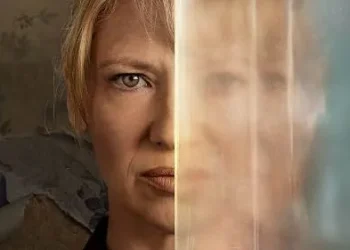



Netflix’s latest Filipino offering, This That and Everything In Between, arrives as a quietly powerful family drama that refuses to settle for easy resolutions. Directed by Cholo Laurel and penned by Cody Abad and Shania Sumergido, the film weaves together the lives of a gifted scriptwriter, her estranged mother, and a surprising young half‑brother. With a runtime of just under two hours, the picture balances professional ambition, buried trauma, and the tentative steps toward reconciliation. This review breaks down the film’s narrative, performances, direction, and overall impact, offering a concise yet thorough take for general readers seeking an honest assessment of the title.
Synopsis
Joanne (Jodi Sta. Maria), nicknamed Jo, is a successful television and film scriptwriter poised to leave the Philippines for a prestigious fellowship in New York. Her plans are disrupted when her mother, Paz (Agot Isidro), reappears after a 27‑year absence. The reunion is further complicated by the discovery that Paz has a 20‑year‑old son, Mattias (Gabriel Lazaro), a stranger to Jo. What begins as an awkward, forced meeting slowly uncovers layers of resentment, mental health struggles, and hidden truths. As the three characters navigate their tangled histories, the film examines how love can persist even when forgiveness feels impossible, and how family can be redefined in unexpected ways.
Performances
Jodi Sta. Maria delivers a restrained yet deeply felt portrayal of Jo. Rather than relying on loud confrontations, she lets silence speak volumes, especially in scenes where Paz attempts to reclaim a maternal role Jo has long outgrown. Sta. Maria’s ability to convey frustration, vulnerability, and a quiet resilience makes Jo’s journey palpable without veering into melodrama.
Agot Isidro matches this intensity with a nuanced Paz. Isidro avoids painting her character as a simple villain; instead, she reveals a woman shaped by hardship, regret, and a fierce, albeit flawed, love for her children. The actress captures Paz’s internal conflict—her desire to reconnect juxtaposed with the awareness of the damage her past choices have caused.
Gabriel Lazaro’s Mattias emerges as more than a plot device. His understated performance hints at psychological turmoil while simultaneously reflecting Jo’s own yearning for connection. Lazaro’s subtle gestures and expressive eyes allow the audience to sense Mattias as a mirror of Jo’s suppressed emotions, enriching the thematic core of the film.
Supporting turns from Gardo Versoza, Ruby Ruiz, RK Bagatsing, and Mitch Valdez add texture to the world surrounding the central trio, grounding the story in a recognizable Filipino social milieu without stealing focus from the primary emotional arc.
Behind the Lens
Director Cholo Laurel adopts a measured visual style that mirrors the film’s thematic tension. The cinematography alternates between tight, intimate frames during emotional exchanges and wider, more detached shots when characters grapple with their isolation. This visual rhythm reinforces the push‑pull between closeness and distance that defines the narrative.
The screenplay, crafted by Abad and Sumergido, resists the temptation to resolve every conflict with a grand revelation. Instead, it allows moments of misunderstanding to linger, emphasizing that healing is often incremental. The dialogue feels authentic, shifting between Taglish‑infused casual exchanges and more poignant, reflective passages when the characters confront their histories.
Music and sound design are used sparingly, letting ambient noises—city traffic, distant conversations, the rustle of paper—fill the spaces where words fall short. This restraint heightens the impact of the few swelling scores that underscore pivotal realizations, ensuring they feel earned rather than manipulative.
Final Verdict
This That and Everything In Between is not a flawless family saga; its occasional melodrama and the concentration of multiple themes—abandonment, mental illness, career ambition—can feel slightly overburdened. Yet, these very imperfections lend the film an authenticity that polished, formulaic dramas often lack. The strength of the picture lies in its commitment to portraying reconciliation as a gradual, imperfect process rather than a tidy ending.
What resonates most is the film’s refusal to let Jo “get over” her past simply because she has built a successful career or attended therapy. Her anger toward Paz remains genuine, and Paz’s attempts at redemption are met with understandable skepticism. Through Mattias, the story expands the notion of family, showing that bonds can be forged not only by blood but by shared experiences of emotional voids.
For viewers who appreciate character‑driven narratives that prioritize emotional truth over plot convenience, This That and Everything In Between offers a rewarding, if sometimes uneven, viewing experience. The film ultimately asks a poignant question: Can two people who have caused each other pain still discover a sliver of love amidst the wreckage? Its answer—hesitant, hopeful, and human—makes it worth the watch.