

Netflix’s Anaesthesia arrives as a compelling entry in the growing catalogue of international medical dramas. Directed by Lukasz Ostalski, the series follows a gifted neurosurgeon forced to confront the fallout of a daring operation gone awry. Spanning eight roughly forty‑five‑minute episodes, the show blends high‑stakes surgery with deep ethical questions, offering viewers a window into the moral gray zones that modern physicians navigate daily. This review unpacks the narrative, acting, production qualities and overall impact, aiming to help general readers decide whether the series merits a spot on their watchlist.
Synopsis
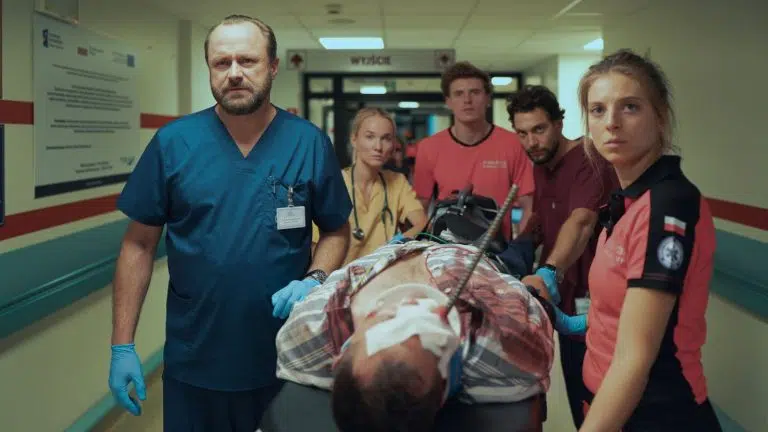
Dr Dawid Łazarz, a brilliant Warsaw‑based neurosurgeon, loses his hospital position after an experimental procedure on a young patient ends tragically. Seeking refuge, he retreats to a modest cabin in the Suwałki region, intending to leave his stressful career behind. Fate intervenes when a train crash lands him in an under‑resourced local hospital, where his expertise is urgently needed. As Dawid works alongside the regional staff, he grapples with the consequences of his past decision while trying to rebuild trust with colleagues and patients alike. The series explores his struggle to balance professional ambition with personal responsibility, set against the backdrop of a community hospital that tests both his skill and his conscience.
Performances
Leszek Lichota delivers a nuanced portrayal of Dawid, capturing the surgeon’s intellectual brilliance, internal turmoil and gradual humility. His restrained yet expressive performance allows viewers to feel the weight of each ethical dilemma without melodrama. Karolina Gruszka shines as Wanda, the pragmatic ward nurse whose quiet strength provides a moral counterpoint to Dawid’s intensity. Aleksandra Poplawska brings warmth to the role of Mateusz’s supportive family member, while Krzysztof Stelmaszyk and Marcin Czarnik enrich the ensemble as fellow physicians whose contrasting approaches spark lively debates about treatment choices.
The supporting cast—including Vasyl Vasylyk, Karol Biskup, Joanna Gonschorek, Dorota Kolak, Masza Wagrocka and Filip Kowalewicz—adds texture to the hospital milieu, each embodying distinct attitudes toward risk, tradition and compassion. Collectively, the actors forge a believable workplace dynamic that grounds the series’ ethical inquiries in human reality.
Behind the Lens
Lukasz Ostalski’s direction emphasizes claustrophobic corridors and stark lighting to mirror the protagonists’ inner confinement. Cinematographer Tomasz Bielski uses tight framing during operative scenes, heightening tension while still respecting the procedural realism that medical audiences appreciate. The series’ score, composed by Bartosz Chilinski, employs subtle piano motifs that swell during moments of revelation and recede during quieter, introspective exchanges.
Production design successfully contrasts the sterile, high‑tech Warsaw hospital with the modest, equipment‑limited Suwałki facility, visually underscoring the theme of resource disparity. Editing maintains a brisk pace without sacrificing depth, allowing each episode to develop character arcs while advancing the central moral question: how far should a clinician go when odds are slim?
Final Verdict
Anaesthesia stands out as a sincere, intellectually stimulating drama that succeeds in humanizing the often‑abstract discussion of medical ethics. Its chief strength lies in the lead performance and the authentic portrayal of hospital camaraderie, which keeps the narrative emotionally resonant. However, the show’s ambition to cover numerous topics—ranging from personal accountability to mental health—sometimes leads to a crowded plot, leaving certain relationships underdeveloped. Despite this, the series rewards viewers who appreciate thoughtful storytelling over pure spectacle. For fans of medical dramas that ask as much of the heart as they do of the mind, Anaesthesia earns a solid recommendation.