

AMC’s celebrated horror anthology franchise has always excelled at transforming historical settings into nightmare fuel, from the frozen 19th-century Arctic to the barbed-wire horrors of World War II internment camps. However, the third season, 𝘋𝘦𝘷𝘪𝘭 𝘪𝘯 𝘚𝘪𝘭𝘷𝘦𝘳, represents the franchise’s most audaciously contemporary and deeply unsettling pivot yet. Premiered on May 7, 2026, on AMC+ and Shudder, this six-episode limited series trades vast external landscapes for the sterile, peeling corridors of a failing psychiatric facility. The result is a meditation on horror that operates on a fundamentally different premise: this time, the monster was already inside the building all along.
Story
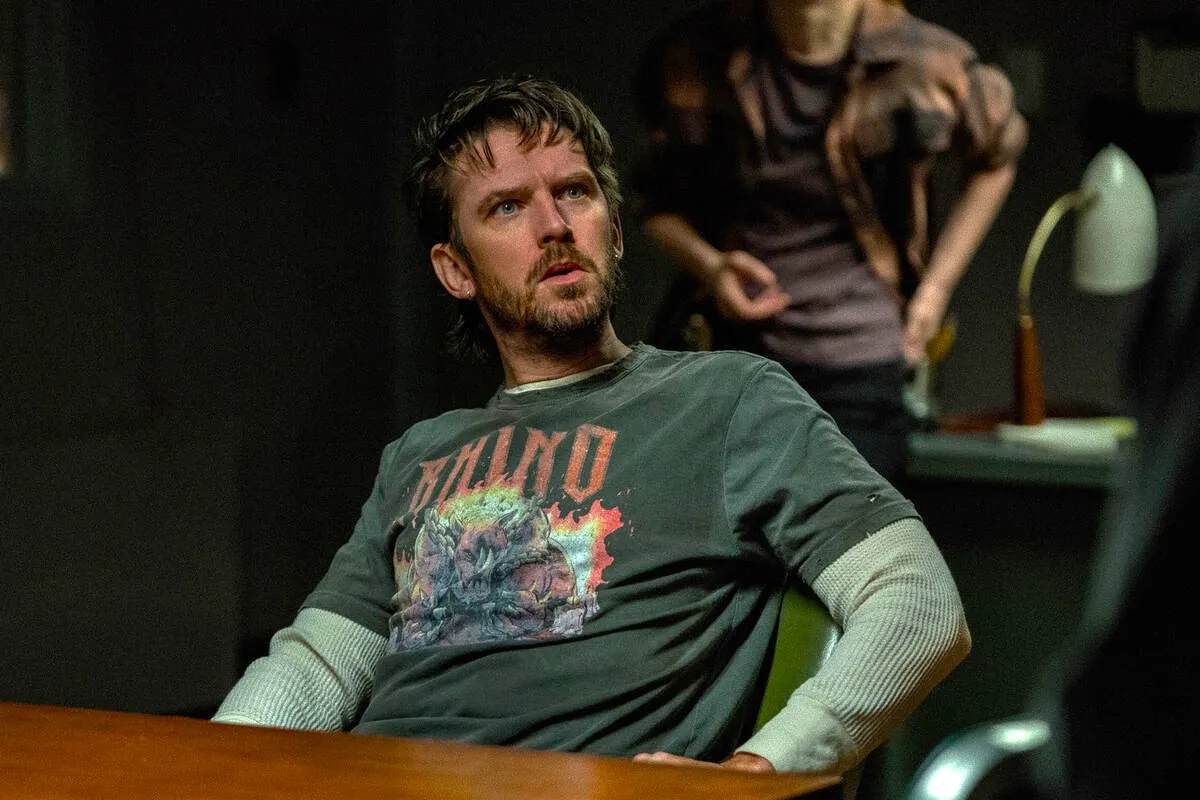
The narrative centers on Pepper, a Queens-based moving man and former heavy metal drummer portrayed by Dan Stevens, whose life unravels with disturbing speed after he intervenes to protect his girlfriend from an harassing ex-boyfriend. Three plainclothes officers, seeking administrative convenience over proper procedure, sidestep the booking process entirely and commit Pepper to New Hyde Hospital for a “routine” 72-hour observation period. What follows is a descent into institutional nightmare that weaponizes the very concept of care against those it supposedly serves.
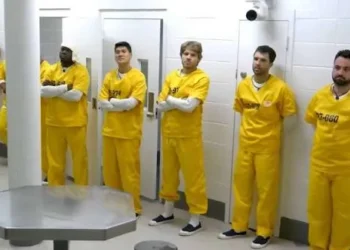
New Hyde Hospital exists as a character unto itself, a crumbling medical facility where fluorescent lights flicker against stained linoleum and drooping ceiling tiles that suggest a building that stopped trying to function around 1987. Filmed at the Arthur Kill Correctional Facility, the location carries an inescapable carceral weight that institutional signage cannot disguise. The horror here operates through what might be termed the “compliance-trap”—a bureaucratic labyrinth where Dr. Anand and seemingly benevolent staff members promise swift release contingent on cooperation, then administer powerful sedatives that knock patients unconscious for days, causing them to miss mandatory medication doses and earning them the “non-compliant” label that extends their incarceration indefinitely.
This catch-22 serves funding purposes rather than healing, and the show presents this systemic dysfunction without melodrama, as though administrative cruelty were simply how things work. The supernatural threat—a buffalo-headed creature that stalks patients through shadows and ceilings—emerges as a manifestation of this neglected empathy. The monster thrives because New Hyde has become a site where care used to exist but no longer does, drawing in society’s castaways like a beacon to predators.
Performances
Dan Stevens delivers a performance of remarkable balance, maintaining manic energy while anchoring Pepper’s character to a fluctuating Queens accent that takes viewer adjustment but ultimately feels lived-in. He brings what can only be described as a “vulnerability-glitch” to the role—a hair-trigger temper sitting directly adjacent to profound, bewildered resentment at his circumstances. Pepper begins the series convinced of his own heroic status, and watching his self-perception collide with his actual history of mistakes provides the emotional architecture upon which the narrative builds.
Judith Light transforms Dorry, a long-term resident who claims Pepper was “summoned” to New Hyde, into something genuinely haunting. Her physical manifestation of grief—including the ability to cry actual blood—could easily tip into camp in lesser hands, but Light makes the mystical feel mundane and the mundane feel catastrophic. Chinaza Uche’s Coffee, a structural engineer maintaining meticulous records of the facility’s failures while making futile calls to government representatives, represents the show’s quietly devastating conscience—a man applying professional rigor to a system designed to defeat it. Stephen Root’s Dr. Badger, leading a book club assigning 𝘖𝘯𝘦 𝘍𝘭𝘦𝘸 𝘖𝘷𝘦𝘳 𝘵𝘩𝘦 𝘊𝘶𝘤𝘬𝘰𝘰’𝘴 𝘕𝘦𝘴𝘵 and 𝘑𝘢𝘸𝘴 to patients, operates as a figure of self-aware paralysis, surrounded by portraits of Dr. Walter, whose philosophy of compliance over care haunts the institution from beyond the budget cycle.
Behind the Lens
Karyn Kusama’s direction in the opening episodes establishes the season’s visual vocabulary with striking precision. High-contrast lighting and deep shadows make New Hyde feel like a breathing, hostile organism. A single red line running down the center of the corridor, separating “compliant” from “non-compliant” patients, functions as a visual motif that’s almost offensively legible—a boundary between freedom and confinement rendered in the language of fire-drill evacuation routes that doubles as a trail of blood through institutional beige.
The directors adopt what might be called a “predator-obscura” strategy, keeping the buffalo-headed monster largely hidden in early episodes. This choice intensifies anxiety for viewers watching characters already destabilized by heavy medication, forcing audiences to inhabit the same uncertainty patients feel about what is real, what is medicated, and what is simply the building settling in the night. The six-episode format creates a “slow-burn-accelero” effect where tension accumulates steadily before erupting into a frantic climax that feels both earned and slightly compressed.
Final Verdict
𝘛𝘩𝘦 𝘛𝘦𝘳𝘳𝘰𝘳: 𝘋𝘦𝘷𝘪𝘭 𝘪𝘯 𝘚𝘪𝘭𝘷𝘦𝘳 succeeds because it understands something its predecessors occasionally obscured: the most effective horror does not arrive from outside walls or frozen wastes. It is constructed into the infrastructure, embedded in systems that feed on the vulnerable and convert human suffering into line items on budgetary spreadsheets. The supernatural creature serves as a loud, bloody echo of the quieter horror of the American healthcare industry—one breaks limbs while the other breaks spirits through neglect.
The season’s final moments make deliberate formal choices, moving away from supernatural spectacle toward intimate human connection, insisting that bonds formed in darkness outweigh the monsters that lurked there. Whether viewers find this conclusion moving or merely convenient will depend on how much they believe institutions can be survived by the people they fail. For those willing to sit with its thematic weight, this represents a precise and unsettling piece of television that lingers long after credits roll—a horror anthology entry that proves sometimes the scariest monsters wear scrubs and carry clipboards.
Also Read:
“The Terror: Devil in Silver” Trailer: Dan Stevens Faces a Psychiatric Nightmare