

Arriving on Netflix this May 24, Our Land is more than just a documentary; it is a profound examination of historical displacement and systemic injustice. Renowned filmmaker Lucrecia Martel turns her lens toward the tragic murder of indigenous leader Javier Chocobar, crafting a narrative that bridges the gap between cosmic scale and human suffering.
From the Heavens to the Soil
The film opens with an ambitious visual scope, transitioning from satellite-like views of Earth to the intimate, dusty terrain of a soccer field in the Chuschagasta community of northern Argentina. Accompanied by the haunting strains of liturgical music, the film immediately establishes a contrast: the vastness of our planet versus the specific, lived struggle of a people fighting to remain on their ancestral land. Rather than leaning into abstract mysticism, Martel uses this juxtaposition to show how a global, capitalistic logic of property rights echoes into the lives of individuals who have been marginalized for centuries.
A Deeper Look at the Chocobar Case
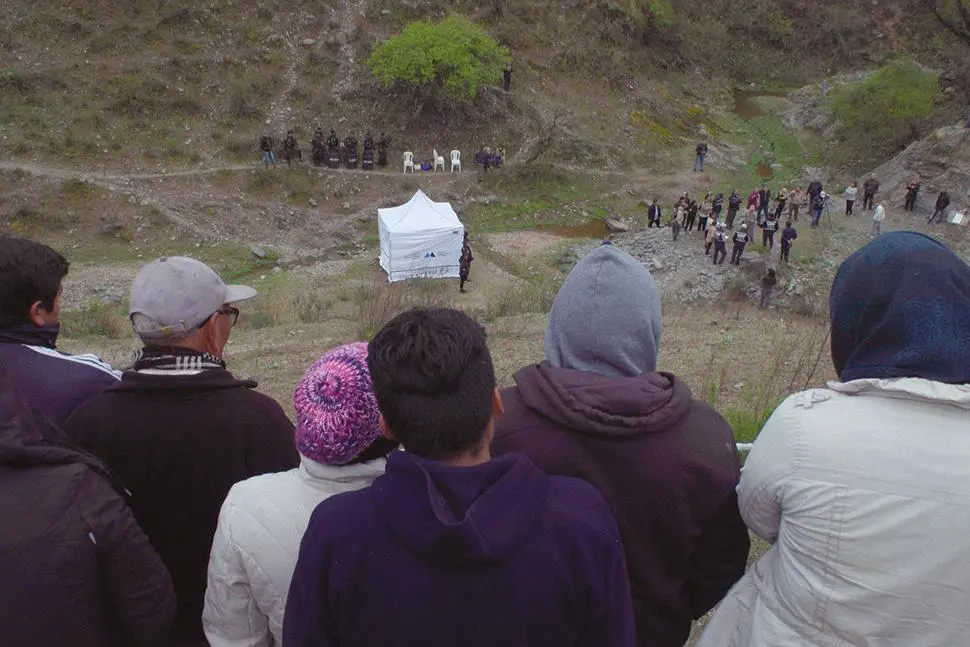
In 2009, Javier Chocobar was killed during a confrontation with individuals claiming ownership of his community’s land—a claim fueled by interests in mining and questionable legal documentation. The incident, partially captured on video by the aggressors, eventually led to a high-profile trial in 2018.
Martel eschews the tropes of standard true-crime television. While she meticulously covers the legal proceedings—the testimonies, the defense arguments, and the courtroom friction—the heart of the film lies in the human cost. By giving screen time to the accused, she allows their own prejudices and cold, exclusionary reasoning to surface naturally, requiring no external narration to expose the systemic racism at play.
The Power of Memory and Community
What makes Our Land truly resonant is its intimacy. The documentary serves as a vessel for the Chuschagasta community’s memories, hardships, and internal migrations. Through the perspective of Chocobar’s widow and the collective voice of his people, the film paints a vivid picture of a resistance that spans generations. Martel’s formal choices—including the creative use of aerial drone photography—contextualize the disputed territory, making the loss of land feel tangible and visceral.
A Necessary Truth
By moving away from the highly stylized aesthetic seen in some of her previous work like Zama, Martel delivers a work of singular clarity. This is a sensitive, urgent piece of cinema that avoids being a mere political manifesto. Instead, it offers a window into the lived experience of indigenous communities whose voices have been systematically ignored.
In an era where such struggles for autonomy remain precarious, Our Land stands as a vital reminder of the persistence of human dignity against the machinery of dispossession. It is an essential watch that demands both our attention and our reflection.