

A child in Mar del Plata once discovered that the heartbeat between a striker’s planted foot and kick contact stretches into what feels like an eternity. Decades later, on the penalty spot in Doha, that very same individual sidled up to a French international, engaged in conversation, and subsequently secured an entire tournament. This journey from small-town Argentina to global sporting immortality forms the backbone of a groundbreaking documentary now streaming worldwide.
The Unconventional Approach to Sports Storytelling
Gustavo Cova’s latest directorial endeavor presents a fascinating narrative architecture that refuses to choose between conventional documentary formats. Unlike typical sports documentaries that rely heavily on archival footage supplemented by interview segments, this film weaves together live-action archives with animated sequences to create something entirely unprecedented in the genre.
The documentary draws its philosophical foundation from a Hernán Casciari short story about a young boy who discovers he possesses the ability to halt time itself, only to find himself in a contentious dialogue with a football that forewarns him of everything yet to unfold. Cova masterfully adapts this fantastical premise onto the actual biographical timeline of Emiliano Martínez, creating a seamless blend between fiction and reality that serves the story’s deeper thematic purposes.
Ricardo Liniers, the acclaimed cartoonist behind the beloved Macanudo comic strip that has become one of the most recognizable artistic voices in Spanish-language publications, provides the animated illustrations that thread through the narrative. Meanwhile, Agustín Aristarán—better known by his stage name Rada—lends his vocal talents to the animated football character. These animated elements exist not merely as decorative flourishes but represent the only viable visual language for depicting the psychological processes occurring within a goalkeeper’s mind in the fractional seconds before contact.
The result is a documentary that achieves what few sports films have accomplished: it renders the invisible visible, translating the internal dialogue and spatial calculations that separate elite goalkeepers from merely competent ones into a format audiences can genuinely comprehend and appreciate.
When Archives and Animation Share the Narrative Stage
Sports documentaries traditionally face an aesthetic binary. Either the extensive archive footage carries the entire narrative weight while experts provide contextual explanation, or the Filmmakers construct entirely fictional frameworks that abandon historical authenticity in favor of dramatic coherence. This production rejects that dichotomy entirely through what industry publications have labeled the “hybrid soccer doc” approach.
Liniers’ animated sequences handle the interior landscape—the private doubts, childhood dreams, and psychological preparations that no camera could ever capture. Meanwhile, Cova’s archival material documents the public record: the spectacular Copa América 2021 performance, the pivotal World Cup 2022 saves against Kylian Coman and Aurélien Tchouaméni, the iconic Topo Gigio celebration that evolved into a widespread Spanish-language internet meme, and the clutch penalty shootout performances at Aston Villa that reintroduced penalty psychology into weekly Premier League discourse.
The documentary maintains two distinct registers throughout its runtime without attempting to reconcile them into false harmony. This deliberate tension between private preparation and public performance constitutes the film’s central argument about what distinguishes exceptional goalkeeping from the ordinary.
The Technique Behind the Theatrical Flourishes
What emerges from this careful construction is a compelling thesis about goalkeeping mechanics that promotional trailers fail to convey adequately. The position at the penalty mark demands not reflex speed but rather the deliberate manipulation of the kicker’s perception. The sideways walking, the lingering stare that extends a half-second beyond comfort, the measured delay in placing the ball on the penalty spot—these behaviors transform the striker’s planted foot into a decision requiring reconfirmation.
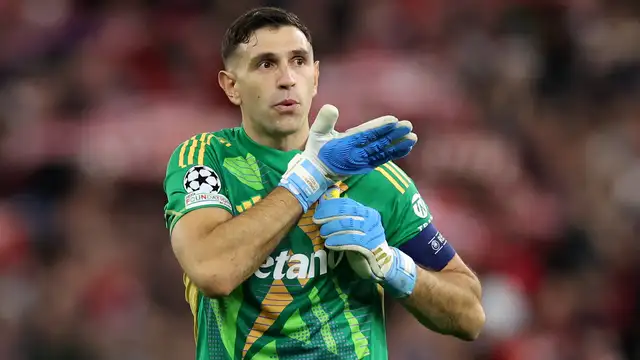
Martínez executed every element of this psychological choreography on full display during the Doha tournament, with viewers interpreting his behaviors variously as natural personality, conscious showmanship, or simply a professional enjoying himself before seventy thousand opposing supporters. The Casciari conceit transforms this figurative description into literal reality: the child who allegedly stopped time grew into the man who induced French strikers to forget where their standing foot had been planted. The animation serves as documentary evidence of these internal processes, making the abstract concrete and the imperceptible visible.
This approach continues a tradition within Argentine sports documentary filmmaking while simultaneously advancing it. Asif Kapadia’s archival biographical model exemplified in works about Ayrton Senna, Diego Maradona, and Roger Federer employed montageto reject the talking-head format entirely, constructing complete features without a single conventional interview setup. ESPN’s The Last Dance represented the opposite extreme: legacy ritual centered on interview chairs with decades of testimony layered alongside archival cutaways.
Hybrid animation in nonfiction has previously appeared as supplementary material, functioning as decorative adjacent elements or occasional flourishes within larger productions. This documentary elevates animation from background ornamentation to narrative spine, allowing it to shoulder the film’s central argument while keeping figures like Lionel Messi, Lionel Scaloni, and legendary Independiente goalkeeper Miguel Ángel “Pepé” Santoro in traditional interview chairs where they provide their perspectives.
The two methods coexist because the subject matter demands both simultaneously. The Martínez of thirteen years old represents a child that no archive captured in meaningful detail, while the Martínez of thirty-one exists as a public figure whose every body movement has been documented, analyzed, and uploaded to internet platforms worldwide.
The Calculated Rejection of Convention
Cova’s most significant creative decision involves what he deliberately abstains from doing with the archival material. The filmmaker largely denies himself the indulgence of slow-motion replay, despite these penalty saves existing across every frame rate in broadcast archives across the world. The easy choice—the default tool employed by sports documentary editors for two decades—would be to layer reverence through gradual playback accompanied by swelling orchestral scores.
The documentary preserves most archival footage at the speed originally chosen by broadcasters. When slow time appears, it exists exclusively within the animated layer while real time continues running through broadcast footage. This deliberate split forces viewers to register goalkeeping technique as something that originated within the goalkeeper’s cognitive processes rather than something created by cinematic manipulation.
The save was never performed in slow motion—only the rehearsal preceding it occurred at a pace comprehensible through animation. This technical choice also grants the animated sequences a credibility that ornamental cartoon segments in nonfiction productions rarely achieve. The alternative, quarter-speed replays with emotionally manipulative musical accompaniment, would have produced something both duller and more familiar.
Argentine Identity Beyond the Trophy
The documentary arrives at a specific cultural moment for Argentina. The nation holds the World Cup, and three and a half years of post-Qatar identity have flowed from football into broader national self-conception—the phenomenon termed “Scaloneta,” the national team serving as collective therapy, Maradona’s spectral presence retreating primarily to museums, tattoo parlors, and Neapolitan nostalgia.
The anxiety accompanying maximum sporting achievement concerns what occupies the intervening years before the next World Cup, with the trophy already secured and the squad’s average age steadily increasing. Cova responds by traveling backward in time, placing the child before the icon, the rehearsal before the championship celebration, the doubt before the certainty.
Argentine audiences seeking the World Cup to signify something beyond mere hardware receive a documentary explaining where the technique originated rather than cataloging what it accomplished. This choice proves rarer than it initially sounds. The default approach for a champion’s documentary photographs the trophy and walks backward through memorable highlights. This work performs the near-opposite: it photographs the technique and walks forward from a small-town childhood until the trophy arrives almost as incidental consequence.
Agustín Pichot, former Argentina rugby captain now producing under the PEGSA banner, assembled the creative team. The selection of Casciari for narrative structure, Liniers for visual line work, and Cova for direction signals a deliberate assembly of Argentine cultural voices rather than an imported sports-documentary template manufactured for international consumption.
Platform Ambitions and Cultural Authenticity
Production occurred across Argentina and England throughout 2025, with Birmingham materials gathered at Aston Villa—where Martínez has competed since 2020 and secured 2024 Champions League qualification that returned him to European elite competition. Netflix’s broader strategic ambitions manifest clearly in this assembly. The platform announced its 2026-27 Argentine content slate when opening Buenos Aires offices in April 2026, wagering on local-language sports intellectual property that achieves global circulation because the protagonist already exists as a known quantity among top European league audiences.
The film constitutes the system’s argument that regional auteur teams operating under platform financing can carry globally relevant subjects without translating themselves into Anglo sports-documentary grammar. Casciari writes for the Orsai publication. Liniers’ “Conejo de viaje” sells out at Buenos Aires bookshops. Neither needed to file their distinctive voices down to reach audiences in Madrid, Mexico City, or Birmingham.
What the documentary opens but cannot ultimately close concerns whether the time-stopping conceit returns anything meaningful to the family that watched their child depart Mar del Plata at thirteen. The animated boy continues conversing with his ball throughout. The actual boy boarded a train to the Independiente youth system, then an airplane to Arsenal at seventeen, followed by successive loans to Oxford United, Sheffield Wednesday, Rotherham United, Wolverhampton Wanderers, Reading, and Getafe. Eight clubs before the Aston Villa breakthrough at twenty-seven years old.
The conceit renders the public career comprehensible. It cannot retroactively shorten the distance experienced by family members or replay the years when the child served as a goalkeeper invisible outside Premier League fringes. The documentary allows both narratives to run parallel, with the gap between them representing precisely what the film refuses to artificially bridge.
Production Credits and Streaming Availability
Emi Martínez: The Kid Who Stops Time premieres on Netflix worldwide on May 28, 2026. The documentary was directed by Gustavo Cova, with story development by Hernán Casciari and animated illustration by Ricardo Liniers. Agustín Aristarán provides the voice for the animated football. The production features Lionel Messi, Lionel Scaloni, Miguel Ángel “Pepé” Santoro, and Martínez’s family members. It was produced by Agustín Pichot for PEGSA.