

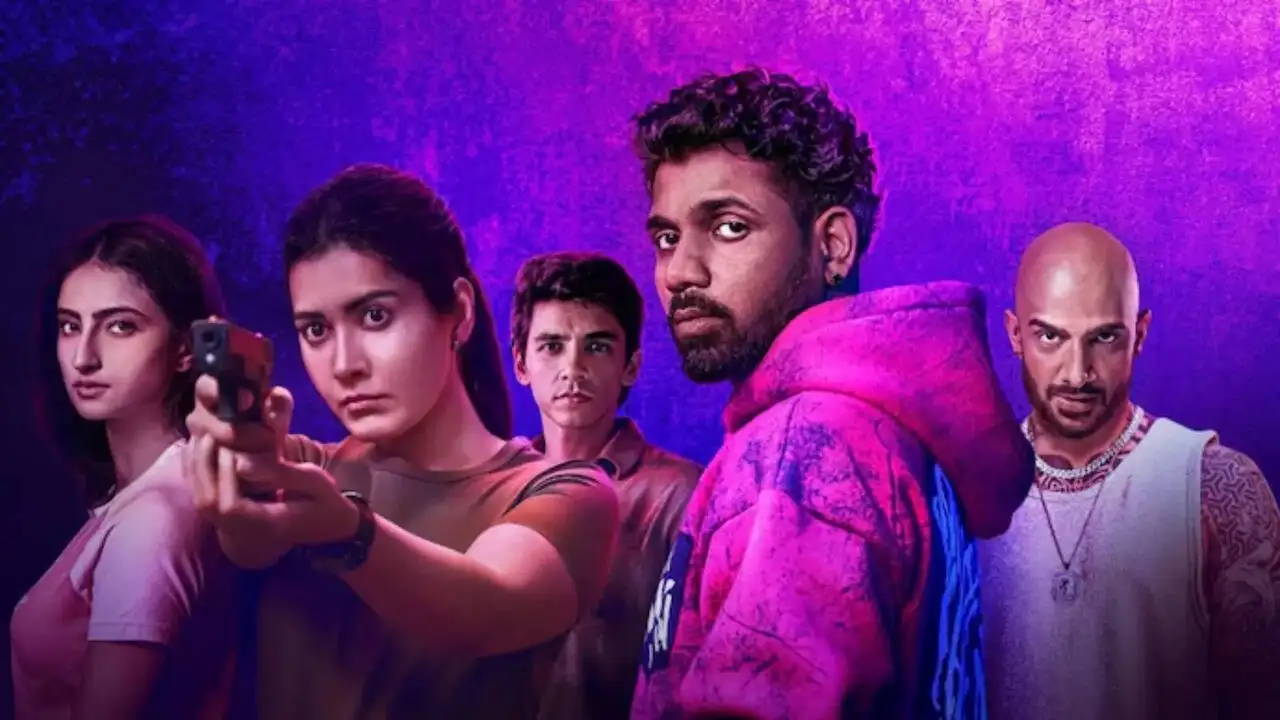
The Indian OTT landscape has become a melting pot of diverse storytelling, with streaming platforms giving creators the freedom to experiment with unique concepts and genre-blending narratives. Among the many shows that have attempted to break the mold, Lukkhe emerges as a refreshing addition to the digital entertainment space.
Directed by Himank Gaur, this musical action drama brings together an ensemble cast featuring King, Raashii Khanna, Palak Tiwari, Lakshvir Saran, and Shivankit Singh Parihar. The series dropped on Amazon Prime Video, promising audiences a high-octane blend of music, action, and emotional storytelling. Having watched the complete series, we delve into whether Lukkhe lives up to the anticipation generated by its trailers and promotional materials, or if it falls short of expectations in execution.
Story
Set against the vibrant backdrop of Chandigarh in Punjab, Lukkhe weaves a complex narrative that centers around two rival rappers whose personal vendetta transforms into something far more consequential. The story introduces viewers to MC Badnaam, portrayed by King, and OG, played by Shivankit Singh Parihar, whose initial rap battle escalates into a full-fledged revenge narrative that forms the backbone of the series.
The plot takes an intriguing turn with the introduction of Police Officer Gurbani, essayed by Raashii Khanna, who suspects MC Badnaam of being the mastermind behind a dangerous drug called Demon that has been flooding the state. This layer of crime and investigation adds a suspenseful edge to the musical premise, preventing the story from becoming predictable or one-dimensional.
Parallel to the main narrative, the series explores the budding romance between aspiring hockey player Lucky, performed by Lakshvir Saran, and Sannober, portrayed by Palak Tiwari. Their love story, while heartwarming, comes with its own set of complications and challenges that intertwine with the central rap rivalry. The interplay between these various storylines creates a multidimensional viewing experience that keeps audiences engaged throughout.
Performances
King makes a remarkable transition from music to acting with Lukkhe, delivering a performance that is both commanding and nuanced. As MC Badnaam, the actor brings an impressive blend of intensity, emotional depth, and swag to the screen. His confrontational scenes and rap battle sequences against Shivankit Singh Parihar’s OG stand out as definite highlight moments of the series. King’s ability to convey vulnerability beneath his character’s tough exterior adds significant weight to the performance.
Raashii Khanna continues to prove her versatility as an actress with her portrayal of the righteous police officer Gurbani. She brings dignity and conviction to the role, and her scenes with Lakshvir Saran’s Lucky are particularly compelling, offering emotional depth and warmth that provide balance to the action-heavy portions of the narrative.
Lakshvir Saran delivers a solid performance as Lucky, bringing restraint and maturity to the character. His character’s arc is one of the most interesting aspects of the series, as viewers watch him navigate both his athletic ambitions and romantic entanglements. The actor effectively conveys the internal conflicts and growth of his character throughout the episodes.
Palak Tiwari, in her role as Sannober, handles the emotional aspects of her relationship with Lucky with reasonable competence. While her character occasionally feels underutilized in terms of showcasing her supposed passion for music, Tiwari still manages to leave a positive impression during the more emotionally charged scenes.
Shivankit Singh Parihar deserves special mention for his portrayal of the hot-headed rapper OG. His screen presence, particularly during the rap battle sequences with King’s MC Badnaam, is undeniably strong and adds considerable energy to the show.
Behind the Lens
The narrative structure remains tight and focused, with each character carrying a well-developed backstory that adds depth and resonance to the overall plot. Himank Gaur successfully balances multiple genres, delivering action sequences, musical performances, romantic moments, and dramatic revelations in equal measure. The series also handles sensitive issues such as drug abuse and mental health with commendable sensitivity, demonstrating a mature approach to storytelling.
Furthermore, Himank Gaur’s direction brings a polished vision to Lukkhe, with the filmmaker successfully creating a cohesive world that feels authentic to its setting in Chandigarh. The color palette and visual tone of the series align perfectly with its musical action premise, elevating the overall mood of the production. This is particularly evident during confrontation scenes and emotionally heavy moments, where the cinematography enhances the impact of the narrative.
The technical aspects of the production, including the music composition and sound design, contribute significantly to the show’s appeal. The rap sequences are well-choreographed and energetically executed, helping to establish the musical identity of the series. The action choreography, while not revolutionary, serves the story adequately and maintains viewer engagement during the more intense sequences.
The production design captures the essence of urban Punjab, providing an appropriate setting for a story that revolves around ambition, rivalry, and redemption. The attention to detail in creating authentic rap battle environments and local settings demonstrates a commitment to grounding the narrative in reality despite its dramatic elements.
Final Verdict
Lukkhe proves to be an engaging and entertaining addition to the musical action drama genre on Indian streaming platforms. The series successfully combines multiple storytelling elements to create a wholesome viewing experience that offers something for everyone. While the performances are universally strong and the narrative remains compelling throughout, there are areas where the show could have benefited from deeper exploration.
Sannober’s character, despite being depicted as someone deeply passionate about music, does not receive the full character development she deserves. Similarly, OG’s character arc, while compelling, could have been enriched with more insight into the origins of his musical passion. Additionally, certain scenes leading up to the climax feel slightly rushed, suggesting that a few moments could have used more breathing space in the editing room.
For those seeking a gripping series that promises action, music, romance, and drama in equal measure, Lukkhe remains a worthwhile investment of time. Despite its minor shortcomings, the series delivers on its core promise and establishes its cast as talent to watch in the coming years.
Rating: 3 out of 5 stars