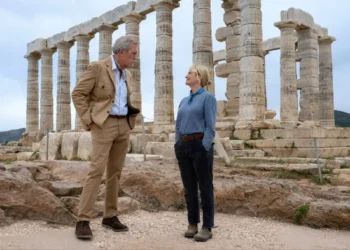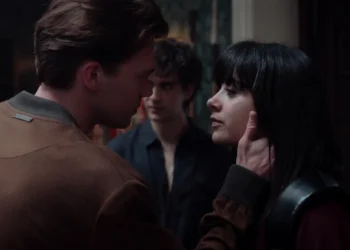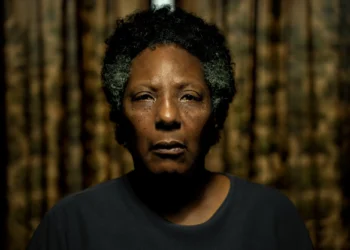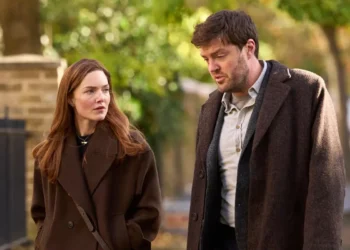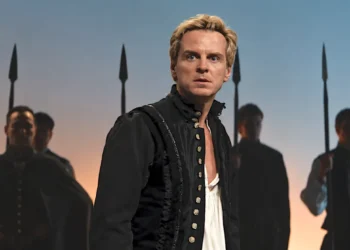


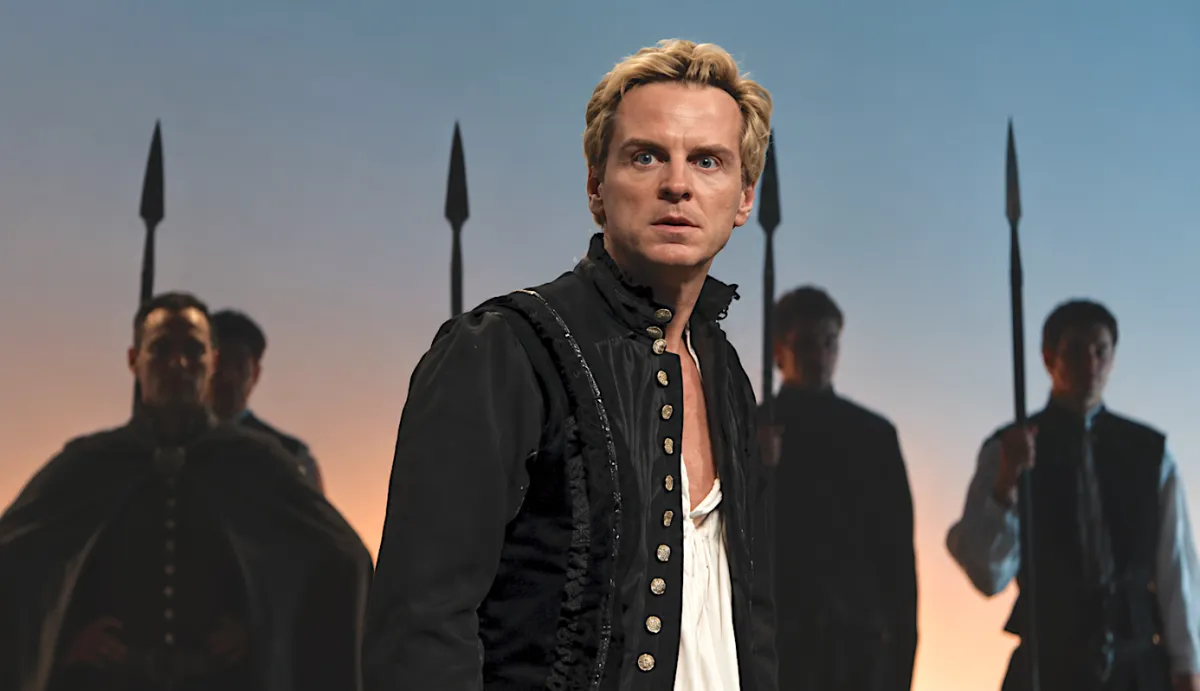
Death comes for everyone — some later, some heartbreakingly sooner. What unites us all is the longing to be remembered. Elsinore, directed by Simon Stone, understands this universal truth and transforms it into an extraordinary piece of cinema. At its heart lies the true story of Ian Charleson, the gifted stage actor who performed “Hamlet” while privately battling AIDS, and it stands as one of the most affecting film experiences of the year.
Synopsis
Inspired by real events, Elsinore follows Charleson (Andrew Scott) as he steps into the title role of “Hamlet” at London’s National Theatre in 1989, taking over after Daniel Day-Lewis famously abandoned the production mid-performance. As the run continues, Charleson juggles his deteriorating health, his chosen family, and his unshakable devotion to his craft. To reveal more would spoil the emotional journey — suffice it to say the film builds toward a conclusion we can anticipate, yet renders it unforgettable nonetheless.
Performances
Words barely suffice for Andrew Scott’s work here. Fresh from his triumph in All of Us Strangers, Scott disappears so completely into Charleson that within minutes the actor vanishes and only the man remains. He balances wit, vanity, terror, and blazing determination without ever reducing Charleson to a saintly martyr. His command of silence is as impressive as his delivery of Shakespeare’s most famous verse — when he speaks the Bard’s lines, you don’t merely hear them; you feel them in your bones.
Olivia Colman, as the physician Margaret Johnson, forms an instant, luminous chemistry with Scott, and their scenes together carry the film’s central thesis: survival alone is not enough — joy matters too. Billie Piper brings warmth as Charleson’s devoted friend Patsy, while Peter Mullan delivers a devastating late-film moment as Charleson’s father that will linger long after the credits roll.
Behind the Lens
Director Simon Stone and editor Valerio Bonelli deserve enormous credit for the film’s graceful rhythm. Rather than manufacturing sentimental contrivances, screenwriter Stephen Beresford chooses honesty, trusting the audience to find meaning in restraint. The structure cleverly intercuts Charleson’s life and mortality with the themes of “Hamlet” itself — a familiar technique, but executed here with remarkable precision. Stefan Gregory’s score occasionally leans too hard on emotions Scott can convey with a single glance, and the performance sequences sometimes feel hastily trimmed. Still, these are minor complaints against a film that finds its greatest power in quiet spaces: backstage banter, hospital friendships, and an actor refusing to let go of the work that keeps him feeling alive.
Final Verdict
Elsinore is far more than a showcase for a phenomenal performance. It is a celebration of artists, of a lost generation of queer men, and of the people — mostly women — who loved and sheltered them while the world looked away. At a moment when artificial intelligence dominates conversations in Hollywood, this film arrives as a vital reminder: artists are the soul of our culture. Elsinore honors those who gave us their art, their joy, and sometimes their lives — and it does so gloriously.
Elsinore opened in select US theaters on November 20, 2026 after a series of festival premieres and will be released extensively on December 4, 2026. UK and Ireland release is on January 29, 2027.