

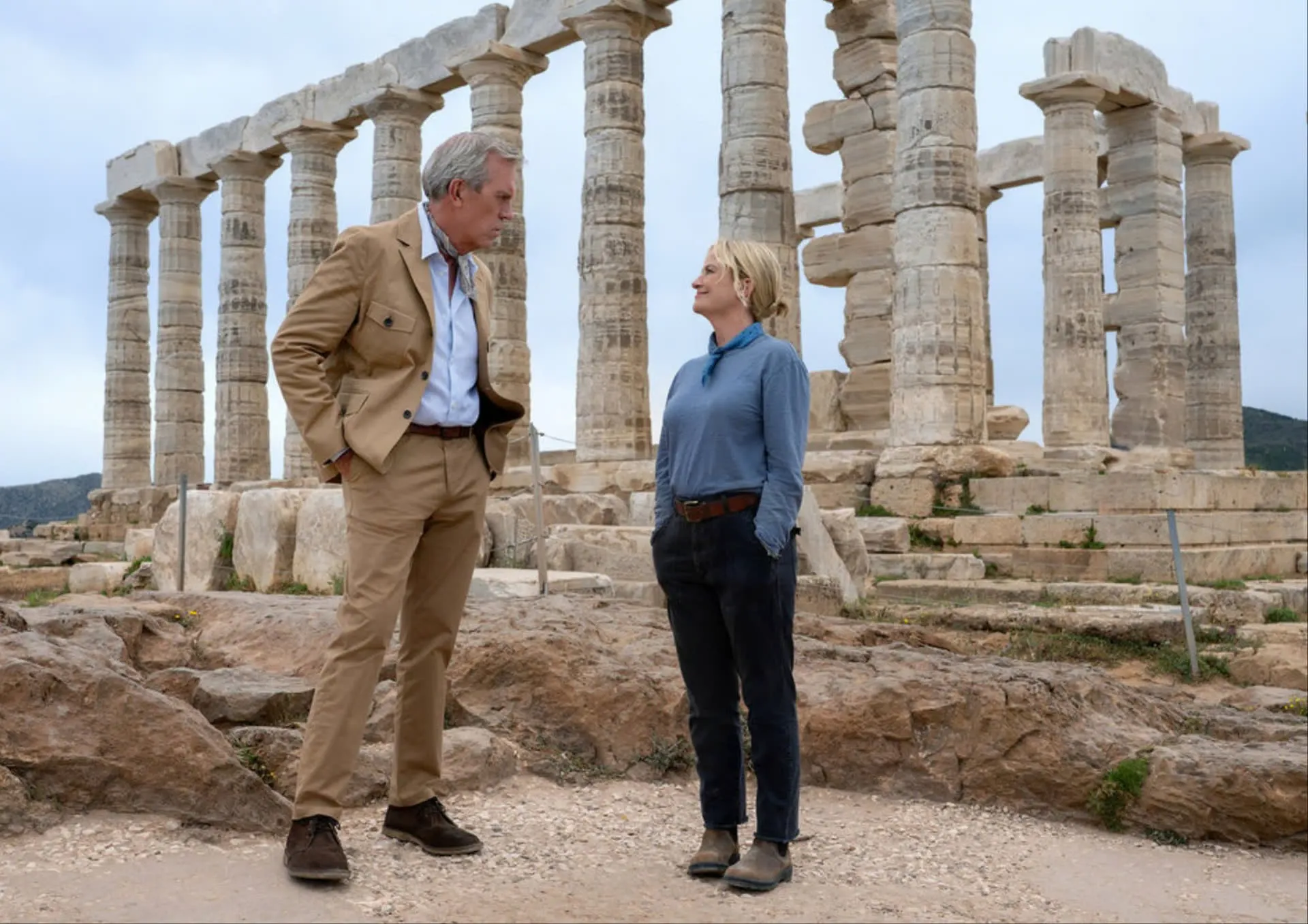
In what might feel like a familiar stratum of prestige TV, this Peacock series leans on a season-long archaeological riddle to justify a lineup of sharp, workplace-centric dynamics. The result is a show that wants to be both a character-driven buddy drama and a slow-burn mystery, a balance that proves tricky to hold. The premise promises a humorous, high-spirited ensemble wrestling with authority, ambition, and loyalty, yet it often truncates the very energy it relies on to propel its intrigue. The tension sits in the gap between what the characters deserve and what the premise asks them to endure for the sake of suspense. The Greek landscape provides ambience, but the narrative frequently uses the backdrop as scenery rather than as a living rival or consequence-heavy environment.
Synopsis
Dig unfolds at a long-established dig site in Greece, where Elise, a seasoned field supervisor, has spent roughly fifteen summers managing students and weathering a professional system that keeps promising recognition while quietly circulating the same power dynamics. Neville Wycombe, a celebrated professor who speaks of retirement with alarming frequency and then reconsiders, embodies the public affection and the ultimate decision-making at the university. Elise possesses the technical fluency, the earned authority, and the stubborn impulse to claim credit—if only she could secure the standing that accompanies it. The discovery of an ancient Hera statue becomes a temptation that threatens to redefine who is seen as the rightful author of the project. The premise is clear: a coveted discovery is at stake, but the more urgent conflict is the skewed hierarchy that undervalues Elise’s indispensable contributions.
In a concise arc, Elise navigates the pressures of leadership, the lure of accreditation, and the expectant gravity of a professional system that keeps promising reward while deferring it. The Hera statue becomes the fulcrum upon which personal and institutional tensions pivot: its discovery triggers the urge for recognition, the fear of misappropriation, and the fear of losing control of the narrative. The mystery provides a spine, yet it is the nuanced dynamics among Elise and her colleagues that provide the series with its emotional backbone. The core drama evolves from questions of credit and leadership to a more intimate inquiry: who is allowed to belong, who is believed, and who must learn to trust the very colleagues who challenge their authority.
Performances
Peel back the layers of Dig, and you’ll find a roster of formidable comic talent that, at its best, elevates the material beyond its partial ambitions. The cast—led by Amy Poehler as Elise and Hugh Laurie as Neville—drives the tonal balance between warmth, wit, and rueful self-awareness. Poehler embodies Elise’s formidable competence and cautious reluctance to cede control, imbuing her with a crisp precision that makes the moments of vulnerability all the more piercing. Laurie’s Neville, a character oscillating between mentor and impediment, lands with a performance that is simultaneously charming and exasperating; his vanity becomes a recurring, endearing irritant that occasionally undermines the very critique the show attempts to sustain.
Geraldine Viswanathan’s Dylan and Antonia Thomas’s Clare form the emotional spine of the middle act. Dylan’s restless impulsivity contrasts with Clare’s more calculated poise, and the chemistry between Viswanathan and Thomas is the most steady throughline the show possesses for exploring how women with divergent paths navigate shared ambitions. Their long arc resists the reduction to “rivalry for a man,” choosing instead to let friendship and mutual respect emerge as the real engines of narrative momentum. Jon Pointing’s Gary, as the ex-boyfriend and current beat in a tangled romantic web, often acts as a catalyst rather than a conclusion, keeping the relationships in motion without letting them drift into sentimental cliches.
Fina Strazza’s Patty is the standout transformation: from an oft-ridiculed, sheltered figure to a voice that earnestly seeks inclusion and belonging. Strazza’s performance grows more confident across the season, turning Patty’s social awkwardness into a source of authenticity rather than humor at someone’s expense. The arc shines because it invites the audience to invest in her personal risk and reward, a motion that legitimizes the ensemble’s broader exploration of leadership, community, and trust.
The supporting roster, including Max Greenfield and Brennan Lee Mulligan, adds color and texture to a show that already relies on a mix of charm and wit to keep momentum. Their appearances matter less for plot propulsion than for the texture they lend the world, offering moments that puncture pretension while maintaining a comfortable, if imperfect, tonal balance.
Behind the Lens
Directorial choices and production design push a consistent, professional tone, even when the storytelling occasionally wobbles around its own premise. The visual palette leans into sunlit Greece with a polished, television-friendly gloss that sometimes flattens the grit of real fieldwork. The set pieces—the excavation trenches, the gleam of marble artifacts, and the bright, breezy exteriors—are technically proficient but less often thematically decisive. The show hints at deeper cultural tensions surrounding antiquities and ownership, yet it hesitates to press the ethical questions with the same urgency it applies to the characters’ personal growth.
The script’s clarity falters when it cycles back to the mystery as a central engine, preferring to let the relationships carry the dramatic weight. When the narrative does pivot toward the artifact’s custody and the potential consequences of misappropriation, the payoff feels provisional rather than revelatory. Still, the performers’ command of timing, especially in the dialogue-driven scenes that lean on wit and rapport, keeps the material buoyant. The choice to stage most of the action around a group of women navigating hierarchy, mentorship, and collaboration is astute, creating a counterpoint to the traditional male-centric workplace dramas that populate the genre.
The production’s sense of place—though sometimes overwhelmed by seasoned exterior shoots and studio-backed landscapes—nonetheless delivers a convincing sense of community and purpose. The interplay between the Greek setting and the American-British ensemble creates a cultural tension that is alluring in concept, even if its execution sometimes blunts the moral questions that should accompany a story about who owns history. The result is a show that looks professional and plays with a familiar, comforting tempo, but occasionally settles for reverie over risk.
Final Verdict
Dig offers a clean, amiable synthesis of workplace comedy and mystery with a strong female core and capable execution. When Elise, Dylan, Clare, and Patty share the screen, the series achieves its most persuasive, emotionally resonant moments. The performances are undeniably solid, with notable breakthroughs from Strazza in particular, and the ensemble’s chemistry stands as a testament to the strength of character-driven storytelling within a genre that often leans on gadgets and twists to drive engagement. However, the season’s energy is uneven: the mystery tends to stall between revelations, and the series occasionally prioritizes the intriguing friction of office politics over the deeper, more illuminating conflicts that arise from genuine cultural concerns surrounding antiquities.
The show’s ambition—fusing a witty, halfway subversive take on modern academic culture with a brisk, serial mystery—lands with mixed results. Its Greek setting, while aesthetically pleasing and thematically resonant in its own right, sometimes feels more decorative than essential to the plot’s moral or emotional spine. Still, Dig remains a well-made, intelligent, and ultimately heartfelt exploration of how women navigate power, connection, and community within an environment that promises advancement while testing their legitimacy at every turn.