


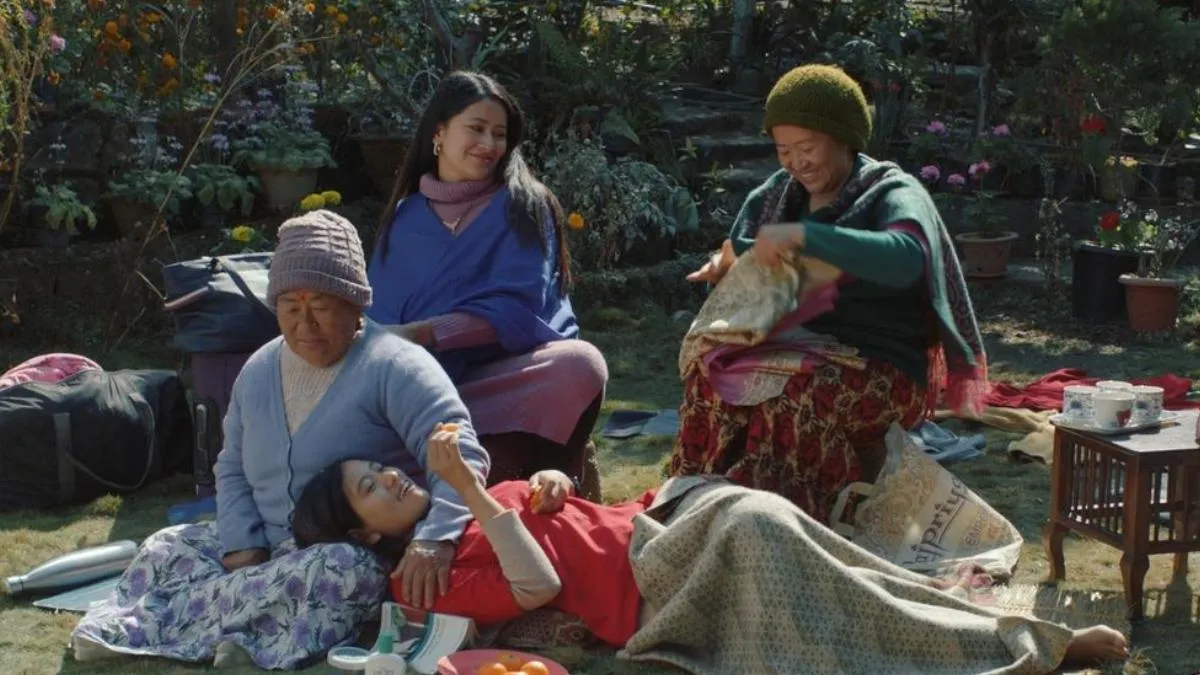
Shape of Momo marks the striking debut of writer‑director Tribeny Rai, delivering a nuanced, biting examination of female autonomy set against the misty hills of Sikkim. While many assume that Northeastern Indian societies enjoy greater gender equality than their Hindi‑belt counterparts, this film shatters that myth with quiet force. The modest dumpling becomes a tactile symbol for the rigid social architecture that women are expected to inhabit, and Rai proves that, although the shape of patriarchy may shift, its taste remains unmistakably bitter.
Synopsis
The narrative charts the journey of Bishnu (Gaumaya Gurung), a contemporary woman who abandons her life in Delhi to return to her family’s ancestral home in a picturesque Sikkimese hamlet. She steps into a household populated by three generations of women, all living under the invisible, suffocating weight of patriarchal tradition. The men of the family are physically absent, yet their authority loom large.
Bishnu’s grandmother (Bhanu Maya Rai) is obsessed with waiting for her son, who will eventually take her to Dubai. Her mother, Pashupati Rai, has adopted a strategy of tactical compromise: she wears a half‑smile that conceals a lingering fear of external intrusion. She drapes the deceased father’s clothes outside the house, creating a phantom male presence to deter the curious gazes of outsiders. Over the years, she has learned to desire only what is realistically attainable, turning a blind eye to minor injustices in hopes of protecting her daughters.
Bishnu’s elder sister, Junu (Shyama Shree Sherpa), embodies the cost of conventional conformity. Once a promising basketball player, she now returns home as a heavily pregnant housewife, her former vigor muted by expectations. Fueled by a sense of righteousness, Bishnu initially views it as her mission to liberate her mother and sister. Yet, as she attempts to take control of the family’s orange orchard and the household chores traditionally reserved for men, she confronts her own privilege. Her well‑meaning feminism, while principled, is colored by class bias and structural arrogance. By aggressively confronting the community, she inadvertently destabilizes the delicate equilibrium her mother meticulously maintained.
Her aspiration to run a homestay brings her into contact with local architect Gyan (Rahul Mukhia), the son of a politician, who appears sympathetic and understanding. Bishnu’s mother sees him as the missing male presence she has long awaited, yet Rai refuses to offer her protagonist an uncomplicated path to happiness.
Performances
Gaumaya Gurung delivers a fiery, nuanced portrayal of Bishnu, capturing the internal conflict of a woman who is simultaneously progressive and privileged. Her performance oscillates between determined activism and inadvertent arrogance, making Bishnu a relatable, flawed heroine. Bhanu Maya Rai is compelling as the grandmother, embodying patience and quiet resignation. Pashmati Rai (the mother) offers a masterclass in subtlety; her half‑smiles and silent gestures speak volumes about survival and sacrifice. Shyama Shree Sherpa provides a heart‑wrenching depiction of Junu, illustrating how societal expectations can strip away ambition.
The supporting cast, particularly the orchard contractor’s son, serves as a potent counterpoint to Bishnu’s sanctimonious tone, reminding the audience of the layered socio‑economic realities that exist beyond her idealist vision.
Behind the Lens
Director Tribeny Rai adopts a deeply observational, restrained style, allowing silences and everyday rituals to convey deeper tensions. Cinematographer Archana Ghangrekar frames the Sikkimese landscape with both serenity and menace, mirroring the emotional landscapes of the characters. The film’s metaphors are grounded in ordinary moments—a casual dinner table joke about flatulence hints at the pervasive odor of entitlement, while the family’s pet, named Liberty, becomes a living paradox that reflects the women’s illusion of independence. A quietly powerful scene shows Gyan leaving his unfinished momo plate on the table and walking away to wash his hands, implying that a woman will clean up after him—an unspoken reminder that even seemingly progressive men can fall into ingrained patterns.
Rai’s script avoids melodrama, instead letting kitchen conversations, household chores, and village interactions reveal the nuanced struggle for autonomy. The film’s pacing mirrors the gentle steam of a dumpling pot: slow, deliberate, yet ultimately transformative.
Final Verdict
Shape of Momo is a thought‑provoking, elegantly crafted debut that uses the simple dumpling as a lens to examine gender, class, and generational conditioning. It challenges romanticized perceptions of Himalayan communities while offering a tender, coming‑of‑age story that resonates with universal themes of self‑discovery and resistance. Though the protagonist’s privileged outlook occasionally clouds her approach, the film’s balanced portrayal of conflicting ideals makes it a compelling watch.
For audiences seeking a film that blends intimate character study with social critique, Shape of Momo is a must‑see. It proves that the struggle for autonomy, much like the perfect momo, requires patience, precision, and a willingness to question the structures that shape us.