

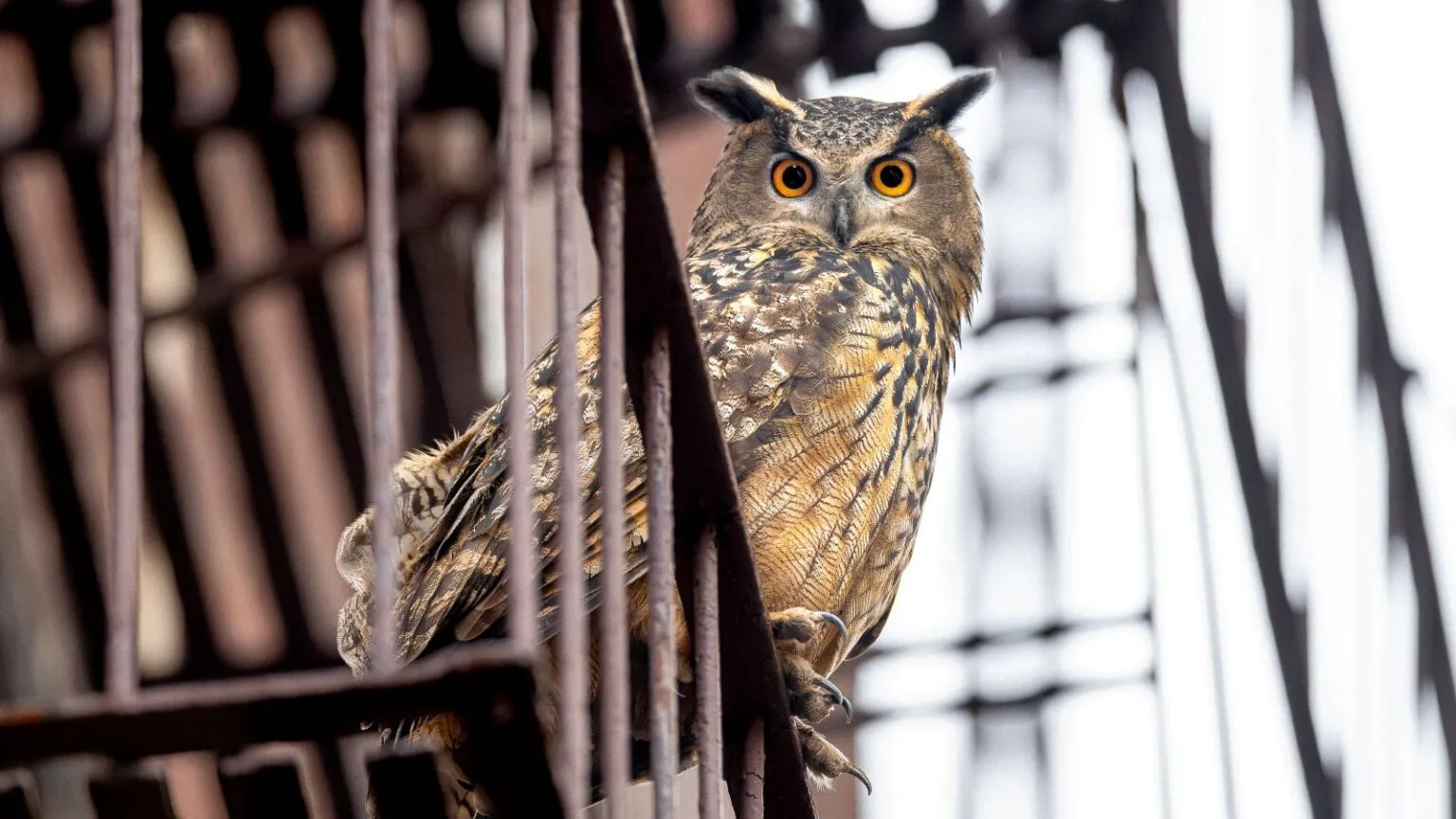
The documentary Wild Inside tells the extraordinary story of Flaco, a Eurasian Eagle‑Owl whose sudden escape from the Central Park Zoo turned a routine vandalism incident into a city‑wide fascination. Director Penny Lane, known for works such as Confessions of a Good Samaritan and Listening to Kenny G, chronicles the bird’s flight, the grassroots bird‑watching network that formed around him, and the broader questions his tale raises about urban wildlife, captivity, and coexistence.
The Escape That Sparked a Citywide Hunt
On February 2, 2023, a vandal sliced the owl’s enclosure, allowing Flaco to slip into the streets of Manhattan. The breakout was serendipitously witnessed by filmmaker Jeremy Workman (Secret Mall Apartment), who was strolling past Bergdorf Goodman on the park’s edge. His quick thinking gave Lane immediate access to raw footage that begins the very moment Flaco took flight.
From that first glimpse, Wild Inside assembles a timeline that follows the owl’s early days of uncertainty—battling wind, daylight, unfamiliar trees, and the occasional curious squirrel—while remaining largely within the sanctuary of Central Park. The film’s opening minutes set a tone of awe mixed with tension, inviting viewers to share the suspense of a city holding its breath over a feathered fugitive.
Behind the Lens: Penny Lane’s Approach
Lane’s signature playfulness shines throughout the documentary. She balances investigative rigor with a light‑hearted curiosity, allowing the narrative to breathe while still probing deeper themes. Interviews with Lane reveal her intent: to portray Flaco not merely as a escaped zoo animal but as a symbol of the fragile interface between human infrastructure and wild instinct.
Her cinematography leans heavily on crowd‑sourced material—smartphone clips, thermal‑camera feeds, and amateur bird‑watcher recordings—creating a mosaic that feels both intimate and expansive. This technique underscores the collective nature of the story: Flaco’s saga was witnessed, documented, and interpreted by countless New Yorkers.
The Birders’ Brigade and Citizen Science
A core component of Wild Inside is the devoted group of urban birders who transformed into an impromptu surveillance squad. Armed with binoculars, notebooks, and a live Twitter feed, they tracked Flaco’s movements, sharing real‑time updates that helped both enthusiasts and casual observers locate the owl.
Among them, the so‑called “bunny lady” emerged as a pivotal figure. Her rescue work for abandoned pet rabbits brought her into the Flaco watch‑list, and her thermal camera proved indispensable—not only for spotting the owl but, incidentally, for detecting late‑night wanderers in the Ramble. Her involvement illustrates how personal passions can converge to form a community‑driven conservation effort.
Flaco’s Survival Lessons
Initially, doubts loomed over Flaco’s ability to thrive outside captivity. Having been reared in a zoo, he lacked refined hunting skills, and his wings appeared underdeveloped compared to wild counterparts. Yet, as days passed, his innate instincts resurfaced. He began hunting the park’s abundant rat population, demonstrating that, despite his upbringing, he remained “wild at heart.”
The film captures delightful moments where Flaco toys with his prey—a behavior that reads as both playful and performative, endearing him to onlookers who gathered to watch his nightly hoots. These scenes reinforce a central thesis: captivity may dull certain abilities, but it cannot erase the intrinsic drive to survive and engage with one’s environment.
Ethical Debate: Freedom vs. Captivity
Wild Inside does not shy away from the moral quandary that Flaco’s freedom provoked. The “Free Flaco” contingent argued that imprisoning a self‑sufficient creature is inherently cruel, while opponents pointed to urban hazards—traffic, rodenticide‑laden prey, and limited foraging grounds—as reasons the owl might fare better under human care.
Even an aviarist from a bird sanctuary advocated for his return to the zoo, asserting that expecting an animal born in captivity to adapt wholly to a wild setting is unrealistic. The zoo’s keepers, wary of public‑relations backlash, largely sided with the freedom camp, acknowledging that reversing Flaco’s experience would be impossible without compromising his welfare.
This debate mirrors larger conversations about rewilding, urban planning, and the responsibilities cities bear toward the non‑human inhabitants that share their streets.
Cultural Impact: Flaco as a New York Mascot
Beyond the ecological discourse, Flaco morphed into a cultural icon. New Yorkers projected their own yearnings onto the owl—seeing in his flight a metaphor for breaking free from cramped apartments and monotonous routines. His nocturnal hoots became a soundtrack for late‑night wanderers, and his habit of peeking into windows sparked both amusement and cautionary tales about urban voyeurism.
Local businesses began featuring Flaco murals, social media feeds overflowed with #FlacoFan art, and the owl’s image appeared on everything from tote bags to coffee mugs. In this way, Wild Inside illustrates how a single wildlife episode can galvanize a city’s collective imagination, turning a bird into a mascot for resilience and curiosity.
Final Verdict
As the documentary reaches its conclusion, Lane refrains from delivering a heavy‑handed moral. Instead, she offers pragmatic suggestions—reducing rodenticide use, applying window decals to prevent collisions, and supporting green corridors—that empower viewers to contribute to safer urban habitats for birds like Flaco.
Wild Inside ultimately reminds audiences that humans and animals are intertwined participants in the same metropolitan ecosystem. By celebrating Flaco’s journey, the film encourages a reflective look at how we shape, and are shaped by, the spaces we inhabit.