


Netflix’s latest offering, My Brilliant Career, attempts to capture the restless energy of an early‑20th‑century Australian heroine while borrowing the glossy romance cues that made Bridgerton a hit. Adapted from Miles Franklin’s 1901 novel, the six‑part series lands somewhere between a lavish costume ball and a gritty outback struggle, promising both swoon‑worthy moments and a thoughtful look at gender, class and ambition. Does it succeed in striking that delicate balance? The answer lies in the details of its storytelling, performances and production choices.
Synopsis
Sybylla Melvyn, a sharp‑tongued young woman from a struggling farm, is sent to find a respectable husband and ease her family’s debts. Instead of bowing to expectation, she clings to her dream of becoming a writer, navigating a parade of suitors, societal pressure and personal setbacks. The series follows her journey from the dusty outskirts of Possum Gully to the polished drawing rooms of Sydney, tracing how each encounter reshapes her vision of success and self‑worth—all without revealing the tale’s ultimate resolution.
Performances
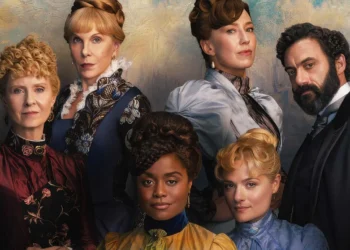
Philippa Northeast carries the mantle of Sybylla with a lively mix of defiance and vulnerability; she captures the heroine’s spirited slang‑filled dialogue while letting the character’s joy of living shine through even the most restrictive scenes. Christopher Chung brings a charming, almost‑mythic presence to Harry Beecham, the wealthy suitor whose polished exterior hides a deeper yearning for authenticity; his chemistry with Northeast feels both effortless and charged. Jake Dunn, as the strait‑laced Frank Hawdon, delivers a surprisingly layered turn—what begins as a caricature of a dullard gradually reveals a man wrestling with tradition and change. Supporting turns from Anna Chancellor as the imperious grandmother and Kate Mulvany as Harry’s bohemian aunt add texture, proving that the ensemble is more than just a backdrop for the lead trio.
Behind the Lens
Writer‑director Liz Doran leans into the visual language of contemporary period drama, weaving modern tracks such as “Young Turks,” “Born to Be Alive” and “Atomic” into the soundtrack to give the series a pulse that feels both timeless and today‑savvy. The production design deftly contrasts the harsh, sun‑bleached Australian outback with the opulent interiors of high society, ensuring that neither setting overwhelms the other.
Cinematography highlights expansive landscapes during Sybylla’s solitary moments, while intimate close‑ups capture the subtle shifts in expression that drive the narrative forward. The show also attempts to broaden the original novel’s scope by inserting a modest but meaningful thread featuring an Indigenous stablehand and fleeting glances at homosexuality—efforts that, while not exhaustive, signal an awareness of stories the source material overlooked.
Final Verdict
My Brilliant Career is an entertaining, visually polished adaptation that manages to honor its literary roots while flirting with modern sensibilities. Northeast, Chung and Dunn each deliver performances that hint at future stardom, and Doran’s direction successfully balances romance with a sharper look at ambition and constraint. Though the series occasionally leans on familiar tropes—think the obligatory wet‑shirt moment or the anachronistic hash‑cookie gag—it never feels forced; instead, these touches reinforce the show’s playful spirit. As a love story it sidesteps predictability, as a coming‑of‑age tale it delights, and as a portrait of creative frustration it resonates. All told, the series lands perilously close to brilliant, making it a worthwhile binge for anyone who enjoys period drama with a fresh, feminist twist.