

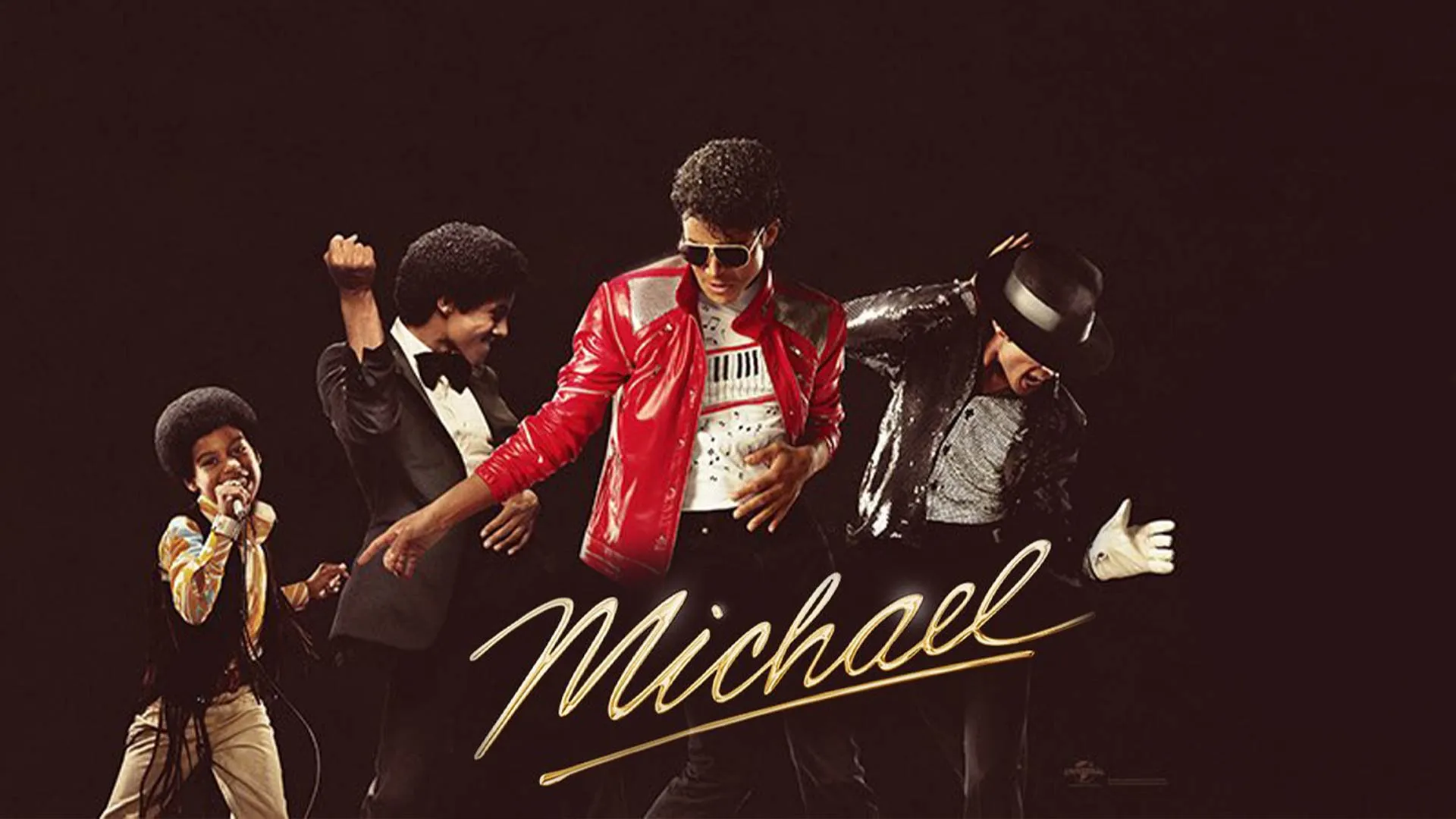
Antoine Fuqua’s newest biopic, Michael, attempts to trace the rise of Michael Jackson from a hopeful child in Gary, Indiana to a global superstar. Backed by the Jackson estate, the film promises an intimate look at the legend, yet it inevitably drifts between reverent adulation and restrained pity. The result is a visually sleek production that often feels more a tribute than a true character study.
Story
The narrative covers the first 26 years of Jackson’s life, compressing the era of the Jackson 5, his early solo breakthroughs, and the formation of the Neverland myth. By design, the screenplay written by John Logan sidesteps the most controversial chapters—legal battles, allegations of abuse, and the dark shadows that haunted his later years. Instead, the story leans on familiar anecdotes: a young Michael leafing through Peter Pan books, dreaming of a real Neverland, and navigating an intimidating relationship with his father, Joseph.
These choices create a tidy, almost nostalgic arc that positions Joseph as the sole antagonist, while Michael is presented as an eternally child‑like genius. The pacing, however, suffers from the need to fit three decades of history into a 125‑minute runtime. Major events are often abbreviated into rapid montages, flattening emotional nuance and leaving the audience craving deeper insight.
Performances
Jafaar Jackson, the son of Jermaine Jackson, makes his feature‑film debut in the title role. Despite the impossible task of stepping into his uncle’s legendary shoes, Jafaar delivers a commendable performance. He captures Michael’s shy vulnerability in quiet moments and conveys the fierce drive that propelled the artist’s career.
Supporting roles are modest but effective. Rhyan Hill as Tito briefly stands out when he dons a glittering “TITO” hat—an odd nod to the family’s brand awareness. Colman Domingo, playing Joseph Jackson, is the film’s most fully realized character. His portrayal balances ambition with menace, giving the “villain” a surprising layer of humanity.
Unfortunately, the script offers limited material for the cast to explore. Dialogue is often expository, and the film’s legal constraints prevent any substantial grappling with the darker side of Michael’s story, leaving performers to work within a sanitized framework.
Behind the Lens
Fuqua’s direction leans heavily on glossy cinematography, vibrant set pieces, and meticulously choreographed dance sequences that echo Michael’s iconic style. The production design excels at recreating 1970s performance venues and the early‑80s studio atmosphere, while the soundscape teems with the original recordings of “Thriller,” “Billie Jean,” and “Bad.”
Because the Jackson estate financed the project, the film enjoys unfettered access to rare archival footage and master recordings, enriching the viewing experience for fans who can separate the music from the man. However, this same involvement limits the filmmakers’ ability to address the more contentious aspects of Jackson’s life, resulting in a narrative that feels intentionally filtered.
Final Verdict
Michael is a visually impressive, musically rich tribute that delivers solid performances, particularly from Jafaar Jackson and Colman Domingo. Yet its refusal to engage with the complexities that shadowed Michael Jackson’s legacy leaves the portrait feeling incomplete and, at times, dull. For casual viewers seeking a nostalgic ride through the pop icon’s early triumphs, the film will satisfy. For those hoping for a nuanced, balanced biography, the glossy veneer may prove too restraining.
Bottom line: a well‑crafted homage, but one that sacrifices depth for reverence.
Also Read:
A Glimpse into the Life of a Legend: The New Trailer of “Michael” Unveiled
King of Pop Reborn: Jaafar Jackson Leads “Michael” Biopic
Michael Jackson Biopic ‘Michael’ Breaks Trailer Record: Everything We Know
Paris Jackson has zero per cent involvement in Michael Jackson biopic “Michael”