

In a media landscape saturated with polished war dramas, Birds of War stands out as a raw, unflinching documentary that redefines what a love saga can look like. Spanning more than a decade of the Syrian conflict, the film chronicles the evolving relationship between a BBC reporter based in London and a Syrian activist on the front lines—all mediated through the tiny screens of their mobile devices.
Setting the Scene
The narrative unfolds over thirteen years of the Syrian Civil War, a period marked by relentless bombardment, displacement, and digital communication. The documentary opens with a series of voice notes, text messages, and shaky video clips that capture the everyday reality of life under siege. By grounding the story in these intimate, low‑resolution exchanges, the filmmakers immediately immerse viewers in a world where personal connection is both fragile and vital.
A Relationship Forged Across Borders
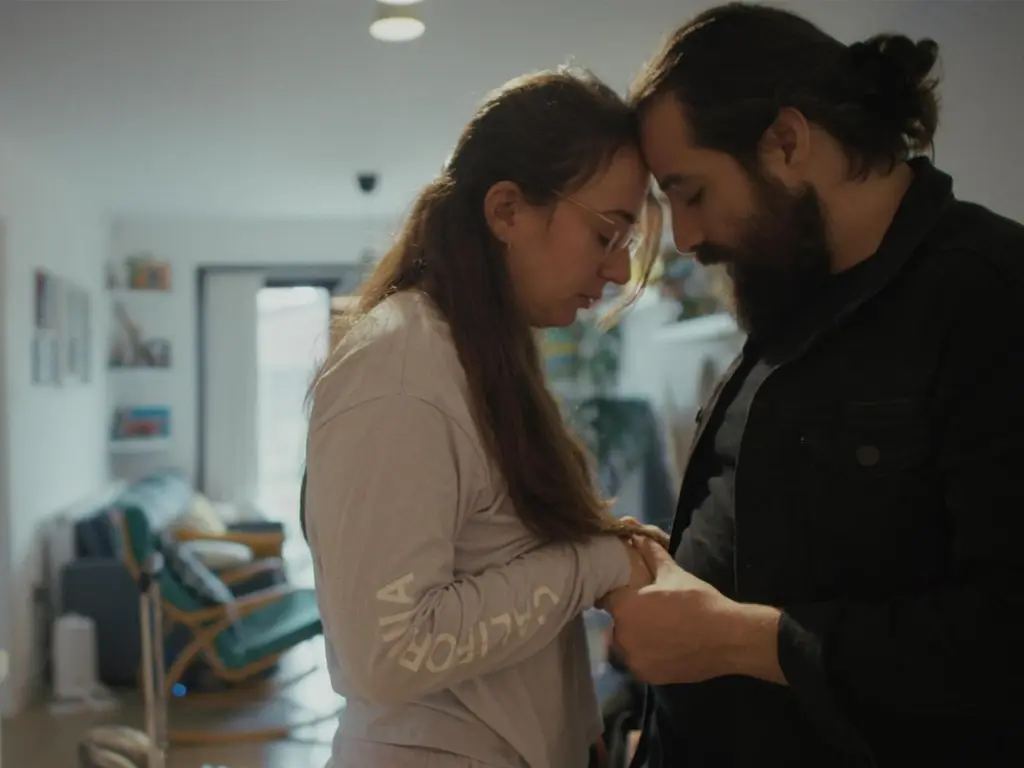
Janay Boulos, a Lebanese‑born journalist working for the BBC, first contacts Abd Alkader Habak, a Syrian frontline activist, seeking on‑the‑ground reports. What begins as a strictly professional exchange soon blossoms into a profound emotional bond. Despite never sharing a physical space, the two develop a partnership that challenges cultural and political expectations. Their romance is forced to remain hidden—Boulos conceals the relationship from her family due to the controversy surrounding a union between citizens of historically antagonistic nations.
The film meticulously documents how the pair navigates love amid constant danger. Habak risks his safety to send compelling footage of regime attacks, while Boulos, stationed in the relative safety of the United Kingdom, grapples with survivor’s guilt and anxiety. Each unanswered message, dropped call, or distant explosion reverberates through their conversations, turning the phone into both a lifeline and a source of emotional turbulence.
Visual Aesthetics and Cinematic Approach
Rather than employing conventional cinematic polish, Birds of War embraces a lo‑fi, fragmented visual style. The directors deliberately utilize smartphone‑generated footage—complete with pixelation, shaky framing, and spotty audio—to craft a narrative that mirrors the immediacy of digital communication. This aesthetic choice becomes the documentary’s signature, reinforcing the notion that intimacy can thrive even in imperfect, glitch‑laden formats.
The raw visual texture does not detract from the storytelling; instead, it amplifies the authenticity of the characters’ experiences. By refusing to smooth out the rough edges, the film underscores the reality that love in a war zone is often messy, unpredictable, and relentlessly human.
Emotional Weight and Themes
At its core, Birds of War explores the paradox of physical safety versus psychological captivity. Boulos’s home in the UK becomes a gilded cage: while she is far from the front‑line bombs, her mind is perpetually occupied by fear for Habak’s wellbeing. The documentary powerfully illustrates how digital proximity can feel as tangible as a shared room, yet also how virtual closeness cannot fully replace physical presence.
The film also serves as a commentary on modern resistance. In an era where technology mediates activism, the simple act of maintaining a loving relationship across conflict zones becomes an act of defiance. The film invites viewers to reconsider the meaning of heroism, suggesting that love—sustained through relentless communication—can be a radical form of protest against oppression.
Final Verdict
Birds of War is not a conventional love story, and it does not pretend to be. Viewers must bring patience, as the narrative builds gradually through sporadic, real‑time exchanges. However, this deliberate pacing rewards the audience with a deeply moving portrayal of a romance that defies geography, politics, and even the limits of technology.
For those interested in documentaries that blend personal narrative with broader sociopolitical commentary, Birds of War offers an eye‑opening perspective on the Syrian conflict and the transformative power of digital intimacy. It is a testament to the resilience of the human spirit and a reminder that love can flourish in the most unlikely of places—right there, on a phone screen.