

There is something uniquely satisfying about stumbling upon a television series that genuinely understands the assignment. Netflix’s adaptation of A Good Girl’s Guide to Murder first captivated audiences with its tight six-episode format, delivering a nail-biting thriller that felt refreshingly different from the glut of mediocrity that has plagued streaming platforms in recent years. The series, led by Emma Myers—perhaps best known for her role in Wednesday—proved that compelling storytelling doesn’t require padding out content to fill endless seasons.
Now, the sophomore installment arrives with Pippa Fitz-Amobi stepping back into the spotlight, this time launching a podcast that serves as both narrative device and love letter to the source material. There’s an almost Inception-like quality to watching these fictional pages come to life on screen, characters Springing forth from print into our living rooms with surprising fidelity. The first season sparked something in viewers—a reminder that when a show respects its audience’s intelligence, the rewards are immeasurable.
After wading through countless forgettable productions that seem designed merely to occupy our attention while we multitask, A Good Girl’s Guide to Murder Season 2 arrives like a breath of fresh air. It rekindles that excitement about storytelling, the kind that makes you feel genuinely engaged rather than passively entertained.
Synopsis
The second season of A Good Girl’s Guide to Murder picks up where its predecessor left off, weaving together two compelling narrative threads that demand the viewer’s full attention. The primary storyline centers on Max Hastings’s trial, approached not only through the conventional lens of courtroom drama but also through Pippa’s investigative lens and that of her close-knit group of friends. Simultaneously, a new missing person case emerges, threatening to upend everything our protagonist thought she understood about her previous investigation.
The beauty of this season lies in its refusal to let previous knowledge render the viewing experience redundant. While attentive fans will immediately recognize connections between the old case and the new, the show masterfully plants enough seeds of doubt to keep even the most astute viewers guessing. Are these mysteries truly connected, or is Parellel coincidence at play? Who exactly remains above suspicion, and have we misjudged certain characters based on season one revelations? These questions pulse beneath every scene, driving the narrative forward with relentless momentum.
True to its predecessor, this season maintains the same economical storytelling approach—six episodes spanning approximately forty-five to fifty minutes each. The episodes are perfectly digestible, packed with substance yet never overstaying their welcome. They demand to be consumed in one sitting, the kind of television that renders the remote control obsolete because pausing simply isn’t an option when the mystery reaches its crescendo.
The show does require some familiarity with season one. While the narrative provides enough context for newcomers, those who have allowed the intervening months to blur their memory would benefit from a refresher watch or at least a comprehensive recap. Understanding the web of relationships, past revelations, and character motivations significantly enhances the experience of the second season’s layered storytelling.
Performances
If A Good Girl’s Guide to Murder Season 2 succeeds—and make no mistake, it does succeed admirably—the credit belongs predominantly to the performance anchoring the series. Emma Myers returns as Pippa Fitz-Amobi, and her portrayal remains the gravitational force that keeps the entire production grounded despite its more outlandish investigative escapades. Pippa is, by conventional standards, a disaster waiting to happen. She is reckless, sometimes foolish, and possesses an almost supernatural ability to attract trouble. Yet Myers imbues her with such earnest charm and genuine warmth that viewers cannot help but root for her success, even when her methods seem questionable.
The joy of watching Pippa operate lies in her relatability. She is not a polished detective archetype but rather a teenager thrust into circumstances far beyond her years, doing her best with imperfect information and limited resources. Her enthusiasm is infectious, her dedication commendable, and her occasional missteps humanizing rather than frustrating. As viewers, we find ourselves genuinely invested in solving the mystery alongside her, testing our own sleuthing skills against hers and debating character motivations between episodes.
The supporting cast deserves equal praise, particularly the chemistry between Pippa and Ravi, her investigative partner and romantic interest. Their relationship represents a refreshing departure from typical television romantic dynamics. Rather than manufactured drama built on misunderstandings and communication breakdowns, their bond feels authentic and mature. A particular moment where Ravi insists on sharing the burden of protection—rejecting the conventional “I am the protector, you are the protected” trope—stands out as genuinely touching. When conflicts arise, they communicate. When Pippa spirals into obsessive investigation, Ravi offers support without judgment. It is the kind of healthy relationship portrayal that feels sadly rare in teen dramas.
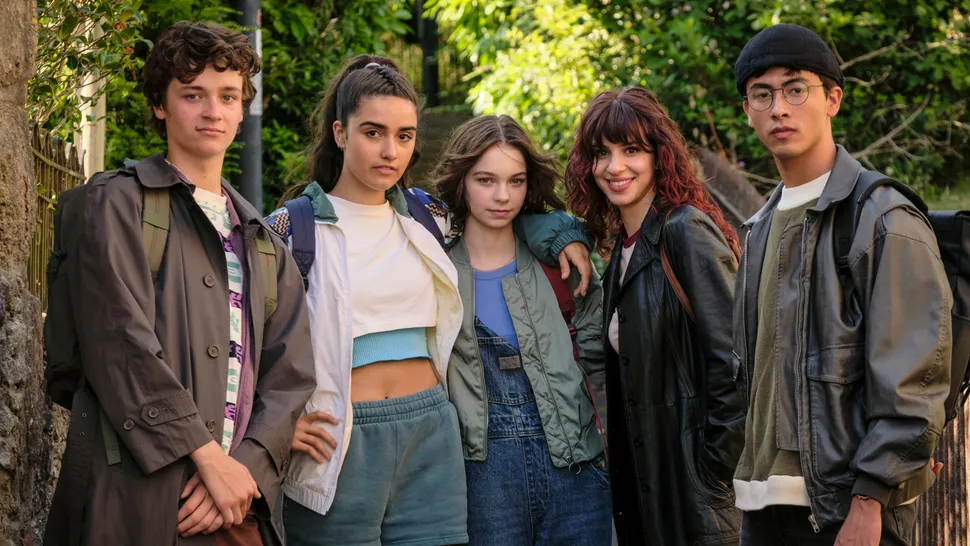
The ensemble extends beyond the central duo to include Pippa’s broader friend group, whose stability is tested throughout the season. Their friendships carry the emotional weight of the series, reminding viewers of how profoundly friendships matter during adolescence. Small conflicts feel apocalyptic; minor betrayals wound deeply. The show captures this intensity perfectly, making us recall our own teenage friendships and their outsized emotional significance.
Behind the Lens
The production values of A Good Girl’s Guide to Murder Season 2 demonstrate how far British television has come in its visual storytelling capabilities. Some critics have described the aesthetic as almost overwhelmingly vibrant—bright where noir mysteries traditionally dwell in shadow, colorful where the genre typically embraces muted palettes. This deliberate visual choices works surprisingly well, creating an aesthetic that mirrors Pippa’s own personality: curious, energetic, and impossible to ignore.
The cinematography complements the narrative rather than distracting from it. Close-ups capture micro-expressions that hint at deception, while wider shots establish the claustrophobic small-town atmosphere that makes everyone a suspect. The visual language speaks clearly to audiences familiar with the thriller genre while remaining accessible to newcomers.
Direction handles the dual mystery structure with impressive dexterity, never allowing either storyline to overshadow the other. Transitions between past revelations and present investigations feel organic rather than jarring, a technical accomplishment that prevents viewer confusion while maintaining suspense. The showrunner clearly understands that momentum matters in mystery narratives, and the pacing never stalls long enough for skepticism to creep in.
The podcast element introduced this season serves multiple purposes beyond plot convenience. It Meta-commentary on true crime culture while simultaneously providing a narrative device that allows Pippa to synthesize her thoughts for the audience. The meta-textual nature of this approach adds depth without pretension, inviting viewers to consider their own consumption of murder mysteries and the ethics therein.
Final Verdict
A Good Girl’s Guide to Murder Season 2 succeeds not by reinventing the wheel but by executing a familiar formula with exceptional skill. The mystery elements, while perhaps slightly more transparent than the first season’s reveals, still deliver genuine surprise and satisfaction. Character motivations remain complex enough to sustain interest, even when certain villain archetypes prove somewhat predictable upon introduction.
The relationship dynamics continue to be the series’ strongest element, specifically Pippa and Ravi’s partnership and the broader friend group tensions. These human elements elevate the mystery beyond pure plot mechanics, creating investment that transcends the whodunit aspect. We care about these characters, which makes every revelation matter on an emotional level rather than merely intellectual one.
The show leaves some threads unexplored by season’s end, though this hardly constitutes a failure. The central mysteries receive satisfying resolutions, preventing the frustration of dangling plotlines. Any sequel-bait feels earned rather than manipulative, a delicate balance that many streaming series fail to achieve. The brief appearances from Pippa’s parents, while limited by runtime constraints, leave lasting impressions, their well-defined roles hinting at richer family dynamics that deserve future exploration.
Minor grievances—particularly the cliffhanger designed to drive viewership into future seasons—feel inconsequential given everything the season delivers. A Good Girl’s Guide to Murder Season 2 stands as one of the more brightly lit, genuinely entertaining British productions available on streaming platforms. It captures the energy of teenage obsession with crime fiction, inviting viewers to recapture that magical time when solving mysteries seemed possible and the stakes felt genuinely life-altering.
For those wondering whether this series justifies the investment of six episodes, the answer is an unequivocal yes. A Good Girl’s Guide to Murder Season 2 premieres May 27, 2026, on Netflix across most territories, with simultaneous availability on BBC Three and BBC iPlayer for United Kingdom and Ireland audiences, and on ZDFneo for German viewers. Some shows simply understand what audiences want, and this adaptation continues to prove it belongs in that rare category.