

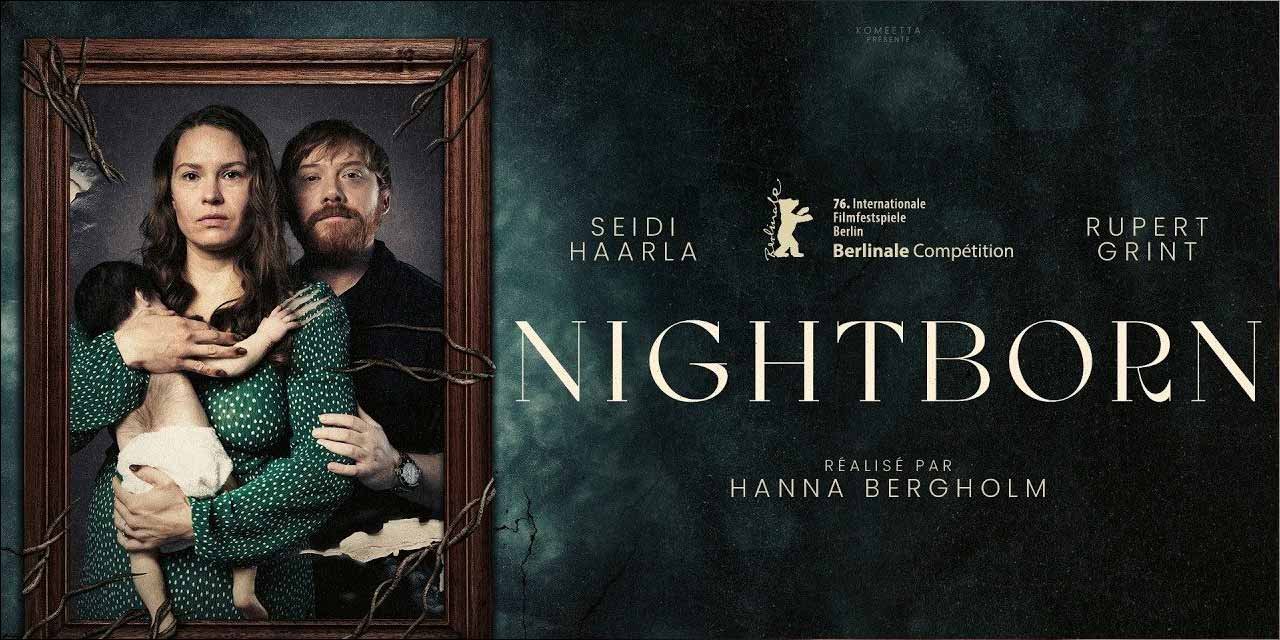
Shudder’s recent push to flood its library with original exclusives has reinvigorated horror streaming, and Nightborn is the newest title riding that wave. Directed by Hanna Bergholm—who also co‑wrote the film with Ilja Rautsi—the movie arrives from the same creative team that delivered Hatching (2022). After a lull in releases that left the service feeling sparse, Shudder now promises a steadier flow of fresh genre fare, even if the quality occasionally wavers. Nightborn lands squarely in the middle of that spectrum: it shows promise, boasts strong visuals and performances, yet never quite reaches the razor‑sharp impact of its predecessor.
Synopsis
When Saga (Seidi Haarla) and Jon (Rupert Grint) retreat to an isolated woodland cabin to start their family, they anticipate the usual joys and challenges of parenthood. Their first child, however, arrives with unsettling abilities that defy infant norms—holding his head up within days, sitting upright almost immediately, and developing a disturbing craving for blood. As the baby’s strange behavior escalates, Saga’s grasp on reality frays while Jon clings to denial, preferring to question her sanity rather than confront the impossible. The film uses this uncanny newborn as a metaphor for the pressures and hidden terrors of motherhood, setting a tense, atmospheric stage for a horror story that leans heavily on its central concept.
Performances
Seidi Haarla delivers a compelling portrayal of a mother teetering on the edge, capturing the slow erosion of confidence and the fierce protectiveness that curdles into fear. Rupert Grint, known for his comedic roots, brings a grounded, almost weary presence as Jon; his reluctance to acknowledge the horror unfolding before him adds a layer of frustrating realism to the dynamic.
The supporting cast, though limited, provides adequate texture to the isolated setting, allowing the leads to carry the emotional weight. Haarla’s physicality—especially in scenes where she confronts the baby’s unnatural strength—stands out as a highlight, making the audience feel her mounting dread viscerally.
Behind the Lens
Hanna Bergholm’s direction continues to showcase her knack for blending bodily horror with intimate drama. The cinematography leans on the stark, muted palette of the forest, turning the cabin’s claustrophobic interiors into a visual extension of Saga’s tightening psyche. Practical effects shine when depicting the baby’s feats—subtle makeup work and clever camera tricks make the infant’s impossible feats feel unsettlingly real without resorting to gratuitous CGI.
The score, sparse and echoing, amplifies moments of quiet tension before erupting into sharp, jarring cues during the baby’s more violent outbursts. While the film’s technical execution is polished, the narrative occasionally feels thin; the reliance on a single, central gimmick leaves little room for secondary plotlines that could have deepened the thematic exploration.
Final Verdict
Nightborn is a well‑crafted horror entry that succeeds in delivering a creepy premise and strong lead performances, yet it falls short of the inventive spark that made Hatching a standout. The film’s greatest strength lies in its atmospheric direction and Haarla’s haunting turn as a mother confronting an unnatural offspring. However, the story leans heavily on its core idea, offering few variations or supplementary arcs to sustain momentum across its runtime. Consequently, viewers may find the experience engaging but somewhat repetitive, wishing for a deeper dive into the psychological ramifications or a broader narrative canvas.
If you’re already a Shudder subscriber, Nightborn warrants a watch—especially for fans of Bergholm’s style or those intrigued by horror that uses motherhood as a metaphorical conduit. Approach it with tempered expectations: it’s a solid, middle‑of‑the‑road offering that adds value to the platform’s growing catalog without reinventing the wheel.