

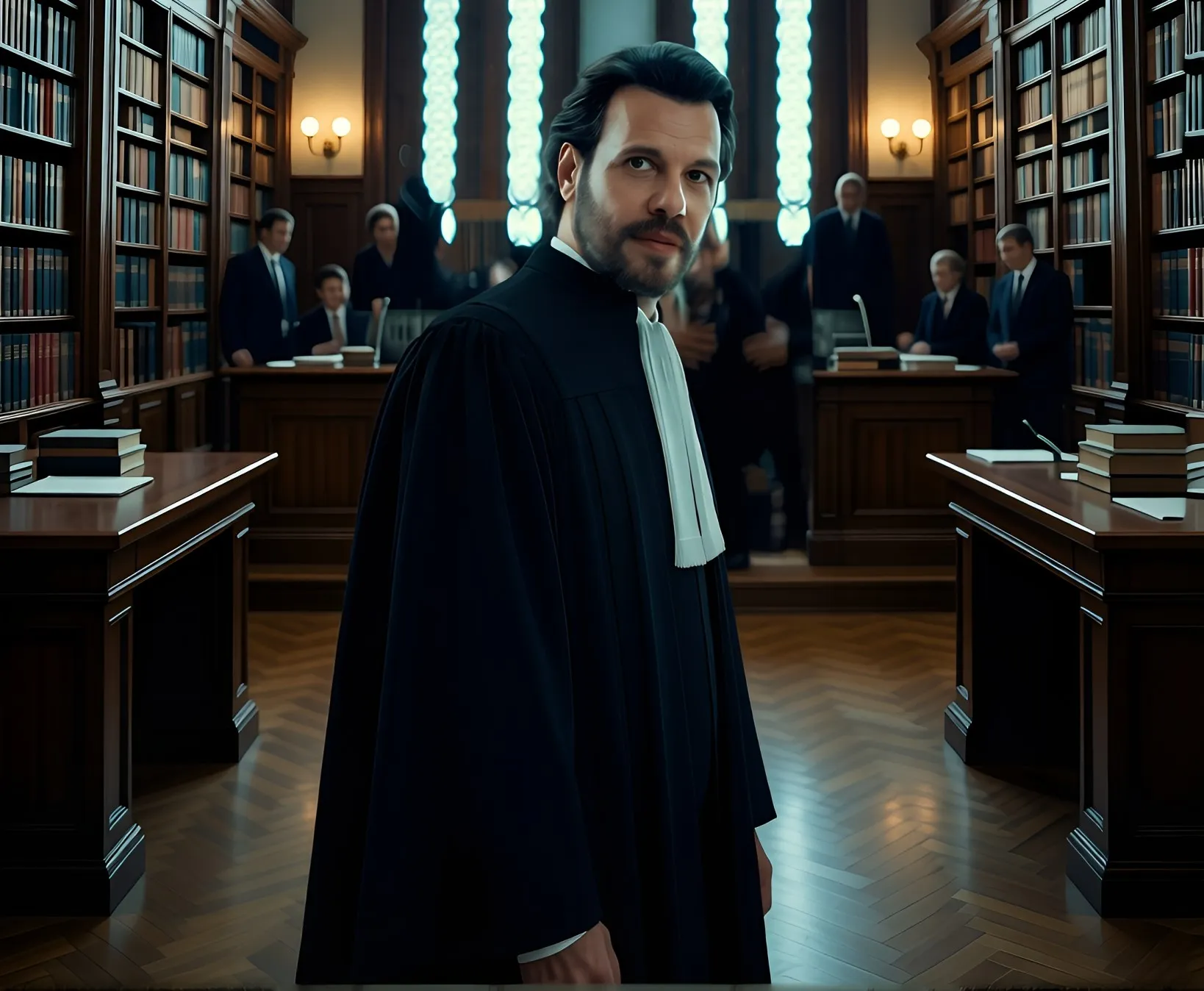
When a high-profile criminal attorney suffers a public medical emergency triggered by substance abuse in the middle of a trial, his entire career—and his reputation—teeters on the brink of collapse. This is the starting point for The Good Lawyer, a tense French legal thriller headed to Netflix. Directed by Tristan Séguéla, this film marks another compelling collaboration between the director and lead actor Laurent Lafitte, following their successful partnership on the acclaimed series Class Act.
Synopsis
Léonard Landry is a brilliant, flamboyant defense attorney whose life is defined by a dangerous double existence. After a shocking public breakdown due to a narcotics addiction, Landry returns from rehabilitation with only seven days to salvage his profession and prepare for his own impending legal battle. To make matters even more complicated, he is simultaneously tasked with the most significant case of his life: defending a massive industrial conglomerate accused of complicity in international terrorism. With no room for error and his sobriety under constant threat, he finds an unlikely ally in Noé, a tenacious and reluctant legal intern. As the clock ticks down, the film evolves into a desperate sprint through complex legal maneuvers and personal temptation.
Performances
Laurent Lafitte delivers a masterclass in vulnerability and arrogance, portraying a man who is as skilled at deceiving a jury as he is at lying to himself. His transition from the powerhouse lawyer seen in Class Act to a crumbling addict is profound. Opposite him, Anthony Bajon serves as the film’s moral compass. Having previously garnered critical acclaim for his performance as a recovering addict in The Prayer, Bajon flips the script here, playing the sober, grounded support system in a volatile environment. The cast is further elevated by the presence of Mélanie Laurent and Carole Bouquet, both of whom bring an added layer of prestige and mystery to the proceedings.
Behind the Lens
Director Tristan Séguéla crafts a narrative that draws inspiration from the somber tone of classic cinema, specifically citing the influence of the 1963 film The Fire Within. He treats the legal environment not just as a setting for procedures, but as a crucible for character development. By filming with a focus on the psychological “cliffhanger” of daily sobriety, the production team—including cinematographers and editors—has managed to create a film that feels less like a sterile courtroom drama and more like a visceral, high-stakes race. The project, produced by Iconoclast, was given a distinct spotlight at the Venice International Film Festival before its streaming release, signaling Netflix’s confidence in its artistic quality.
Final Verdict
The Good Lawyer succeeds because it subverts the traditional tropes of the genre. Instead of focusing solely on the “whodunit” or the technicalities of the case, it forces the audience to question if a man can ever truly trust his own judgment when his personal life is in shambles. The title itself serves as a clever bit of irony, leaving the viewer to wonder if the “good lawyer” is the disgraced veteran or the newcomer tasked with keeping him upright. It is a taut, expertly acted, and thematically rich film that stands out in the current landscape of international streaming content.