

When Netflix dropped Voicemails for Isabelle on June 19, 2026, the premise sounded like yet another recycled rom-com trope—a grieving woman leaving voicemails to her deceased sister, accidentally reaching a stranger who falls in love from afar. If you’re thinking “haven’t we seen this before?” you’re absolutely right. The concept tread familiar ground that romantic comedies have explored countless times. However, what initially appears to be formulaic entertainment quickly reveals itself as a surprisingly emotional and well-acted character study that earns its emotional moments.
This Voicemails for Isabelle review explores how writer-director Leah McKendrick transforms potentially tired material into something genuinely touching, anchored by breakout performances and sharp writing that balances humor with heartfelt drama.
Synopsis
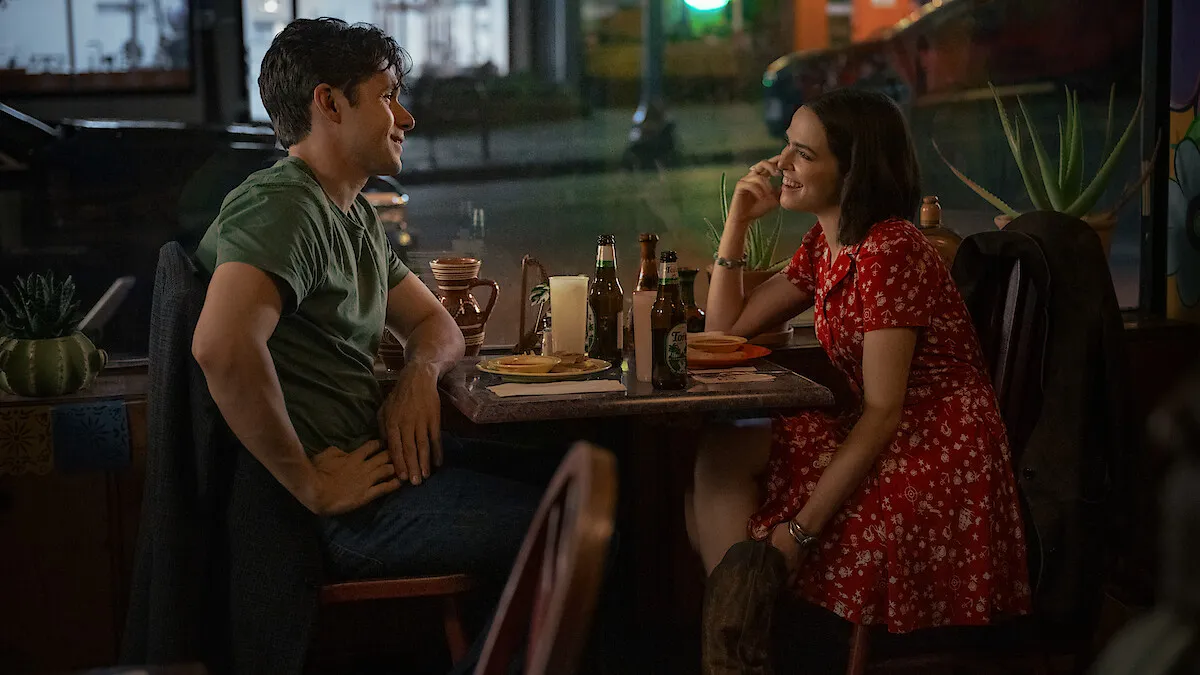
Voicemails for Isabelle follows Jill (Zoey Deutch), an aspiring chef still reeling from the loss of her sister Isabelle (Ciara Bravo), who died from cancer in her early twenties. In her grief, Jill continues leaving heartfelt voicemails on her sister’s old phone number—a coping mechanism that has become her emotional lifeline. What she doesn’t know is that the number has been reassigned to Wes (Nick Robinson), a handsome real estate agent in Texas who listens to these raw, confessional messages with growing fascination. As Jill pours her heart out about her chaotic dating life, career struggles, and deepest fears, Wes finds himself falling for this vulnerable stranger through her voicemails alone.
The story unfolds through flashbacks to the sisters’ childhood, showing the unbreakable bond they shared, including their special song “Dancing On My Own” by Robyn. When Wes finally decides to track down Jill in San Francisco after some light social media investigation, he faces a moral dilemma: reveal the truth about how he knows so much about her, or continue the deception that could ruin everything.
Performances
The casting proves absolutely perfect for this material, and our Voicemails for Isabelle review highlights the exceptional work from the lead actors. Zoey Deutch delivers a career-defining performance as Jill, capturing the character’s vulnerability, messiness, and resilience with remarkable authenticity. Her no-filter approach brings radiance to every scene, whether she’s ranting about terrible dates or navigating the competitive world of professional cooking under the watchful eye of a sexist chef played by Nick Offerman in an amusingly exaggerated role.
Nick Robinson brings genuine charm and conflicted depth to Wes, making the character’s morally questionable choices somehow feel harmless and well-meaning. The supporting cast including Lukas Gage as a self-absorbed cooking rival, Toby Sandeman as a deceptive podcast host, and Harry Shum Jr. adds layer to the ensemble. Young actors Alice Comer and Iris Everly are particularly effective in flashback sequences portraying the sisters as children, establishing the emotional foundation that makes the later tragedy hit hard. The chemistry between Deutch and Robinson creates winning moments that elevate familiar plot points into something more meaningful.
Behind the Lens
Leah McKendrick proves she’s a rising filmmaker to watch with this sophomore feature, having previously starred in and directed Scrambled about freezing eggs while navigating the dating scene. Her directorial vision brings the same grounded messiness to Jill’s character while knowing precisely when to play scenes for absurdist comedy versus emotional resonance.
The script intelligently explores themes of vicarious living through loved ones, dark humor as a coping mechanism, and how grief transforms relationships. The decision to establish the sisterhood bond before introducing the romantic angle proves strategically brilliant—viewers become emotionally invested in Jill and Isabelle’s relationship first, making Isabelle’s absence feel genuinely devastating.
The film addresses how terminally ill individuals often live vicariously through healthy siblings, and how dark humor helps people survive another miserable day. McKendrick avoids making the tearjerker moments feel cheap by ensuring they come from an earned place of honesty rather than emotional manipulation. The production handles sensitive topics with care while maintaining entertainment value, creating a delicate balance that works surprisingly well.
Final Verdict
Voicemails for Isabelle exceeds expectations at every turn, transforming a potentially tired premise into something fresh and emotionally satisfying. While some plot developments feel predictable and the two-hour runtime stretches occasionally, the journey remains engaging thanks to outstanding performances and genuine emotional stakes.
The film delivers a powerful message about self-love and personal growth before romantic connection, ending in a way that perfectly matches its opening emotional thrust. This Netflix original proves that familiar concepts can still work beautifully when executed with heart, honesty, and talented performers who elevate the material.
For audiences seeking a romantic comedy with genuine depth, this film delivers both laughs and tears in equal measure. Voicemails for Isabelle stands as one of Netflix’s most surprising and rewarding releases this year—proof that sometimes giving a film a chance reveals hidden gems that challenge initial skepticism.