

The new film The Death of Robin Hood throws audiences straight into a storm of bleak visuals and unflinching violence before offering a surprising sanctuary of calm. Directed by Michael Sarnoski, this retelling reshapes the legendary outlaw into a character who must confront both the aftermath of his brutal past and the possibility of redemption. By weaving stark, grim dark aesthetics with moments of delicate human connection, Sarnoski crafts a piece that feels both contemporary and timeless, ultimately asking what value stories hold for each generation.
Synopsis
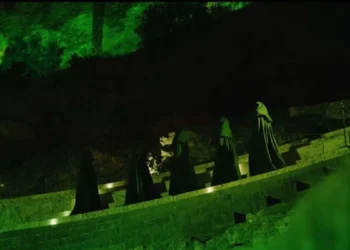
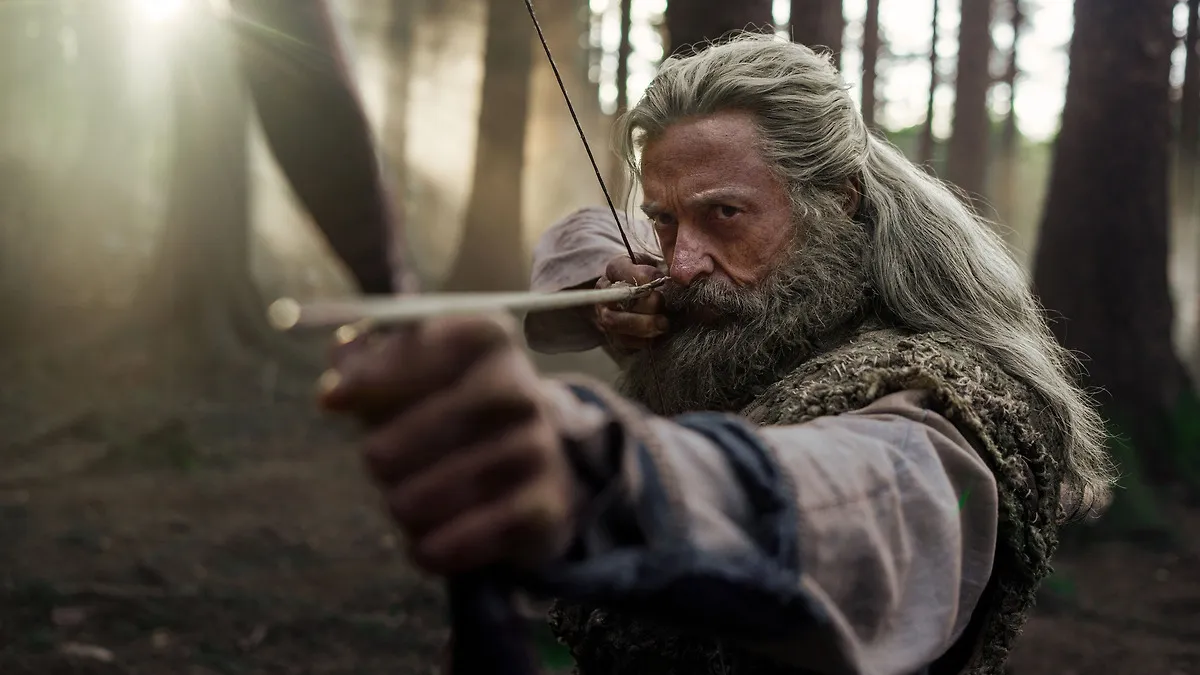
The narrative opens with a sequence that spares no graphic detail: two youths and an innocent woman are slain on screen within the first quarter‑hour, establishing the film’s relentless tone. The story then follows Robin (Hugh Jackman) and his companion Little John (Bill Skarsgård) as they traverse the mist‑shrouded mountains of Northern Ireland, their journey illuminated only by flickering flames and the occasional burst of distant light.
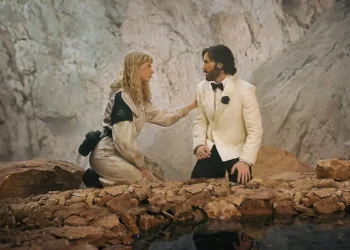
During a ferocious battle, Robin sustains severe injuries and is whisked away to a remote priory perched on a modest island. There, Sister Brigid (Jodie Comer) tends to his wounds, offering a place of healing that welcomes all, regardless of past sins. As Robin recovers, the setting shifts from oppressive fog to sun‑dappled seas and vibrant foliage, visually emphasizing his transition from darkness to tentative hope.
The plot deepens when a young girl, Little Margaret (Faith Delaney), arrives at the sanctuary after witnessing violence. She withdraws into herself, refusing food and sleep, and Robin steps into a protective role, coaxing her back to normalcy through gentle encouragement and shared meals. The film later grapples with the question of narrative power, debating whether stories inspire compassion or fuel cruelty, before concluding with a resolution that both affirms and subverts expectations.
Performances
Hugh Jackman delivers a commanding yet haunted portrayal of Robin, capturing the weight of a lifetime spent in conflict. His physical presence conveys both the ferocity of a battle‑hardened fighter and the vulnerability of a man seeking absolution. Opposite him, Jodie Comer brings quiet strength to Sister Brigid, imbuing the character with compassion that feels unconditional.
Bill Skarsgård’s interpretation of Little John offers a towering, somewhat feral energy, while Murray Bartlett provides a nuanced turn as the leper who assists Brigid, adding layers of humanity to the priory’s inhabitants. Noah Jupe appears in brief but pivotal scenes, delivering a performance that underscores the film’s thematic focus on generational storytelling. The ensemble’s chemistry ensures that the film’s tonal swings feel earned rather than jarring.
Behind the Lens
Michael Sarnoski’s direction is bold, deliberately immersing viewers in murky lighting and restricted sightlines that mirror the characters’ internal turmoil. Cinematographer Pat Scola employs a palette of dense grays and stark contrasts, using a burning farmhouse as a dramatic light source that turns smoky air into a canvas of orange hues. This technique not only heightens the visceral impact but also visually punctuates the story’s pivotal turning points.
The score, composed by Jim Ghedi, melds ominous bowed strings with cavernous percussion, creating an atmospheric soundtrack that oscillates between dread and serenity. Ghedi’s debut effort proves unexpectedly powerful, providing an emotional backbone that supports the film’s evolving tone.
Sarnoski’s script cleverly plays with the meta‑concept of myth‑making, allowing Robin to voice skepticism about “lies upon lies” while later championing the redemptive power of narrative. This internal dialogue gives the film a philosophical depth, distinguishing it from a simple action flick.
Final Verdict
The Death of Robin Hood succeeds in delivering a story that is as unflinching as it is tender. Its initial grim dark atmosphere grabs attention, while the subsequent shift toward introspection and humor offers a welcome reprieve. The film’s exploration of storytelling—both its potential for harm and its capacity for healing—adds a layer of complexity that resonates beyond the screen.
Though the finale leans into a somewhat abrupt resolution that may feel slightly forced, the overall execution, strong performances, and evocative technical work make this reimagining a compelling watch for fans of mythic retellings and modern drama alike.