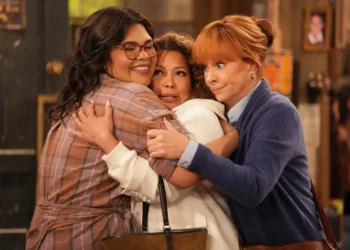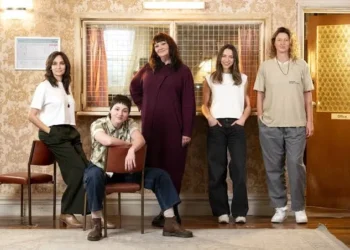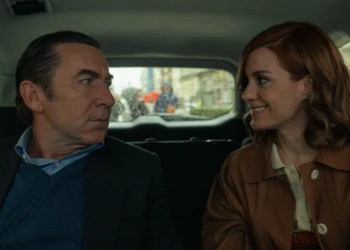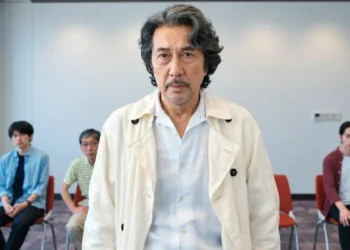


Steven Soderbergh’s latest cinematic endeavor, The Christophers, emerges as a remarkably intelligent and emotionally layered exploration that transcends the boundaries of a simple drama. Working from a sharp, incisive screenplay by Ed Solomon, the acclaimed director delivers what can only be described as an “emotional heist” narrative—one that cleverly examines the tangled relationship between artistic creation, personal identity, and the enduring question of what we leave behind when we’re gone. This film represents a masterclass in character-driven storytelling, anchored by two powerhouse performances that remind audiences why certain performers command the screen with such effortless authority.
From its opening moments, The Christophers signals that it’s operating on a different frequency than the genre exercises that have dominated Soderbergh’s recent filmography. Where his previous works have felt deliberately detached and experimental, this picture pulses with genuine warmth, frustration, and humanity. It’s a film that demands to be felt rather than merely observed, and it succeeds brilliantly on almost every level.
Synopsis
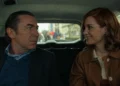
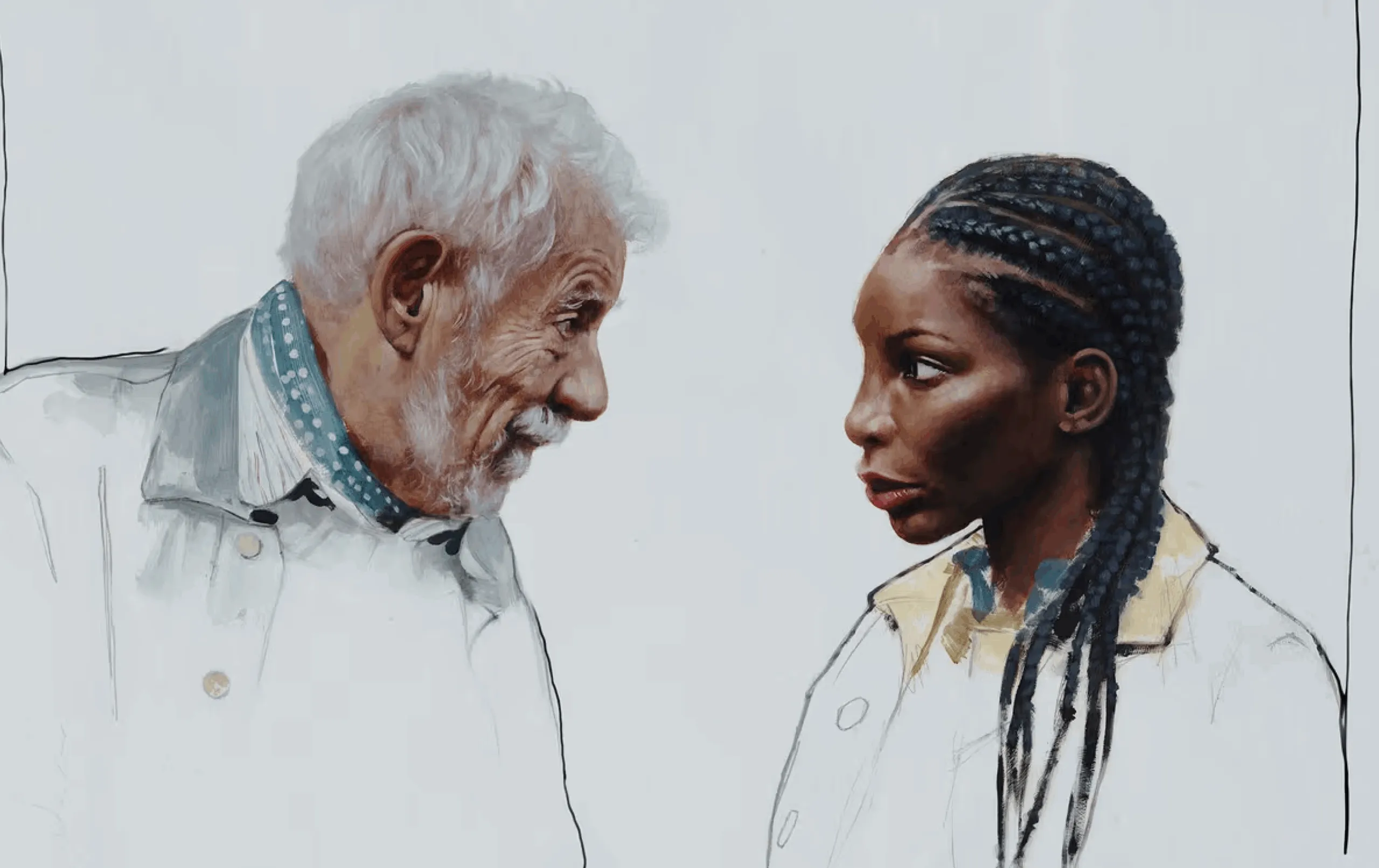
The narrative introduces us to Julian Sklar, portrayed with magnificent grumpiness and wounded pride by Ian McKellen. Once celebrated as one of Britain’s preeminent painters, Julian has faded into comfortable irrelevance, recording Cameo messages for admirers while performing an absent signature gesture—an invisible pen moving through the air to “sign” each personalized video. His magnificent London townhouse serves as both museum and prison, filled with framed clippings from his glory days alongside piled up art supplies and unfinished canvases that whisper of abandoned potential. The commodification of the art world and the cruelties of public rejection have transformed this once-vibrant creative spirit into something bitter and isolated.
Into this carefully constructed world of stagnation arrives Lori Butler, played with mesmerizing control by Michaela Coel. A gifted artist in her own right, Lori has retreated from the public eye, supporting herself through art restoration and, occasionally, the shadowy world of forgery. Her clients have hired her to work as Julian’s assistant, though their true motives remain far more sinister—the siblings hope she’ll create convincing forgeries of their father’s “unfinished” Christophers paintings, allowing them to cash in after his inevitable death.
What follows is a dance of manipulation, unexpected connection, and gradual revelation as these two wounded artists circle each other with caution and growing respect.
Performances
Ian McKellen delivers what might be his most revelatory work in years, disappearing completely into Julian’s curmudgeonly exterior while excavating the profound vulnerability beneath. His portrayal balances theatrical bombast with genuine emotional devastation, particularly in scenes where the character’s past glory collides with his present irrelevance. Every line reading carries weight; every gesture feels lived-in and authentic.
Michaela Coel matches him toe-to-toe with a performance of remarkable restraint and complexity. Lori’s quiet intensity, her careful boundary-setting, and the gradual softening of her professional detachment all feel precisely calibrated. The contrast between these performers—from their costuming (knitwear and corduroy in competing palettes) to their physical vocabulary—creates a visual and emotional friction that drives much of the film’s power.
Unfortunately, the same cannot be said for James Corden and Jessica Gunning, whose turns as Julian’s greedy children border on pantomime villainy. Their cartoonish scheming creates a tonal dissonance that threatens to undermine the grounded work happening elsewhere in the film.
Behind the Lens
Ed Solomon’s screenplay deserves particular praise for its ability to tackle weighty themes—artistic authenticity, the commodification of creativity, intergenerational legacy—without ever becoming didactic or heavy-handed. The dialogue crackles with intelligence while remaining accessible, and the thematic concerns feel genuinely urgent rather than merely academic.
Soderbergh’s direction proves surprisingly tender here, marking a departure from the cooler aesthetic that has characterized much of his recent output. His visual choices—particularly the treatment of Julian’s cluttered, time-capsule home—communicate volumes about memory, loss, and the passage of creative time without requiring explicit explanation.
The irony, of course, is unmistakable. Just as Soderbergh has publicly committed to incorporating substantial AI elements into his future projects, he delivers a film so obviously crafted with deep intentionality, so evidently born from human artistic struggle, that it reads as the most eloquent possible rebuttal to that technological direction. The handmade quality of The Christophers—its imperfections, its emotional specificity, its refusal to smooth over rough edges—stands as evidence of what authentic human creativity can achieve when given space to breathe.
Final Verdict
The Christophers ultimately succeeds as a meditation on artistic legacy and the courage required to remain true to one’s creative vision amid a world that demands conformity and profit. It’s a film that understands art not as product but as process, not as commodity but as communication across time and understanding. While its occasional tonal stumbles prevent it from achieving absolute perfection, the central performances and thematic richness make this an essential watch for anyone who believes in the transformative power of creativity.
The Christophers proves that even seasoned filmmakers can still surprise us—when they choose to lead with their hearts rather than their technological ambitions.
The Christophers released in cinemas on May 15, 2026.