

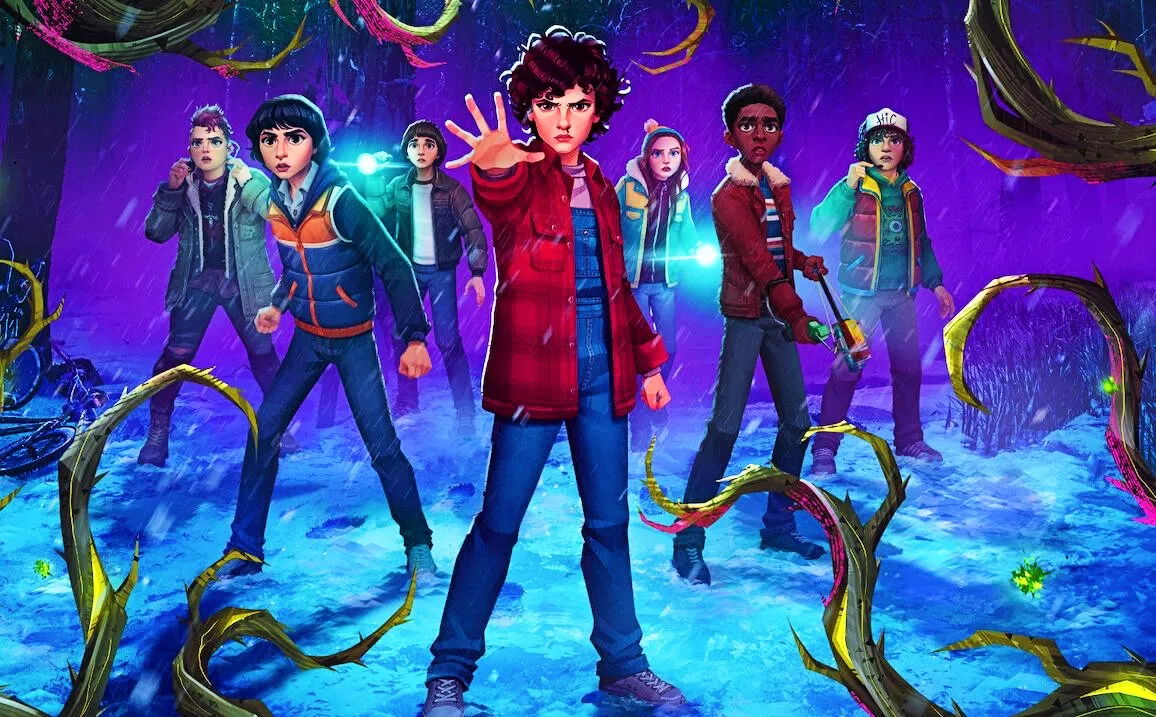
The second installment of Stranger Things: Tales From ’85 pushes the beloved franchise into fully animated territory, allowing the town of Hawkins to bend, glow, and mutate in ways live‑action could never achieve. While the series retains the core timeline that anchors it to the larger Stranger Things mythos, it experiments with visual storytelling, creature design, and a more expressive colour palette. This review explores how the show balances its inventive animation with the constraints of franchise continuity, and whether the result feels like a fresh chapter or a reiteration of familiar beats.
Synopsis
Set in February 1985, the eight‑episode arc follows the Hawkins Investigators Club as their once‑thrilling supernatural hunts have settled into routine. A new arrival, Nikki Baxter, stirs both romantic tension and fresh mysteries, while a lingering disappearance rekindles the club’s sense of danger. Throughout the season, the gang confronts spectral threats tied to local lore, re‑imagined flora from earlier seasons, and a series of visually striking chases that test their camaraderie. The narrative intertwines personal stakes—particularly Nikki’s growing awareness of adult‑level concerns—with the series’ signature blend of nostalgia‑driven adventure and otherworldly intrigue.
Characters
- Dustin Henderson (voiced by Braxton Quinney) – Quinney captures Dustin’s restless enthusiasm, grounding the amateur paranormal club in a believable, eager leader whose curiosity drives the group’s investigations.
- Max Mayfield (voiced by Jolie Hoang‑Rappaport) – Hoang‑Rappaport gives Max a sharper edge, preventing the romantic subplots from becoming overly saccharine while preserving her loyalty to the crew.
- Nikki Baxter – Positioned as the tech‑savvy gadget‑maker, Nikki’s arc evolves from a novelty addition to a steady, trusted member. Her storyline deepens as she grapples with her family’s financial strain, adding a layer of realism that distinguishes her from the established core cast.
- Supporting Cast – The returning voices of Mike, Eleven, Lucas, and Will maintain continuity, delivering performances that echo their live‑action counterparts without slipping into mere imitation.
The ensemble succeeds in translating the spirit of the original actors into the animated format, allowing fans to recognise familiar traits while enjoying the fresh possibilities that voice work in a cartoon medium affords.
Behind the Lens
Flying Bark Productions leverages the freedom of animation to render Hawkins with a surreal, almost painterly quality. Deep orange headlights cut through turquoise and purple backlighting, giving the town a nocturnal glow that feels both nostalgic and otherworldly. Creatures are rendered with graphic confidence—glowing, stretching, and lurching in ways that defy practical‑effect limitations. One notable antagonist moves with a stop‑motion‑inspired jerkiness, instantly signalling its unnatural nature before any exposition explains its threat.
The series also experiments with shifting animation styles episode‑to‑episode, giving each “case‑of‑the‑week” a distinct visual flavour. This approach keeps the aesthetic fresh, though it occasionally clashes with the need to preserve a consistent timeline for the broader franchise. The colour palette itself becomes a narrative tool, with saturated hues underscoring moments of tension and muted tones signalling introspection—especially in Nikki’s financially‑driven scenes.
Voice direction ensures that performances stay true to the source material while embracing the exaggerated expressiveness animation permits. The result is a hybrid that feels both reverent to Stranger Things and bold enough to stand on its own as an animated adventure.
Final Verdict
Stranger Things: Tales From ’85 Season 2 showcases what the franchise can achieve when animation is allowed to lead: imaginative creature design, expressive lighting, and a willingness to let colour and motion convey emotion. The show’s greatest strength lies in Nikki Baxter’s grounded storyline, which ties her personal anxieties to her role as the club’s gadget‑maker, giving her growth genuine weight.
However, the series remains tethered to the established Stranger Things timeline, which limits how much the characters can evolve and forces the plot into a familiar rhythm of chases, confrontations, and quick resolutions. Consequently, the season’s visual inventiveness often outpaces its narrative depth, leaving many promising ideas feeling under‑explored.
For viewers who crave a fresh, stylised take on Hawkins, this animated spin‑off delivers a visually striking experience worth watching. For those hoping for substantial, long‑term character development or a mystery that truly expands the lore, the show’s reliance on franchise continuity may feel restrictive. Ultimately, Stranger Things: Tales From ’85 Season 2 proves that the medium can transform Hawkins, but the story still needs to break free from its own constraints to realise the full potential of its animated form.
Also Read:
New Trailer for “Stranger Things: Tales From ’85” Season 2: Unearthly Blossoms and Holiday Havoc
Netflix Fast-Tracks Season 2 of “Stranger Things: Tales From ’85” Following Solid Debut
“Stranger Things: Tales From ’85” Review: A Frosty, Forgettable Return to Hawkins