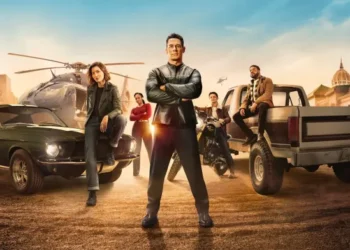


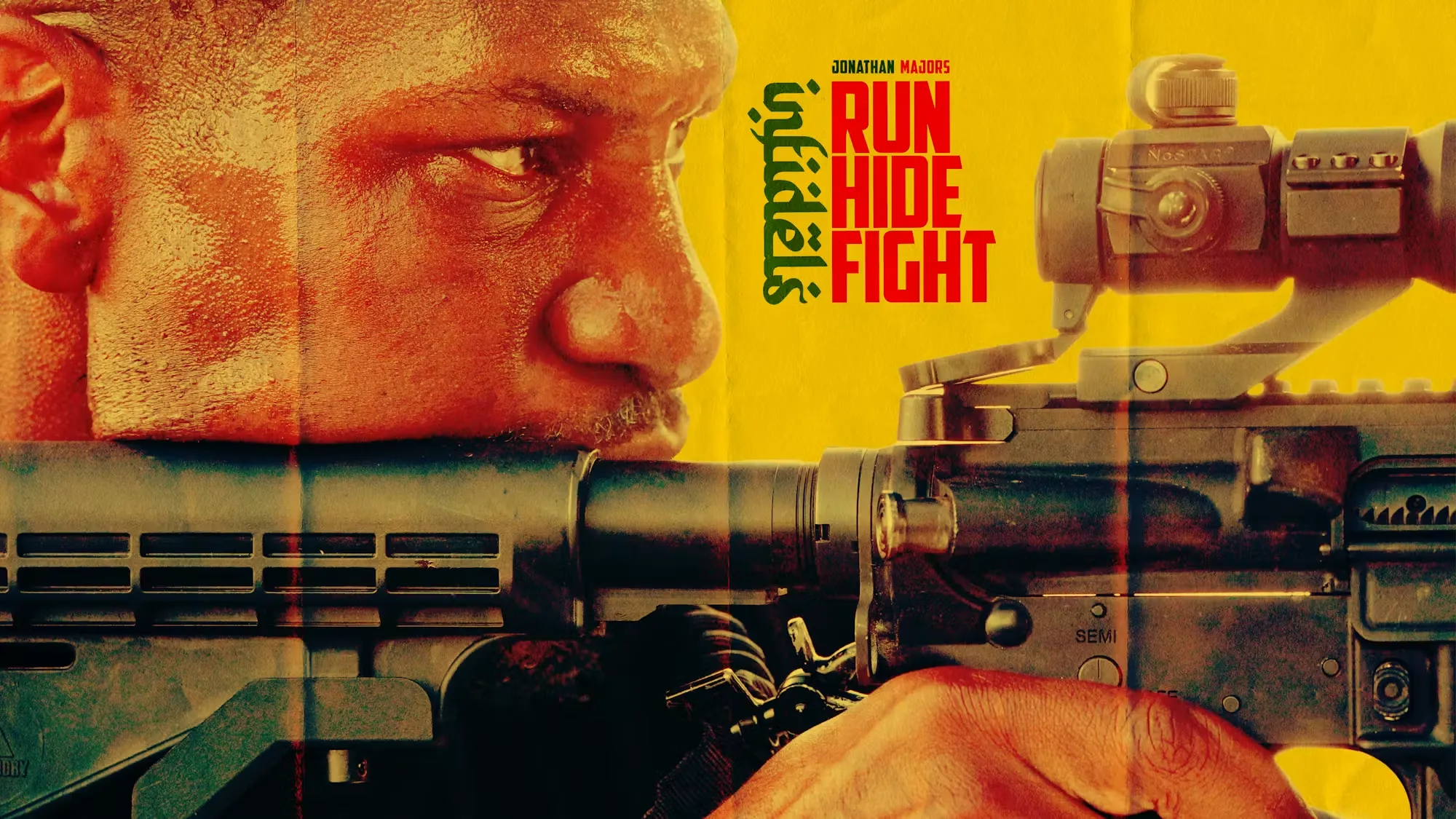
The action‑thriller Run Hide Fight: Infidels debuted on September 16, 2026 and is currently streaming exclusively on The Daily Wire. Directed and written by Kyle Rankin, the film assembles a recognizable ensemble—Jonathan Majors, David Lucas, JC Kilcoyne, Tyler Aser, James Bingham, Savanna Leigh James, Stephen Hailo, and Myles Clohessy—to dramatize a campus siege that pits a rag‑tag group of students and a Delta Force veteran against a jihadist extremist cell. Marketed as a high‑stakes thriller, the film promises claustrophobic corridors, shifting loyalties, and a battle of wits that should keep viewers on edge. Yet, as the review that follows will show, the film’s ambition to foreground a specific worldview often undercuts the very suspense it seeks to generate.
Synopsis
When a radical terrorist faction hijacks Laughton University’s sprawling campus, the protest‑filled quad quickly morphs into a lethal chessboard. A former Delta Force captain, still haunted by a lost comrade, finds himself thrust into the conflict alongside a skeptical student whose father’s legacy looms large. As hostages are taken and ideological speeches echo across the quad, the survivors must navigate narrow dormitory hallways, blind spots created by a lingering carnival, and improvised firing positions to stay alive. The narrative walks the line between personal redemption and collective survival, asking whether conviction can outweigh fear when the walls begin to close in.
Performances
Jonathan Majors delivers a restrained portrayal of Captain Saunders, imbuing the veteran with a quiet gravitas that hints at deeper turmoil, though his limited screen time prevents the character from fully anchoring the emotional core. David Lucas shines as Terrence, the campus security guard whose sardonic one‑liners punctuate tense moments without defusing the danger, providing a much‑needed human pulse amid the ideological monologues.
JC Kilcoyne and Tyler Aser bring earnest energy to the student contingent, while Savanna Leigh James and Stephen Hailo flesh out the protestors with believable fervor. Myles Clohessy’s portrayal of the antagonistic roommate P.J. walks a fine line between comic relief and problematic stereotype; the performance leans into broad caricature, which occasionally undercuts the film’s attempts at moral complexity. Overall, the cast supplies competent work, but the script’s tendency to sermonize leaves several actors searching for substantive material to play against.
Behind the Lens
Kyle Rankin’s direction treats the university layout as a narrative device, attempting to convert architectural spaces into moral shorthand. Darin Moran’s cinematography captures the stark contrast between sun‑lit quad expanses and claustrophobic interior corridors, yet the camera often lingers on expositional speeches rather than exploiting the geography for visceral tension.
Matthew Lorenz’s editing maintains a steady rhythm, but the middle act stalls as the antagonist’s propaganda loops repeat, diluting any building urgency. The score by Mondo Boys oscillates between brooding synth pulses and unexpected needle‑drops—Stone Temple Pilots’ “Vasoline” and Deep Blue Something’s “Breakfast at Tiffany’s”—choices that aim for tonal release but frequently feel discordant with the film’s gravitas. Production design effectively turns protest banners, carnival stalls, and makeshift barricades into visual cues, though the ideological framing sometimes flattens nuance, rendering the extremists less frightening and more emblematic.
Final Verdict
Run Hide Fight: Infidels possesses the scaffolding of a gripping siege thriller: a confined setting, a ticking clock, and a cast capable of delivering both intensity and levity. Unfortunately, Kyle Rankin’s insistence on foregrounding a didactic message repeatedly supersedes the opportunity for genuine surprise. The film’s political certainty turns what should be a pressure cooker into a lecture hall, where every corridor feels pre‑labeled and every character’s arc is predictable.
While David Lucas offers a welcome spark of humanity and the premise hints at a sharper, more ambiguous action picture, the final product leans heavily on ideological exposition at the expense of suspense. Viewers seeking a lean, pulse‑pounding experience may leave feeling that the battle was won before the first shot was fired, and the lingering pop‑culture soundtrack only underscores that sense of unresolved tension.