


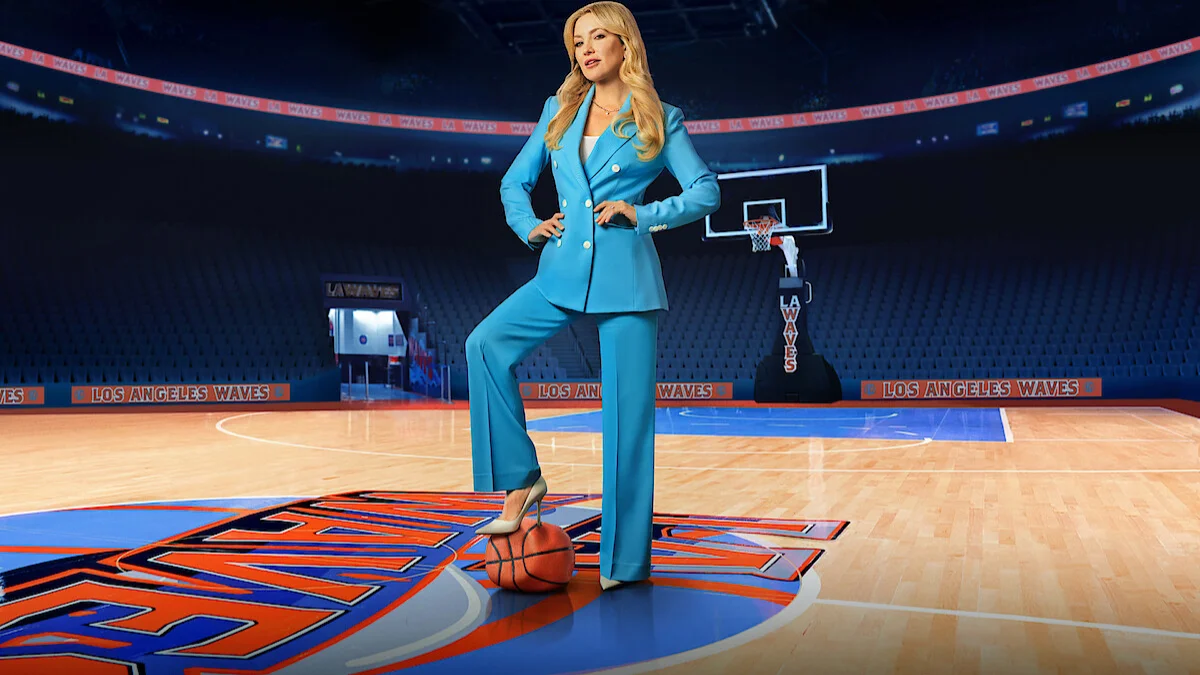
The “sophomore slump” is a hurdle every successful debut series must clear, and for Running Point, the pressure was palpable. Created by the powerhouse trio of Mindy Kaling, Ike Barinholtz, and David Stassen, the series returns to Netflix with a newfound sense of stability. Drawing loose inspiration from the real-life ownership dynamics of the Los Angeles Lakers, the show continues to navigate the chaotic intersection of professional sports management and dysfunctional family politics. At the center of the storm is Isla Gordon (Kate Hudson), the President of Operations for the fictional Los Angeles Waves, who finds that keeping her crown is much harder than winning it.
Story
While the first season was defined by Isla’s struggle to prove her legitimacy in a male-dominated front office, Season 2 shifts the goalposts. The battle for the seat at the head of the table is won; now, she must defend it. The narrative engine is ignited by the return of her brother, Cam (Justin Theroux), fresh from rehabilitation and ready to disrupt the status quo.
The season balances a championship run—complete with a clever parody of high-stakes NBA trades—with Isla’s personal complications, including a looming wedding to Lev (Max Greenfield) and unresolved chemistry with former coach Jay Brown (Jay Ellis). While the plot moves at a brisk, binge-ready pace, it occasionally suffers from a lack of lasting consequences. High-stakes crises like dancer strikes and sponsor retreats are often resolved too neatly within thirty minutes, preventing the drama from ever feeling truly perilous.
Performances
Kate Hudson remains the undisputed MVP of the series. She handles the show’s tonal shifts—from high-energy physical comedy to quiet romantic vulnerability—with a seasoned grace. This season, she is given even more room to play, evidenced by a bizarre yet brilliant Dune-inspired dream sequence that highlights her comedic fearlessness.
However, the season’s secret weapon is Brenda Song as Ali Lee. Her performance provides the emotional backbone of the year, as Ali finally begins to demand her own seat at the table. The friction between her loyalty to Isla and her personal ambition feels more grounded and “real” than the larger-than-life sibling antics. Ray Romano also makes a fantastic addition as Norm Stinson, a “faded legend” coach who brings a touch of melancholic humor to the Waves’ bench. Justin Theroux, playing the foil, delivers a performance that oscillates between charming and unsettling, even if his character feels somewhat isolated from the main ensemble’s chemistry.
Behind the Lens
The writing staff clearly understands the internal shorthand of the Gordon family. The show is at its most vibrant when the siblings are confined to a single room, trading barbs and demonstrating a volatile yet unbreakable bond. Fabrizio Guido’s Jackie and Scott MacArthur’s Ness provide consistent comedic relief, with the latter’s obsession with new social media platforms serving as a sharp recurring gag.
Where the production stumbles is in its attempts at topical satire. Jokes regarding specific cultural trends or pandemics often feel dated before the credits roll. Running Point excels when it focuses on character-driven humor rather than trying to capture a fleeting “online” moment. The direction, however, remains slick, maintaining the glossy, high-energy aesthetic one expects from a premiere sports dramedy.
Final Verdict
Season 2 of Running Point has stopped trying to be four different shows at once and has finally embraced its identity as a polished, reliable comfort watch. It is a series that knows its strengths lie in its ensemble chemistry and the natural charisma of its lead. While the stakes could benefit from a bit more weight and the romantic subplots feel somewhat repetitive, the cliffhanger finale proves there is still plenty of gas in the tank. If you’re looking for a sharp, funny, and well-acted dive into the world of professional sports, Running Point has earned its spot in the rotation. We are officially ready for Season 3.