

A Fresh Take on Modern Romance and Old-World Charm
The second season of this British television phenomenon has arrived, and it delivers exactly what fans hoped for. Hulu’s 𝑅𝑖𝑣𝑎𝑙𝑠 continues its winning formula of combining scandalous affairs, cutthroat business rivalries, and the stunning Cotswolds countryside into one irresistible package. Based on Jilly Cooper’s beloved “Rutshire Chronicles” novels, this series has carved out a unique space in the entertainment landscape—somewhere between soap opera and sophisticated drama, with enough romance to satisfy any viewer who loves watching relationships crumble and reform in spectacular fashion.
The show picks up almost immediately where season one left off, with two competing broadcasting companies—Corinium and Ventura—still battling for a lucrative commercial contract. What makes this premise so engaging is how it mirrors the personal relationships of everyone involved. The professional rivalry becomes indistinguishable from the romantic entanglements, creating a web of connections that grows more complicated with each episode.
When Will the Follies of the Male Characters End?
Puck’s famous observation from Shakespeare’s 𝑨 𝑴𝒊𝒅𝒔𝒖𝒎𝒎𝒆𝒓 𝑵𝒊𝒈𝒉𝒕’𝒔 𝑫𝒓𝒆𝒂𝒎—”Lord, what fools these mortals be”—could serve as this show’s subtitle. The male characters in 𝑅𝑖𝑣𝑎𝑙𝑠 consistently demonstrate their inability to prioritize anything beyond their immediate desires, leaving the women around them to pick up the pieces while navigating their own complicated feelings.
On the Ventura side of this professional war, sweet and sincere Taggie, played by Bella MacLean, finds herself heartbroken when the charismatic but unreliable Rupert Campbell-Black, portrayed by Alex Hassell, vanishes after finally expressing his romantic interest. The Tory Cabinet minister of sport, two decades her senior, has retreated to a cottage in Devon with the fiercely independent producer Cameron Cook, brought to life by Nafessa Williams. Cameron Cook is on the run after a violent confrontation with Corinium’s villainous Lord Tony Baddingham, played by David Tennant—an act of violence that sets the tone for the season’s escalating conflicts.
Navigating Affairs, Ambitions, and Broken Hearts
While Rupert and Cameron engage in their passionate retreat, those left behind must manage the fallout. The hunky Irish broadcaster Declan O’Hara, performed by Aidan Turner, faces separation from his whimsical wife Maud, portrayed by Victoria Smurfit. Maud has grown tired of living in her husband’s shadow and has returned to London to pursue her theatrical ambitions, leaving Declan to contemplate what he truly values. Meanwhile, the married businessman Freddie Jones, portrayed by Danny Dyer, struggles with his attraction to the romance writer Lizzie Vereker, played by Katherine Parkinson. His vapid wife Valerie, portrayed by Lisa McGrillis, remains unaware—or perhaps unconcerned—about his wandering heart. Lizzie herself is bound to James, played by Oliver Chris, a Corinium TV host whose ego matches his profound obliviousness.
At Corinium, the notoriously ruthless Baddingham has recovered from the violent altercation that concluded season one and is now plotting elaborate revenge against his enemies. His practical wife Monica, portrayed by Claire Rushbrook, looks on with reasonable disgust at her husband’s short-sighted schemes. Baddingham also faces the uncomfortable consequence of having impregnated the network’s married host Sarah Stratton, played by Emily Atack. Yet these complications barely register on his ambition meter, as he continues his relentless pursuit of power, pleasure, and satisfaction—often attempting to seduce whatever woman crosses his path.
Shakespearean Themes in a Modern Setting
The parallel between 𝑹𝒊𝒗𝒂𝒍𝒔 and Shakespeare’s enchanted comedy becomes increasingly apparent as the season progresses. Viewers find themselves in the role of Puck, observing passionate adults tumble in and out of love with increasingly inappropriate partners against the picturesque backdrop of the English countryside. The show embraces the chaos of romance with neither judgment nor apology, presenting human desires in all their messy, complicated glory.
This connection deepens through specific plot points that deliberately invoke Shakespearean themes. Taggie, who serves as the series’ moral compass in an otherwise amoral world, attends a theatrical performance and seeks to understand its meaning. Her companion distills the play’s essence perfectly: it explores “the fragility of being in love. How easy it can happen with the wrong person, but how that same haphazardness makes the triumph of true love all the sweeter.”
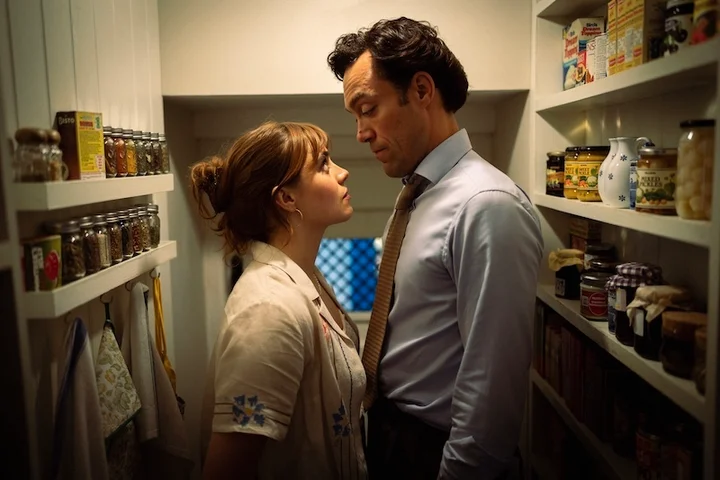
This observation encapsulates everything 𝑅𝑖𝑣𝑎𝑙𝑠 attempts to communicate about romance in its fictional corner of Britain. Love here never runs smoothly—there are too many clandestine meetings in pools and pantries, too many promises made and broken, too many power games being played at the expense of genuine connection. The show poses an intriguing question: can any love survive when male characters remain obsessed with their games and female characters grow exhausted from constantly being caught in the crossfire?
Capturing the Spirit of the 1980s
One of the series’ most charming qualities is its meticulous attention to period detail. Each episode immerses viewers in the lived realities of 1987, from the fashion choices to the social dynamics. The polo matches that determine broadcasting prestige, the pre-election dinner parties where guests spend more time in the pantry than at the dinner table, and the political maneuvering that determines who wins power—all these elements combine to create an authentic sense of time and place.
The writing preserves Jilly Cooper’s signature wry social commentary while adapting it for contemporary audiences. This balance between nostalgia and modern sensibilities gives 𝑅𝑖𝑣𝑎𝑙𝑠 its distinctive flavor. It’s escapist entertainment, yes, but it’s escapism with substance, examining how class, gender, and ambition intersect in ways both funny and tragic.
A Worthwhile Commitment Despite Frustrating Release Schedules
The show’s primary weakness lies not in its storytelling but in its distribution model. While the first three episodes of this twelve-episode season debuted simultaneously, subsequent episodes will follow a weekly release pattern. Viewers must then wait for an unspecified date to access the concluding six episodes. This hybrid approach—combining the worst elements of streaming immediacy and traditional broadcasting scheduling—creates genuine frustration.
Yet this inconvenience should not deter potential viewers. 𝑅𝑖𝑣𝑎𝑙𝑠 remains one of the freshest, most entertaining, and delightfully ridiculous shows currently available. Its characters may be fools in love, but their foolery makes for compelling television. The passionate performances, gorgeous cinematography, and clever adaptations of Cooper’s source material ensure that each episode delivers genuine satisfaction.
As the season unfolds, viewers will discover just how the Bard’s influence weaves through this modern tale of ambition and desire—whether through direct references, thematic parallels, or narrative structure. For now, it’s enough to know that 𝑅𝑖𝑣𝑎𝑙𝑠 has returned, bringing its signature blend of sophistication and scandal to audiences hungry for programming that doesn’t take itself too seriously while still having something meaningful to say about love, power, and human nature.