

Every literary phenomenon eventually faces the inevitable question: will it survive the transition from page to screen? Shelby Van Pelt’s 2022 novel captured readers with its unconventional narrator—a surprisingly philosophical octopus named Marcellus—and its tender exploration of loss, loneliness, and unexpected friendship. Now, Netflix brings this word-of-mouth sensation to streaming audiences, proving that some stories are simply too compelling to stay confined between book covers. The result is a respectful, emotionally resonant adaptation that honors its source material while finding its own cinematic voice.
The journey from bestseller to streaming release follows a familiar pattern, yet 𝑅𝑒𝑚𝑎𝑟𝑘𝑎𝑏𝑙𝑦 𝐵𝑟𝑖𝑔ℎ𝑡 𝐶𝑟𝑒𝑎𝑡𝑢𝑟𝑒𝑠 manages something rather special. Rather than forcing the material into oversized blockbuster territory, the adaptation maintains the novel’s intimate scale, focusing on human connections and quiet moments of revelation. For readers who fell in love with Tova, Cameron, and their eight-armed confidant, this screen version offers both familiarity and fresh discovery.
Story
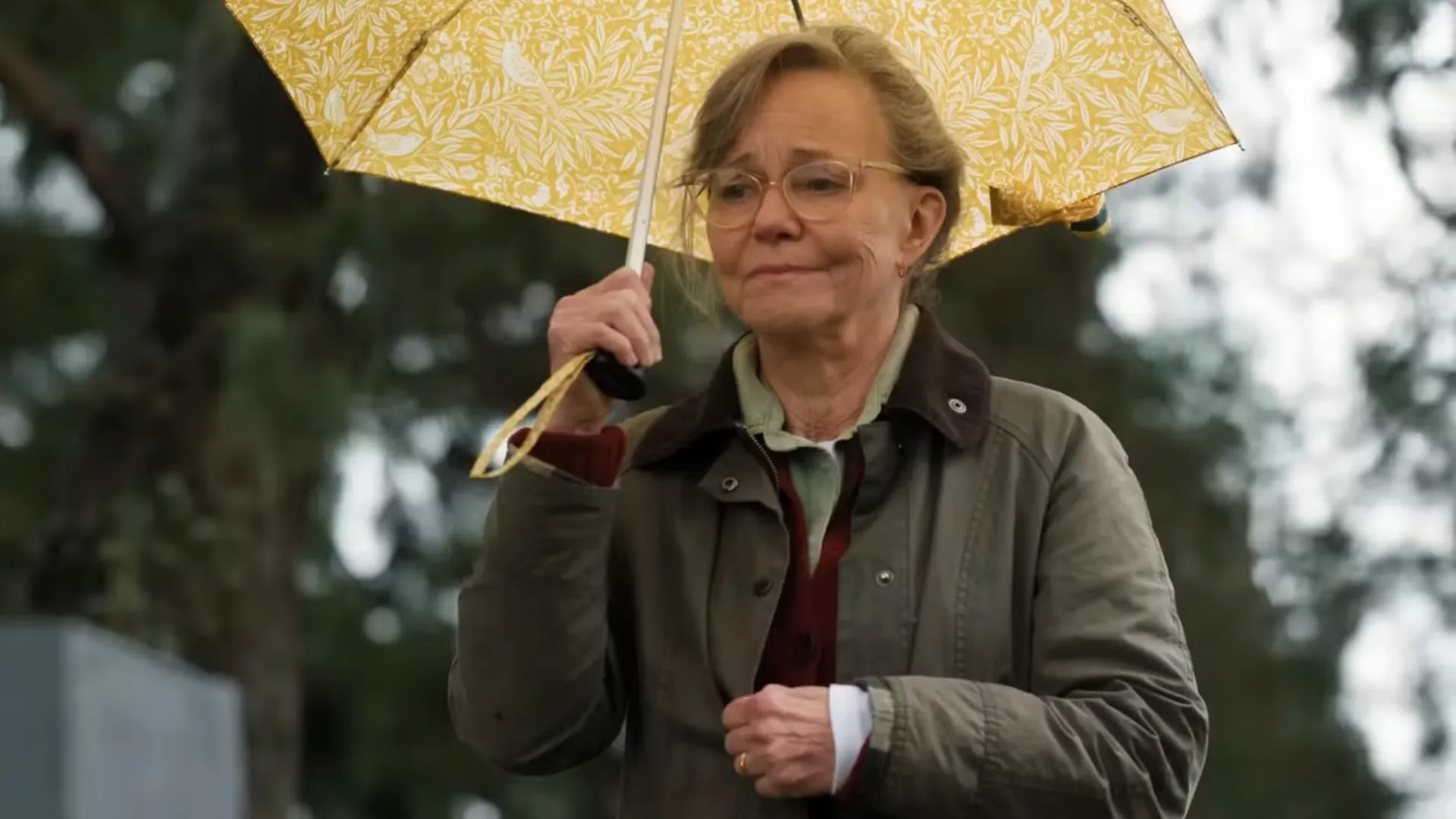
At its core, 𝑅𝑒𝑚𝑎𝑟𝑘𝑎𝑏𝑙𝑦 𝐵𝑟𝑖𝑔ℎ𝑡 𝐶𝑟𝑒𝑎𝑡𝑢𝑟𝑒𝑠 is a story about people searching for belonging in the wake of profound loss. Tova Sullivan, portrayed by Sally Field, is a seventy-year-old widow still reeling from the mysterious death of her son decades earlier. Living alone in a picturesque Pacific Northwest town where everyone seems to know everyone’s business, she has retreated into herself, finding solace only during her night shifts cleaning at the local aquarium. There, she speaks to Marcellus—a cranky yet remarkably articulate octopus who serves as the story’s unconventional narrator.
When Tova suffers an injury, her employer brings in temporary help: Cameron Pullman, a thirty-something drifter played by Lewis Pullman. Cameron has arrived in town searching for a father he has never met, a wealthy developer revealed to him only after his mother’s recent death. Struggling with his own demons and living out of a battered camper van, Cameron represents the kind of disruption that makes Tova’s neighbors uncomfortable—but also the exact kind of fresh perspective she desperately needs.
What unfolds is a gradual, beautifully rendered friendship between two people united by grief and displacement. The octopus Marcellus, voiced by Alfred Molina, observes and narrates their journey, providing insight into human behavior that only an outside observer genuinely possess. The narrative structure moves between aquarium walls and the wider community, occasionally feeling stop-and-go in its pacing, yet ultimately building toward emotional payoffs that feel earned rather than manufactured. The film resists treacly sentimentality, instead choses finding authenticity in its characters’ quiet struggles and small victories.
Performances
Sally Field delivers a masterclass in restrained performance as Tova, a woman hardened by loss yet not defeated by it. Her prickly exterior—the kind that might rate a two on any scale of approachability—conceals profound sorrow and unexpected vulnerability. Field has always excelled at conveying inner strength through subtle facial expressions and carefully chosen words, and her work here stands among her most nuanced recent performances. Watching Tova gradually open herself to possibility, even tentatively, provides the film’s emotional anchor.
Lewis Pullman brings considerable charm to Cameron without making the character’s struggles seem trivial. There is something inherently compelling about an actor who can make threadbare clothes and unwashed hair look almost artistic, and Pullman pulls off this trick while conveying genuine desperation beneath the wandering musician facade. His chemistry with Field feels authentic, their growing friendship arising organically from shared pain rather than forced narrative convenience.
Alfred Molina’s voice work as Marcellus provides the film’s philosophical center. The octopus doesn’t speak to the characters within the story—only to the audience—creating an intimate narrative voice that bridges the gap between what we see and what we understand. Molina brings warmth and wit to the narration without ever becoming precious or overwrought.
The supporting ensemble, featuring Colm Meaney as an eccentric ex-Deadhead shopkeeper and Joan Chen, Kathy Baker, and Beth Grant as Tova’s well-meaning but ultimately peripheral friends, adds texture to the Small-town setting. While some supporting characters feel underutilized, they contribute to the sense of a community that has both protected and constrained Tova for far too long.
Behind the Lens
Director Olivia Newman continues demonstrating her aptitude for literary adaptations following her work on 𝑊ℎ𝑒𝑟𝑒 𝑡ℎ𝑒 𝐶𝑟𝑎𝑤𝑑𝑎𝑟𝑠 𝑆𝑖𝑛𝑔. Her approach to 𝑅𝑒𝑚𝑎𝑟𝑘𝑎𝑏𝑙𝑦 𝐵𝑟𝑖𝑔ℎ𝑡 𝐶𝑟𝑒𝑎𝑡𝑢𝑟𝑒𝑠 emphasizes character over spectacle, finding visual poetry in aquarium lighting and coastal atmosphere rather than attempting to elevate the material into grander cinematic territory. This restraint serves the source material well, preserving the intimate scale that made the novel so appealing.
Newman co-wrote the screenplay with John Whittington, and their adaptation manages the delicate balance of condensing narrative while preserving emotional beats that readers will recognize. The pacing occasionally suffers from the novel’s structure, which divides attention between multiple storylines, but the adaptation generally maintains momentum toward its climactic revelations. Visually, the film remains grounded in the realistic rather than the stylized, which helps ground the more whimsical elements—particularly Marcellus’s narration—in emotional truth.
The production design deserves particular recognition for creating an aquarium setting that feels both magical and believable, a space where the boundary between mundane work and mystical encounter seems appropriately thin. Combined with cinematographic choices that emphasize the Pacific Northwest’s moody beauty, the visual presentation supports rather than overshadows the human story at its center.
Final Verdict
𝑅𝑒𝑚𝑎𝑟𝑘𝑎𝑏𝑙𝑦 𝐵𝑟𝑖𝑔ℎ𝑡 𝐶𝑟𝑒𝑎𝑡𝑢𝑟𝑒𝑠 succeeds not because it reinvents the wheel of literary adaptation, but because it approaches its material with sincerity and craft. Sally Field and Lewis Pullman anchor the story with performances that make their characters’ journey feel genuinely affecting rather than manipulative. The octopus narrator, which could easily have become a gimmick, instead provides the film with its most distinctive voice—a reminder that sometimes the most profound wisdom comes from those who observe rather than participate.
The film’s impact sneaks up on viewers over its running time, building toward an ending that, while containing a few eye-roll-inducing mechanics, ultimately delivers emotional catharsis through careful character development rather than sudden revelation. For viewers seeking meaningful storytelling that respects their intelligence while reaching for their hearts, this Netflix offering delivers exactly that.
Rated PG-13 for thematic material, some strong language, suggestive references, and brief drug use, the film, streaming now on Netflix, is suitable for mature teens and adults comfortable with nuanced exploration of grief and healing. At 113 minutes, it earns every minute of investment, leaving audiences with something rare: a story that feels both completely told and genuinely continued in their hearts long after the credits roll.