

There is something utterly predictable about the way romance adaptations tend to market themselves. A stunningly attractive couple, locked in an intense gaze, surrounded by the aesthetic trappings of their narrative—it takes approximately one glance to determine whether this particular offering aligns with your personal preferences. The promotional material for Off Campus, based on the popular book series by Elle Kennedy, follows this formula without apology. On paper, it ticks every expected box: elite hockey players, a fake relationship plot, and the promise of steamy encounters that the genre has built its empire upon.
Yet what separates this Prime Video series from its numerous contemporaries is its refusal to rest entirely on those familiar laurels. While the surface-level appeal certainly exists—and would be enough to satisfy viewers seeking exactly what the trailers promise—Off Campus ultimately distinguishes itself by caring deeply about the emotional infrastructure beneath its romantic premise. This is a series that asks meaningful questions about vulnerability, daily intimacy, and what it genuinely takes to support another person, all while delivering the passionate encounters that draw audiences to this genre in the first place.
Story
The narrative unfolds across the interconnected lives of three Briar University students whose paths converge in ways that feel both contrived and oddly organic. Hannah, portrayed with compelling vulnerability by Ella Bright, faces a make-or-break moment in her academic career. As a composition major desperately trying to maintain her scholarship, her only path forward involves winning an upcoming music showcase with an original composition—a deadline that looms with increasing menace as her creative block solidifies.
Enter Garrett, played with effortless charm by Belmont Cameli, the captain of the Briar U Hawks hockey team whose athletic dominance masks a startling academic deficiency. His position as team captain hangs by a thread unless he can dramatically improve his grades before the administration loses patience. Meanwhile, Justin, brought to life by Josh Heuston, represents the object of Hannah’s affections—a fellow student and performing artist whose artistic credibility she idolizes from a comfortable distance.
The convergence of these storylines manifests through an elaborate arrangement that only romantic comedy logic could love. Hannah and Garrett agree to a strategic fake relationship, designed specifically to provoke Justin’s jealousy into offering his assistance with Hannah’s showcase composition. In exchange, Hannah commits to tutoring Garrett through his academic perils, all while maintaining the illusion that their connection is genuine—and more importantly, concealing this arrangement from the rest of the hockey team, whose potential reactions could derail everything.
The predictable question, of course, becomes whether the performance transforms into something authentic. When staged emotions begin generating genuine feeling, and when the fake intimacy starts carrying genuine weight, our protagonists must confront whether their arrangement has evolved into something far more meaningful than they initially intended. The series handles this evolution with surprising patience, exploring not just the exciting elements of new romance but the unglamorous, essential work that sustainable relationships actually require.
Performances
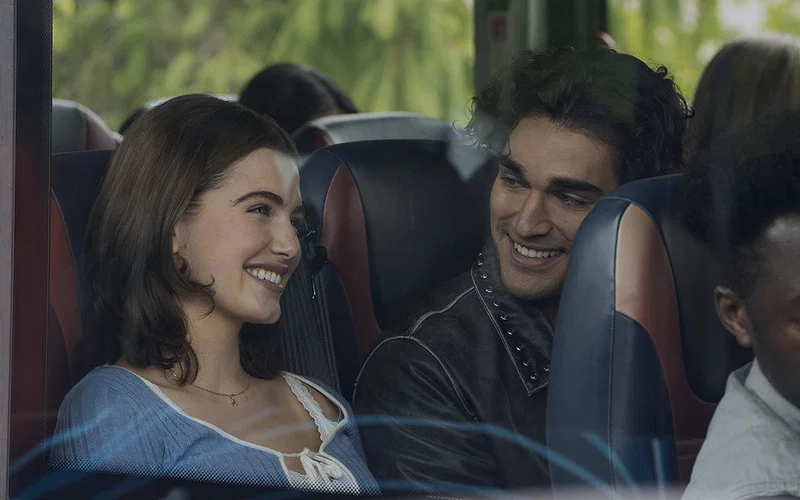
The success of any romantic endeavor—whether fictional or performed—hinges entirely on whether the audience genuinely wants these specific people to end up together. From the first scene shared between Ella Bright and Belmont Cameli, it becomes abundantly clear that the casting directors understood this fundamental truth. Their chemistry operates on multiple frequencies simultaneously: playful banter that suggests genuine friendship beneath the romantic tension, physical awareness that conveys attraction without feeling performative, and a willingness to be genuinely awkward in ways that humanize both characters.
Bright’s Hannah emerges as a fully realized protagonist rather than merely a romantic prize. She possesses an introverted artistic sensibility that could easily tip into cliché but instead feels authentic—the kind of creative soul whose internal world is rich and complicated, not simply waiting for the right man to notice her. Her poetic nature expresses itself not just in her music but in how she observes the world, and Bright captures this quality without ever making Hannah seem like a Manic Pixar dream Girl archetype.
Cameli, meanwhile, delivers a performance that refreshingly avoids the jock stereotypes that lesser productions would rely upon. His Garrett is physically charismatic, certainly—there’s no escaping the appeal of a hockey captain who moves with athletic confidence—but the performance finds considerable richness in revealing unexpected depths. Garrett’s intelligence manifests in surprising ways, and Cameli demonstrates impressive range when the material demands emotional exposure rather than charming deflection.
The supporting cast proves equally essential to the series’ success. Mika Abdalla’s portrayal of Allie, Hannah’s theater major roommate, provides some of the series’ most delightful moments—her presence elevates every scene she inhabits, and she emerges as a genuine highlight rather than mere comic relief. Even the members of Garrett’s hockey team, whom this reviewer fully expected to find insufferable, develop into a surprisingly cohesive ensemble whose B-storylines reward viewer investment.
The facial acting throughout the series deserves particular commendation. Both leads demonstrate remarkable emotional precision in their expressions, conveying interior states that dialogue alone could never capture. The latter episodes, in particular, feature intense emotional moments that demand subtle physical performances, and both Bright and Cameli rise to these challenges with professionalism that belies their relative youth in the industry.
Behind the Lens
The source material for Off Campus originates from Elle Kennedy’s successful book series, and the adaptation carries the dual challenge and opportunity of translating beloved literary content for the screen. The creative team behind the series demonstrates savvy understanding of what transfers effectively from page to streaming platform while making intelligent modifications that serve the visual medium.
Comparisons to other hockey-adjacent romantic content feel almost inevitable, given the similar terrain both series explore. However, Off Campus charts a notably different course than its predecessors in terms of pacing and intimacy calibration. While certain productions in this space prioritize immediate physical passion—delivering on audience expectations within the opening minutes before developing emotional depth—Off Campus takes a more patient approach. The series builds toward physical intimacy as a meaningful milestone rather than an opening gambit, allowing genuine character development to precede and contextualize romantic and sexual encounters.
This approach proves particularly effective in how the series handles thematic territory around communication and consent. Rather than treating these elements as afterthoughts or box-checking exercises, the narrative integrates them organically into the relationship dynamics, resulting in romantic developments that feel responsibly portrayed without ever feeling preachy or didactic.
The production values appropriately serve the material. Briar University feels convincingly established as both a real place and a romanticized setting, and the series makes effective use of varied locations—from intimate dorm rooms to expansive hockey rinks—that mirror the emotional range of its narrative. The music, obviously central to Hannah’s story, receives appropriate emphasis without overwhelming the surrounding dramatic content.
Final Verdict
Off Campus is not without its imperfections. The series requires patience before hitting its full dramatic stride, and viewers who signed expecting exclusively light romantic entertainment may find certain darker emotional elements somewhat jarring. Justin, despite Heuston’s capable performance, functions primarily as a vehicle for the love triangle mechanic rather than as a fully realized character with independent narrative significance—his screen time occasionally feels disproportionate to his contribution to the story’s emotional core.
Despite these reservations, when Off Campus achieves its ambitions, it does so with considerable success. The central romance earns its emotional investment through genuine character development rather than mere attraction, the supporting cast provides consistently engaging material, and the thematic exploration goes considerably deeper than this kind of premise typically dares to venture. The announcement of a second season feels not like a cynical extension of a successful brand but like a genuine invitation to continue spending time with characters worth knowing.
Against considerable odds, Off Campus transforms what could easily have been yet another trope checklist into a genuinely compelling romantic narrative with real emotional weight. It earns its steamy moments through character investment rather than simply demanding audience acceptance, and that fundamental shift in approach elevates the entire enterprise.
Off Campus premiered exclusively on Prime Video on May 13th.
Also Read:
“Off Campus” Season 1 Trailer: A First Look at the Steamy New Hockey Romance
Prime Video Brings Elle Kennedy’s “Off Campus” to the Screen