

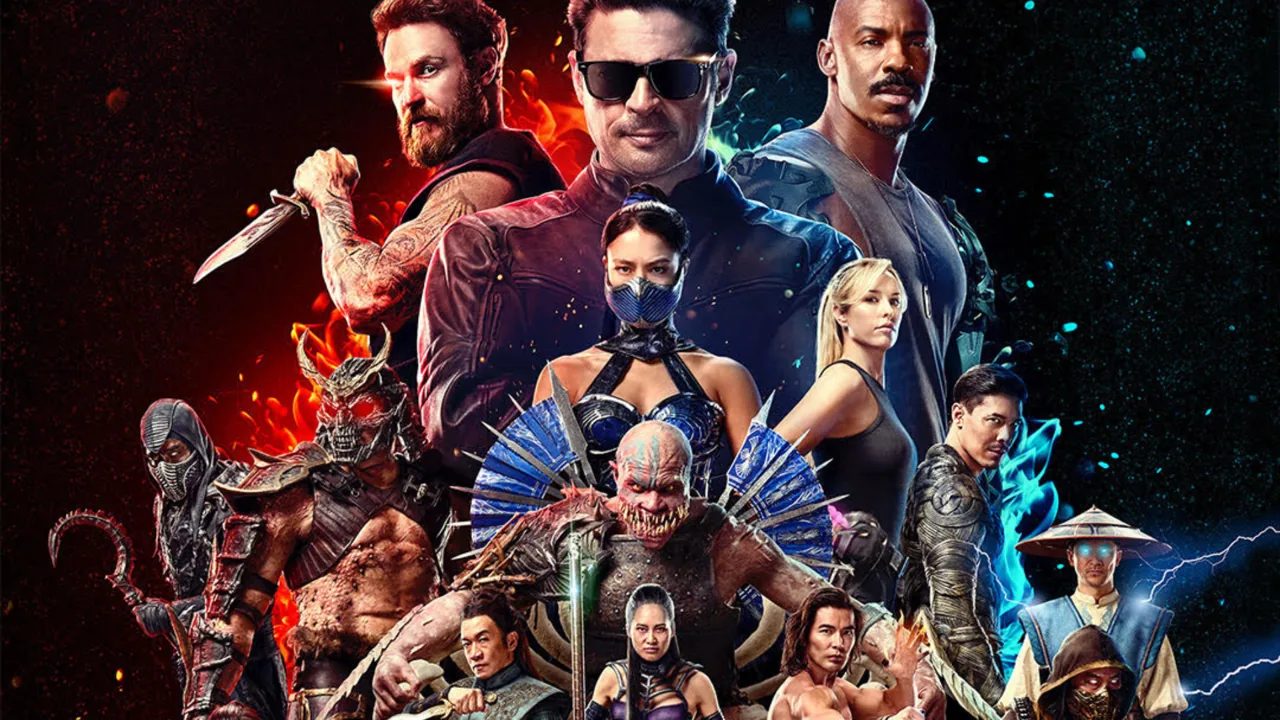
Sometimes, cinema doesn’t need to reinvent the wheel—it just needs to polish it until it gleams with unapologetic spectacle. Mortal Kombat II, the explosive sequel to the 2021 reboot, understands this philosophy entirely. Director Simon McQuoid and screenwriter Jeremy Slater have crafted a follow-up that doesn’t merely replicate its predecessor’s winning formula but amplifies every element that made the original entertaining while addressing its shortcomings with surgical precision.
Story
The narrative picks up with Shao Kahn’s devastating conquest of Edenia, a sequence that establishes the personal stakes driving our heroes forward. The prosperous kingdom falls within minutes of screen time, with King Jerrod slaughtered and Queen Sindel claimed alongside Princess Kitana as spoils of war. Twenty years pass in the film’s mythology, during which Kitana transforms from royal prisoner to covert warrior, aligning with Raiden, the thunder god, in preparation for the inevitable confrontation with her tyrannical adoptive father.
Into this supernatural conflict wades Johnny Cage, portrayed as a faded action star whose glory days have long since passed. Karl Urban’s interpretation of the character proves surprisingly effective—he embodies Cage as a skeptical has-been, someone who’s spent too many years on convention circuits to genuinely believe in mystical tournaments until confronted with undeniable evidence. His presence provides both comic relief and an accessible entry point for newcomers unfamiliar with franchise mythology.
The storytelling approach deserves considerable credit for balancing multiple character arcs without drowning in exposition. Cage’s accidental entry into the larger conflict, Kitana’s quiet determination driven by personal loss, and Liu Kang’s heroic ambitions all receive adequate development. The Mortal Kombat tournament itself serves as the structural backbone, with each match presenting opportunities to showcase distinct fighting styles, supernatural abilities, and increasingly elaborate fatalities that the franchise is famous for. By positioning Cole Young in a reduced supporting role, the sequel corrects its predecessor’s central weakness: a protagonist disconnected from established lore.
Performances
Adeline Rudolph carries significant emotional weight as Kitana, transforming what could have been a one-dimensional warrior princess into a figure defined by quiet tragedy and fierce resolve. Her prologue establishing Edenia’s fall effectively communicates the character’s internal burden—displacement, forced service to her enemy, and the weight of a kingdom’s destruction resting on her shoulders. Rudolph conveys Kitana’s determination through subtle performance choices that complement, rather than compete with, the film’s relentless action sequences.
Karl Urban’s Johnny Cage proves to be the sequel’s most pleasant surprise. Rather than attempting to recreate past interpretations, Urban claims the character entirely. His Cage exists as a relic of a vanished action-movie era, wearing cynicism as armor against a world that stopped making the films he once headlined. The performance balances self-aware humor with genuine stakes, allowing Cage’s gradual transformation from skeptic to believer feeling earned rather than rushed.
Martyn Ford’s portrayal of Shao Kahn deserves recognition for pure physical presence. The character functions less as a fully developed antagonist than as an insurmountable obstacle, and Ford’s massive frame combined with the iconic metal skull helmet and spiked hammer creates exactly the imposing threat the narrative requires. His introduction establishes the film’s willingness to deliver extreme violence without flinching.
The supporting ensemble, particularly the practical effects-driven Baraka, contributes memorable moments throughout. When digital backgrounds occasionally resemble generic fantasy soundstages, strong performances anchor scenes in reality—or at least in the specificreality the franchise demands.
Behind the Lens
Simon McQuoid’s directorial approach prioritizes momentum over introspection, fitting a 116-minute runtime packed with references, callbacks, and tournament action. The pacing rarely allows for genuine stagnation, with fights following a rhythmic frequency that echoes fighting-game ladder progression. Each confrontation carries specific mechanical identity, culminating in technical showcases like the Liu Kang versus Kung Lao sequence that brilliantly combines fire manipulation with that iconic razor-rimmed hat.
The choreography deserves particular praise for understanding what fans actually want from a Mortal Kombat adaptation. Rather than generic martial arts cinema, the action consistently highlights powers and techniques recognizable from the source material. The R-rated violence serves a purpose beyond shock value—it fulfills a promise made to audiences familiar with the games’ notorious fatalities. Decapitations and impalements land with impact because the camera commits fully to showing them.
Technical execution varies in quality across different environments. The Underrealm presents a tiered inferno with heavy horror-movie atmosphere, while Edenia’s sequences carry that distinctly bright, artificial sword-and-sorcery aesthetic. This variety prevents visual fatigue, even when certain backgrounds feel more like video-game screensavers than lived-in worlds. Practical effects for creatures like Baraka provide tactile grounding that CGI alone cannot achieve.
The soundtrack presents an interesting missed opportunity. Opening licensed tracks like Scorpions effectively capture the ’90s action-movie vibe central to Johnny Cage’s character, but the orchestral score defaults to generic territory that drains some of the franchise’s aggressive identity as the film progresses. Signature sound effects offer occasional grounding reminders of the source material, though the audio never quite reaches the memorable heights of the game’s distinctive soundscape.
Final Verdict
Mortal Kombat II knows exactly what it is and refuses to apologize for it. This isn’t highbrow cinema attempting to transcend its source material—it’s a celebration of everything that made the franchise resonate across decades, delivered with excessive violence, undeniable charm, and fight choreography that genuinely impresses.
The sequel succeeds by correcting its predecessor’s mistakes, centering characters with genuine connection to the mythology while maintaining the accessible entry points that draw casual audiences. Rudolph’s Kitana provides emotional resonance, Urban’s Cage brings surprisingly effective humor and pathos, and the fight sequences consistently deliver on the promise of video-game spectacle translated to the screen. While some characters receive less development than others and the visual quality fluctuates between stunning and serviceable, these issues never derail the momentum.
For dedicated franchise followers, this film offers the validation of seeing beloved characters and abilities rendered with genuine care. For action enthusiasts seeking high-octane entertainment, it delivers exactly the bloody, brazen spectacle promised. Mortal Kombat II doesn’t aim higher than its arcade-game origins—and that honesty, paradoxically, elevates it above countless more ambitious failures.
Mortal Kombat II is screening in theatres now.