

The American drama Miss You, Love You arrives on HBO and HBO Max on May 29, 2026, delivering an unforgiving examination of how modern families delegate even their most sacred obligations. Director Jim Rash makes his solo feature debut with this intimate chamber piece that strips away comfortable cinematic conventions to expose the raw nerve endings of familial abandonment. Set against the stark sunlight of New Mexico, the film follows an estranged son who dispatches his personal assistant to handle his stepfather’s funeral arrangements, forcing a grieving widow into uncomfortable proximity with a complete stranger. What unfolds over the course of one excruciating week constitutes a study in emotional outsourcing, a concept as ugly as it sounds. Rash has crafted something genuinely uncomfortable—a film that understands how family duty increasingly travels through chains of assistants, intermediaries, and contracted professionals, transforming intimate loss into a transaction logged through spreadsheets and scheduled phone calls.
Synopsis
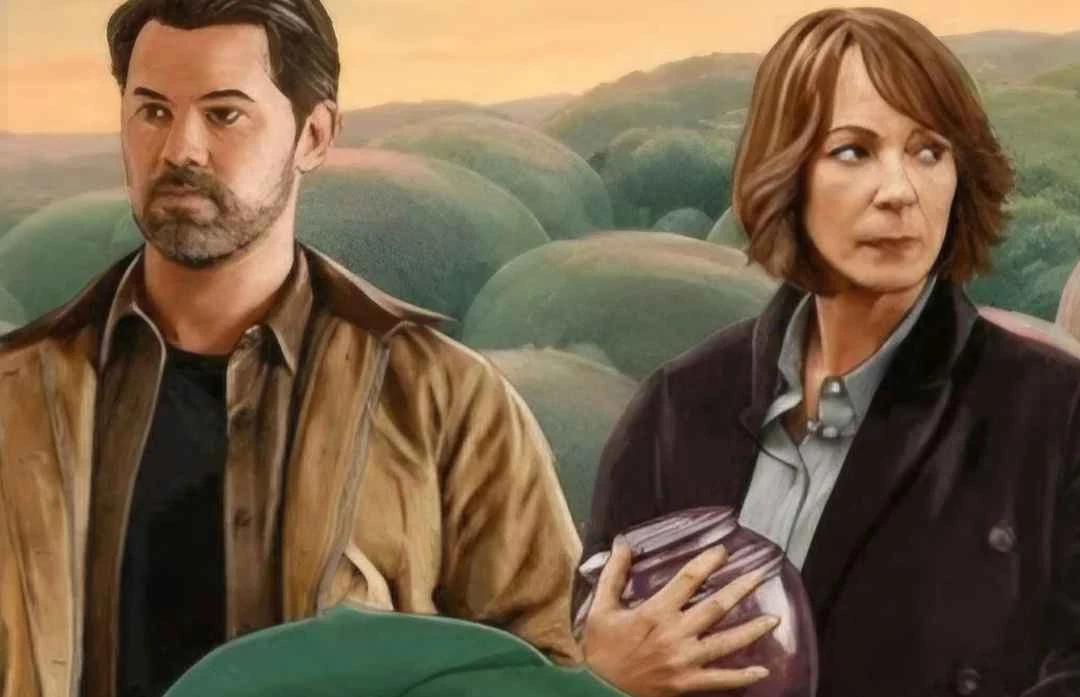
Diane Patterson has spent three miserable years in New Mexico, having fled New York City after her husband’s Parkinson’s diagnosis progressively stripped away his independence. Allison Janney portrays this woman with magnificent coiled hostility, a widow who has calcified inside her own resentment during years of caregiving that left her emotionally depleted. When Henry finally passes, Diane expects her estranged son Tyler to appear. Instead, he remains trapped overseas on a work assignment and sends Jamie Simms—his personal assistant played by Andrew Rannells—to manage the grim machinery of funeral logistics.
This single decision creates a brutalcollision between two strangers bound together by an absent man. Jamie enters as the quintessential corporate intermediary, professionally polished with an almost pathological politeness that masks deep private wounds. His customer-service demeanor serves as armor against a situation he was never equipped to handle. Meanwhile, Diane transfers her accumulated abandonment onto this stranger, treating Jamie as a proxy for the son-shaped void in her living room.
The quiet family home transforms into a pressure chamber where grief becomes categorized, sharpened, and redistributed across seven days of forced cohabitation. As Diane and Jamie clash, their respective confessions emerge in jagged bursts. Jamie reveals he came out at thirty-five, after both parents had passed, and hints at a painful unreturned history with Tyler that began in a West Hollywood bar. In return, Diane shares her own shame: Henry’s illness had stolen his voice, and she missed his final desperate calls for help. The film gives caregiving fatigue a physical weight that resonates with anyone who has watched a loved one’s slow decline.
Performances
Allison Janney delivers a spectacular turn that refuses any softening of Diane’s edges. She commits fully to a character whose cruelty becomes almost architectural—part of the house itself, part of the air the characters breathe. Janney prevents the role from hardening into monstrous caricature, instead shaping Diane into a portrait of bone-deep exhaustion that makes her abrasive behavior almost heartbreaking rather than simply off-putting. This is character work that demands complete surrender to unlikability while somehow maintaining audience connection.
Andrew Rannells meets Janney’s intensity with admirable restraint. His performance begins behind the polished mask of an eager-to-please corporate employee, that customer-service smile functioning as sophisticated armor. The transformation during his third-act monologue proves genuinely staggering when his professionalism finally cracks and the character escapes the neat construction he had erected for protection. Rannells makes Jamie’s private damage feel earned rather than revealed, building toward that moment of collapse with careful precision.
The supporting cast, including Bonnie Hunt, Oscar Nuñez, and Suzy Nakamura, drift through scenes as minor characters offering brief comic interruptions. These appearances function as speed bumps in the narrative, small jolts of ordinary social interaction that emphasize how thoroughly isolated Diane and Jamie have become from normal human connection.
Behind the Lens
Jim Rash’s directorial eye pares cinema down to its essential components—nerve endings, cramped rooms, and catastrophically bad timing. His screenplay occasionally stumbles over theatrical instincts, with too many exchanges feeling manufactured as if characters have been waiting offstage for their polished wound-delivery moments. The speeches occasionally read more like acting workshop material than spontaneous human speech, sacrificing naturalism for structural impact.
However, Rash’s final confrontation compensates for earlier limitations through its deliberate refusal of clean comfort. The catharsis arrives messy, loud, and inconsistently human, exactly as genuine emotional breakthroughs actually occur. Barry White’s “You’re the First, the Last, My Everything” arrives during the closing sequence and becomes somehow transcendent, a perfect encapsulation of the film’s strange, imperfect humanity.
Daniel Moder’s cinematography deliberately refuses desert postcard beauty, instead keeping the camera close to walls, rooms, and faces until the home becomes a claustrophobic map of injury. Physical objects carry Henry’s ghost with theatrical bluntness—an unfinished painting in the corner, empty pet bowls where a cat once lived before an owl claimed it, a dying succulent that symbolizes Diane’s failing domestic stewardship. The dialogue circles repeatedly between the characters like trapped animals, swinging between cruel wit and heavy disclosure, using language as both shield and bludgeon.
The neighbor comedy threads occasionally fall flat, landing with the energy of someone politely knocking during an emotional exorcism. Yet these minor missteps never derail the core power of two remarkable performances carrying an otherwise predictable independent-drama framework—mismatched lonely people placed together until pain begins to sound like medicine.
Final Verdict
Miss You, Love You functions as a jagged, hyper-theatrical chamber piece that succeeds on the sheer velocity of its performances rather than the originality of its script. Jim Rash constructs an authentic, often painful examination of outsourced family devotion, though his dialogue occasionally feels too rehearsed for the cinematic medium. Allison Janney and Andrew Rannells elevate the predictable indie-drama structure into something genuinely arresting, avoiding easy sentimentality at every turn.
The film remains strange and imperfect—a cultural artifact built from resentment, care work, delayed confession, and family failure. Its willingness to sit inside that mess rather than tidy it away gives the work a ghostly relevance for contemporary audiences navigating their own versions of emotional outsourcing. This is not comfortable viewing, but it is affecting viewing, and in an era of increasingly sanitized grief narratives, that discomfort proves valuable.
Also Read:
Grief Meets Wit: Allison Janney and Andrew Rannells Shine in HBO’s “Miss You, Love You”