

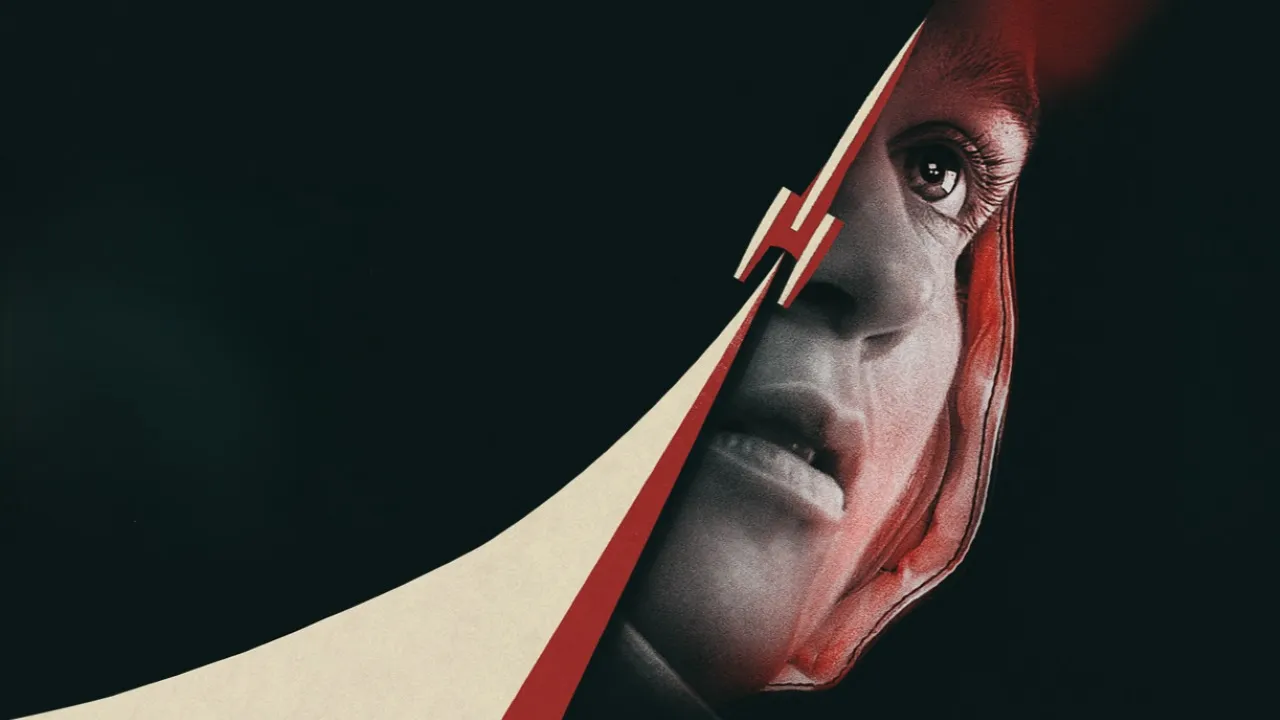
The original For All Mankind posed a compelling question: what would the space race look like if the Soviet Union had beaten the United States to the lunar surface in 1969? That series answered that query from the American perspective, capturing the competitive fire and nationalistic drive that propelled NASA forward under impossible pressure. Now, Star City flips the script entirely, taking viewers behind the Iron Curtain to experience an alternate history where the USSR claimed victory first—but at a devastating cost to everyone living under its shadow.
This eight-episode limited series, now streaming on Apple TV+ with new episodes dropping every Friday, introduces audiences to a world where hope is a dangerous commodity and survival itself becomes an act of defiance.
Synopsis: Life Under the Sword of Damocles
The premise alone establishes Star City as something genuinely ambitious within the alternative history television landscape. In this universe, the Soviet Union landed cosmonauts on the moon before American astronauts could fulfill that dream. From there, the narrative branches in an entirely unexpected direction. Rather than celebrating this achievement as a triumph of communist ideology, the series uses this victory as a starting point to examine what happens when a nation achieves its greatest ambition while trapping its citizens in an even tighter web of control and paranoia.
The titular Star City serves as both the show’s physical setting and its metaphorical heart. Located at the headquarters of the Soviet space program, this isolated community operates under rules entirely separate from the rest of the country. Everyone who works and lives there exists under constant surveillance, knowing that any misstep could result in imprisonment or worse for themselves and their families. The weight of this reality hangs over every scene, creating an atmosphere so thick with tension that viewers will find themselves holding their breath during seemingly simple conversations.
At the center of the storm stands the Chief Designer, portrayed with magnificent complexity by Rhys Ifans. This powerful figure, whose name is never spoken aloud for fear that it might somehow reach foreign ears, leads the Soviet space program while knowing that even he’s not permitted to leave the country. The government literally retrieves medals from his hands for “safekeeping” after official ceremonies, and his achievements go unrecognized in state media. Despite these constraints, he continues advocating for a more ambitious space program that could take humanity to the stars, fighting against superiors who care more about propaganda victories than genuine scientific progress.
Anastasia Belikova, played by Alice Englert, represents another tragic dimension of life under this system. Hastily chosen for a moon orbital mission more for her Communist Party loyalty than her abilities, she doesn’t recognize the fate awaiting her. The state will transform her into eternal celebrity, surrounding her with secret service guards and stripping away any possibility of living what others would consider a normal existence. Her story arc explores how the regime weaponizes fame itself as a form of control.
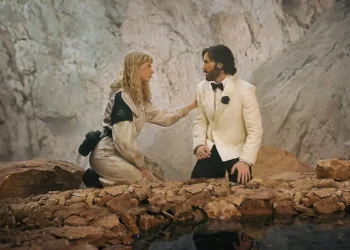
Agnes O’Casey delivers a breakthrough performance as Irina Morozova, a young woman newly assigned to the KGB’s surveillance unit at Star City. Working in a cramped room that recalls the anonymous typing pools of classic cinema, she’s tasked with transcribing recordings captured by hidden microphones in citizens’ homes. The irony cuts deep: Irina accidentally finds herself listening to the personal lives of cosmonauts, including Valya Markelov (Adam Nagaitis), whose wife Tanya (Ruby Ashbourne Serkis) carries on an affair with his fellow trainee Sasha (Solly McLeod). These intimate glimpses into others’ lives contrast sharply with Irina’s own professional detachment, creating compelling dramatic tension throughout her storyline.
Anna Maxwell Martin commands the screen as Lyudmilla Raskova, head of the KGB’s surveillance operation. Her presence radiates menace; one glance conveys disapproval and the threat of consequences. She doesn’t hesitate to exercise her authority, and her pistol appears as a constant reminder of the power she wields over everyone’s fate. Josef Davies rounds out the principal cast as Sergei Nikulov, a young engineer whose unconventional thinking catches the Chief Designer’s attention. Their growing relationship suggests that revolutionary ideas can bloom even in the most repressive soil.
What makes Star City particularly fascinating is how it borrows from Akira Kurosawa’s Rashomon while narrowing its focus to a single, concentrated perspective. Where that classic film told the same story from multiple viewpoints, this series takes the alternative history established in its parent show and explores it entirely from one side of the ideological divide. The effect proves revelatory: actions that seemed heroic in For All Mankind take on darker, more ambiguous shades when viewed through Soviet eyes.
Performances: Portraits of Courage and Cruelty Under Pressure
The ensemble cast collectively achieves something remarkable, creating characters who feel fully realized despite the oppressive system that constrains them. Rhys Ifans delivers perhaps the most layered performance, portraying a man who must carefully navigate power structures while maintaining his vision for humanity’s future. His Chief Designer radiates both tremendous authority and profound vulnerability, a combination that makes his scenes compelling throughout. Watch how he modulates his voice when speaking to superiors versus subordinates, revealing a man who understands exactly how much danger he faces with each careless word.
Anna Maxwell Martin’s Lyudmilla represents the series’ most overtly terrifying presence, yet even here, the performance transcends simple villainy. She plays someone who genuinely believes in her role protecting the state, finding satisfaction in her work without recognizing—or perhaps without allowing herself to recognize—its moral implications. This nuanced approach prevents the show from becoming simplistic propaganda while still making clear the horrors of the system she represents.
Among the younger cast members, Agnes O’Casey stands out as someone whose star should definitely rise following this performance. Her Irina begins the series as something of an observer, transcribing others’ words without truly understanding their contexts. As the show progresses, O’Casey gradually reveals Irina’s growing awareness of the moral compromises her work requires. These subtle shifts in expression and bearing speak volumes without requiring expository dialogue.
Alice Englert navigates Anastasia’s arc with particular skill, capturing both the character’s initial enthusiasm and her dawning realization of what her “success” will cost. Josef Davies brings energetic charm to Sergei, whose unconventional ideas suggest that innovation might sometimes spring from the most unlikely sources. The chemistry between Davies and Ifans offers some of the series’ most hopeful moments, suggesting that human connection can survive even systematic attempts to crush it.
Behind the Lens: The Creative Visionaries
The series comes from the collaborative minds of Ben Nedivi, Matt Wolpert, and Ronald D. Moore, the same trio who developed For All Mankind for Apple TV+. Their involvement ensures thematic continuity with the parent series while demonstrating their range as storytellers willing to explore radically different perspectives on the same premise. Moore, in particular, has built a career examining historical what-ifs across projects like Outlander and Battlestar Galactica, bringing that expertise to bear on this more intimate but equally ambitious undertaking.
What distinguishes Star City from its predecessor is its deliberately slow-burn pacing and unrelentingly bleak atmosphere. Where For All Mankind thrived on competitive urgency and near-misses that left audiences breathless, this spinoff operates at a more contemplative tempo. Scenes unfold with deliberate attention to environmental detail, whether capturing the claustrophobic corridors of Star City or the vast emptiness of the Russian wilderness surrounding it. The production design deserves particular praise, creating a world that feels simultaneously futuristic in its space program elements and oppressively backwards in its social structures.
The writing smartly grounds its science fiction elements in human concerns. The technical aspects of space exploration serve as backdrop for more universal struggles: the tension between personal ambition and moral compromise, the impossible choices facing parents who want better futures for their children, the question of whether hope constitutes resistance or recklessness under authoritarian rule. These themes resonate beyond genre boundaries, making Star City accessible even to viewers who don’t typically engage with alternate history or speculative fiction.
Final Verdict: A Bleak Masterpiece in the Making
There’s no sugarcoating it: watching Star City can feel like an emotional endurance test. The totalitarian mechanisms depicted operate with such efficient cruelty that viewers may find themselves feeling suffocated during extended viewing sessions. Every smile feels earned, every moment of kindness carries disproportionate weight because the audience understands how dangerous such expressions can be in this world. The series asks uncomfortable questions about human resilience—how would any of us develop under such conditions? Would our spirits be ground down to nothing, or would some irreducible core of identity survive?
Yet despite—or perhaps because of—this unrelenting darknes, Star City emerges as compelling television. The despair feels authentic rather than performative, which is likely why it resonates so deeply. The creators understand that showing oppression means capturing its mundane horror as much as its dramatic excesses. It’s in the way characters speak in code even among trusted colleagues, the way official recognition comes with implicit threats, the way simple dreams of freedom become acts of rebellion requiring tremendous courage.
The glimmer of hope scattered across these early episodes suggests the series understands its responsibility to its audience. Given the creative team’s track record—particularly the remarkable turnaround For All Mankind achieved between its first and second seasons—there’s good reason to believe Star City will find its way toward illumination by season’s end. The performances alone justify the investment, painting enduring portraits of people fighting, conniving, loving, and surviving against impossible odds.
For now, Star City stands as a testament to the power of perspective in storytelling. By taking a premise that could have supported a straightforward propaganda piece and transforming it into something far more complicated and compassionate, the creative team has crafted a series that respects its audience’s intelligence while challenging their assumptions. It’s dark, demanding, and frequently difficult—but in the landscape of prestige television, that’s precisely what makes it worthwhile.