

When Jesse V. Johnson returned to the director’s chair for Above and Below (2026), audiences braced for another entry in his catalogue of gritty, low‑budget thrillers. Teaming up with writer Tony Giordano and a cast that mixes rising talent—Laura Marano, Christina Ochoa—with seasoned stars such as Antonio Banderas, the film promises a hybrid of shark‑infested terror and cartel‑driven action. Released in the United States on July 29, 2026, the picture attempts to carve out a niche where underwater menace meets above‑water crime syndicate drama. Does it succeed in delivering pulse‑pounding excitement, or does it flounder under the weight of its own ambition?
Synopsis
A group of friends sets out for a sun‑soaked getaway filled with parties, diving, and carefree fun off the Mexican coast. Their idyllic retreat quickly darkens when they encounter a dangerous criminal operationally intersect with a ruthless syndicate functioning both on the water and beneath it. As tensions rise, the vacationers must navigate threats that come from the deep as well as from the deck, forcing them to rely on wits, courage, and uneasy alliances to survive. The story unfolds across two contrasting realms—sun‑lit decks and the murky abyss—creating a premise that constantly shifts the source of danger.
Performances
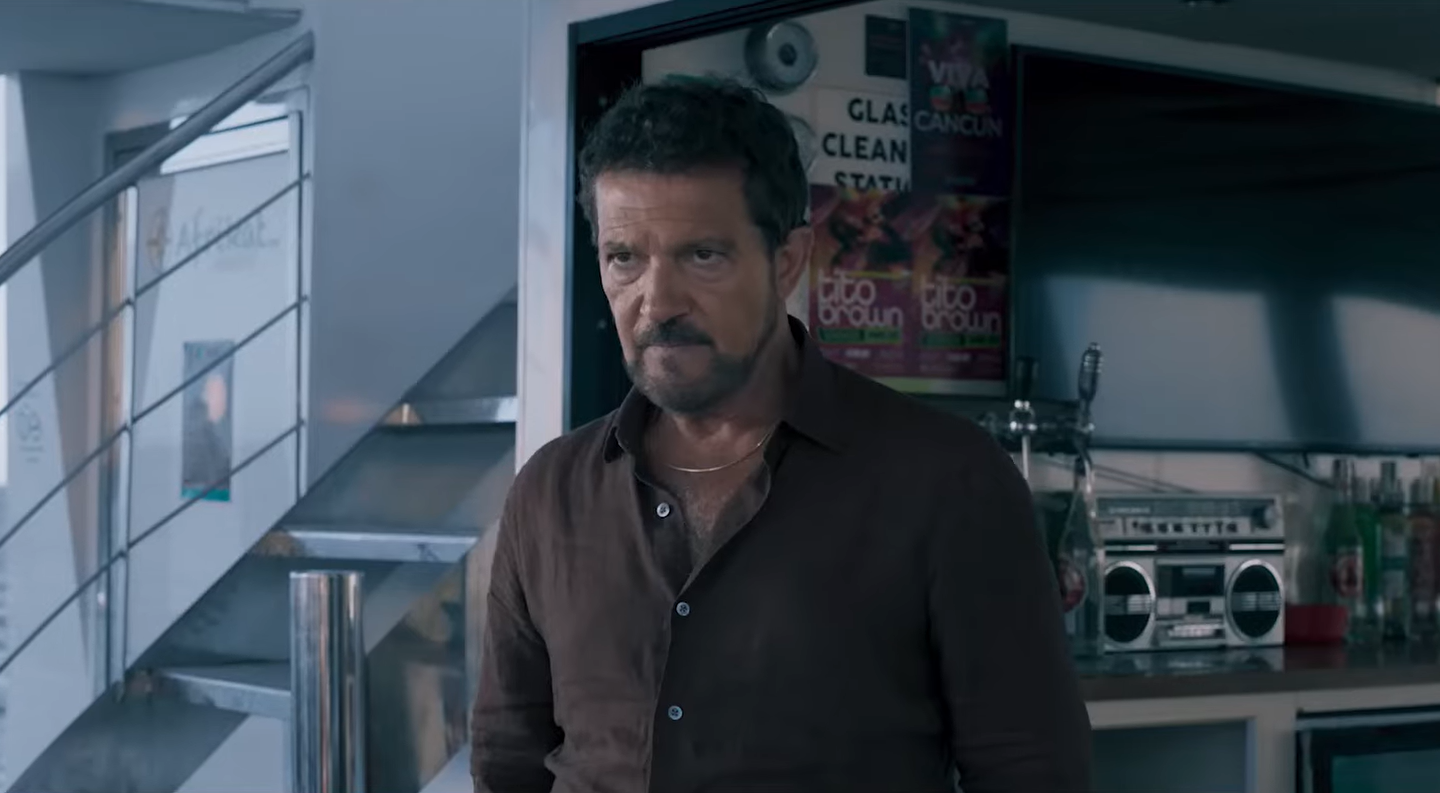
Laura Marano anchors the ensemble as Tatiana, delivering a earnest portrayal of a young woman at a crossroads in her relationship. Her chemistry with Christina Ochoa’s Kayle feels genuine, providing the film’s emotional core amid the chaos. Antonio Banderas steps into the role of the enigmatic cartel operative Burns; although the part is far from his most acclaimed work, he brings a measured intensity that avoids slipping into caricature.
Timothy V. Murphy and Louis Mandylor fill out the supporting ranks with solid, if unspectacular, turns, while Jess Liaudin’s brief but memorable appearance adds a layer of menace. The cast collectively manages to keep the characters from becoming mere props, even when the script pushes them into implausible situations.
Behind the Lens
Johnson’s direction shows noticeable growth in technical execution. The underwater sequences benefit from clear, well‑lit cinematography that lets the shark design appear credible rather than laughable—a marked improvement over his earlier efforts. Set‑piece staging is competent, with the transition from cramped boat decks to open ocean handled with a sense of spatial awareness.
Tony Giordano’s screenplay, however, remains the film’s weakest link: dialogue often feels wooden, and the plot leans heavily on convenient coincidences to push the narrative forward. The blend of shark‑horror tropes with cartel action creates tonal whiplash; moments of genuine tension are intermittently undercut by stretches of lethargic pacing. Production values are modest but adequate, reflecting a budget that allows for effective practical effects without overreaching into CGI extravagance.
Final Verdict
Above and Below (2026) is a film that tries to do too much at once. Its premise—merging deep‑sea predator terror with high‑stakes narcotics crime—offers fresh ground for a genre hybrid, and the movie does deliver a handful of genuinely suspenseful scenes, especially when the characters are trapped beneath the waves. The performances are respectable, and Johnson’s improved visual storytelling hints at a director refining his craft. Yet the script’s reliance on clunky exposition, uneven pacing, and occasional logical gaps prevents the picture from achieving consistent momentum.
For viewers who enjoy B‑level thrillers and can forgive occasional narrative shortcuts, the film provides enough adrenaline to warrant a watch. Those seeking a tightly plotted, emotionally resonant experience may find themselves drifting away before the final act surfaces. In short, Above and Below sinks in parts but manages to stay afloat long enough to merit a cautious recommendation—particularly for fans of shark‑centric action who are willing to overlook its flaws.