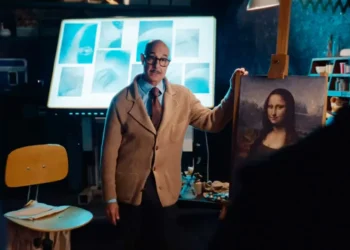


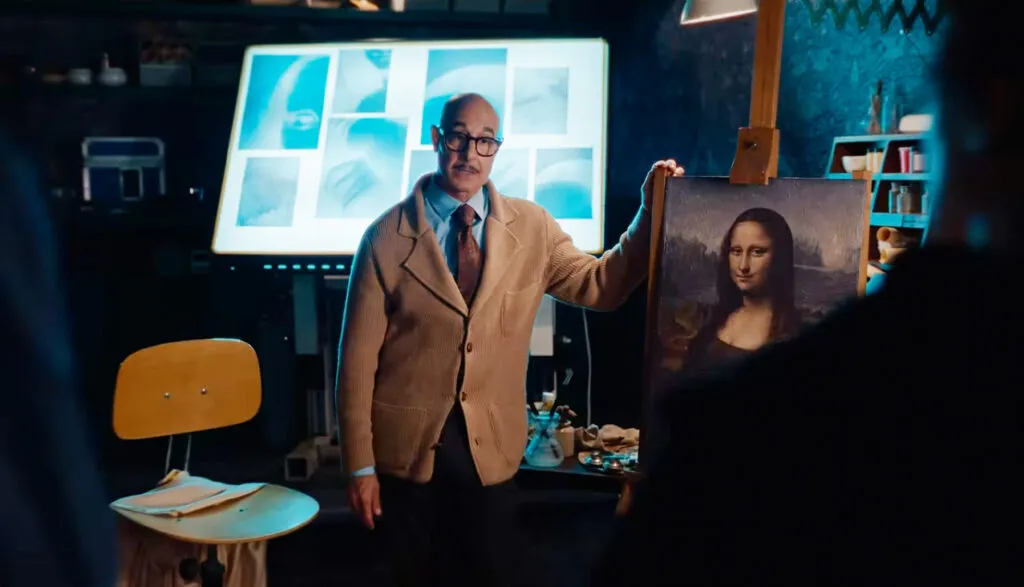
Prime Video’s latest crime‑comedy Masterplan arrives with a tantalising premise: a veteran thief plotting the theft of the Mona Lisa while dragging two estranged “children” into the caper. Headlined by the ever‑charismatic Stanley Tucci, the film promises a blend of slick heist mechanics and awkward family revelations. Does it deliver on that promise, or does the charm wear thin before the final frame? This review unpacks the movie’s strengths and shortcomings, offering a clear verdict for anyone weighing a leisurely stream.
Synopsis
Roger Cavendish (Stanley Tucci) is a seasoned burglar who decides to pull off one last spectacular job—lifting Leonardo’s masterpiece from the Louvre. To succeed, he recruits Jay (Victor Belmondo), an explosives specialist, and Chiara (Simona Tabasco), a cybersecurity ace. Unbeknownst to the pair, Roger claims to be their long‑lost father and presents them as siblings, a revelation that should upend their lives. As the trio plans the robbery, the film oscillates between tense preparation moments and brief, comedic beats that hint at the emotional fallout of Roger’s confession. The narrative never lingers long enough to explore the fallout, keeping the focus on the next obstacle rather than the characters’ inner turmoil.
Performances
Stanley Tucci carries the picture with his trademark wit and relaxed confidence, making Roger a likable rogue even when the script underserves him. His ease in delivering both sly one‑liners and quieter, paternal gestures adds a layer of charm that lifts the material whenever it threatens to stall. Victor Belmondo and Simona Tabasco share a pleasant on‑screen rapport; Belmondo’s steady assurance as Jay balances Tabasco’s energetic, tech‑savvy Chiara. Both actors inject enough personality to keep their roles engaging, yet the screenplay limits their arcs, leaving hints of deeper sibling chemistry unexplored. Supporting players such as Philippe Uchan, Foëd Amara and Élisabeth Vitali provide colourful texture, but none are given sufficient room to leave a lasting imprint.
Behind the Lens
Director Thomas Vincent keeps the pacing brisk, employing rapid cuts that match the film’s self‑described “madness” of mixing a high‑stakes art theft with sudden family drama. The cinematography leans on the picturesque streets of Paris and Italy, giving the production a polished, European‑flavoured look that feels apt for a Louvre‑centric plot. Editing ensures the 105‑minute runtime never drags, though it also contributes to the sensation that emotional beats are skimmed over in favour of moving to the next set piece. The score is light and unobtrusive, complementing the comedic tone without demanding attention. While the technical execution is competent, it never rises to the level of inventiveness needed to make the heist sequences feel truly clever or memorable.
Final Verdict
Masterplan succeeds as a visually appealing, well‑cast romp that offers fleeting enjoyment thanks largely to Stanley Tucci’s magnetic presence and the film’s glossy backdrop. However, the story squanders its intriguing premise by rushing through the familial revelation and skimping on character development, resulting in a heist that feels more procedural than ingenious. Humour hits sporadically, often feeling forced rather than emerging naturally from the characters’ situations.
For viewers seeking a light, undemanding watch, the movie may satisfy; for those hoping for a smart, emotionally resonant caper, it falls short of the cleverness its title suggests. In short, Masterplan is a decent, if forgettable, entry in the crime‑comedy genre—worth a stream when you’re in the mood for charm over depth.