


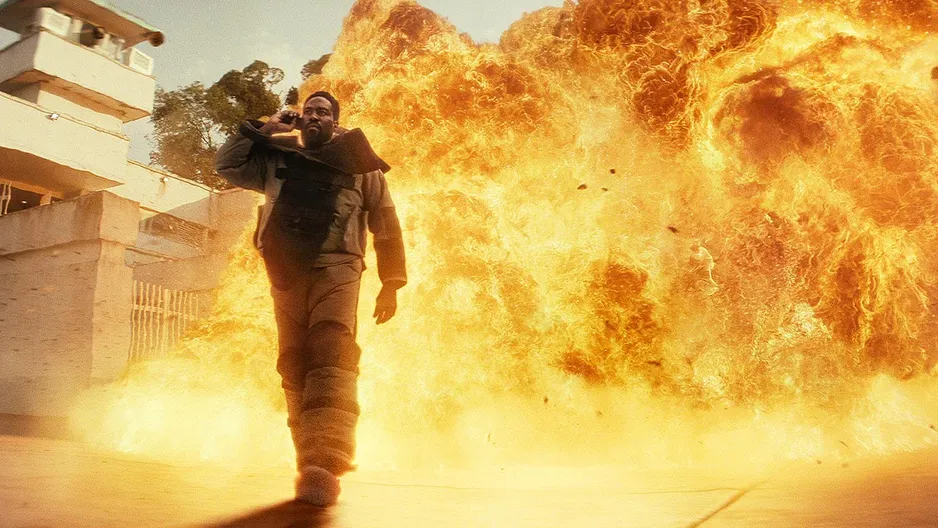
Netflix’s latest foray into the action-thriller genre, Man on Fire, arrives as a seven-episode series that is as technically proficient as it is narratively thin. While many viewers hold a sacred spot in their hearts for the 2004 Tony Scott film starring Denzel Washington—or perhaps even the 1987 Scott Glenn original—this new iteration seeks to modernize A. J. Quinnell’s 1980 novel. With showrunner Kyle Killen at the helm, the series attempts to distinguish itself through updated settings and character arcs. However, despite a powerhouse lead performance and some of the most visceral combat sequences on television this year, the show struggles to escape the shadow of its own predictability.
Story
The narrative centers on John Creasy, portrayed by Yahya Abdul-Mateen II, a high-level special forces operative who has become a hollow shell of his former self. Haunted by PTSD following a catastrophic mission that was pinned on him, Creasy is a man adrift. His long-time friend Paul, played by Bobby Cannavale, attempts to pull him back from the brink by securing him a security gig.
The transition back into “the life” is far from smooth. A botched operation leaves Creasy’s entire unit dead and him in a hospital bed with fragmented memories of the carnage. As he attempts to piece together the betrayal, tragedy strikes again when a massive explosion claims Paul’s life. Forced into a corner, Creasy must reclaim his lethal instincts to protect Paul’s young daughter, Poe, while digging through a conspiracy of “inside men” and shadow-dwellers. While the emotional stakes are present, the “twist” regarding the true villain is telegraphed so early that the buildup feels more like a formality than a mystery.
Performances
Yahya Abdul-Mateen II is the undisputed engine of this series. Fresh off his impressive stint in Wonder Man, he brings a nuanced, simmering intensity to John Creasy. He expertly balances the character’s physical lethality with a deep sense of wounded vulnerability. Abdul-Mateen II makes it easy to root for Creasy, even when the character is at his most violent. His performance is so commanding that it’s easy to envision him taking on iconic roles like James Bond in the future. Bobby Cannavale also provides a much-needed grounded energy as the loyal friend, providing a brief but essential emotional anchor for the first half of the season.
Behind the Lens
From a technical standpoint, Man on Fire excels. The action direction—particularly the early airplane sequence helmed by Steven Caple Jr.—is top-tier. The stunt department deserves high marks for making the combat feel authentic. Unlike many action heroes who glide through fights unscathed, Creasy takes a beating. Watching him struggle to find his rhythm and physically suffer through brawls adds a refreshing layer of realism to the show. However, the project’s Achilles’ heel is the pacing. At seven episodes, the story feels stretched thin. The script relies on tired tropes and a “secret bad guy” formula that feels dated, suggesting that this story would have been far more impactful as a tight, two-hour feature film.
Final Verdict
Man on Fire is a competently made, high-budget action series that unfortunately suffers from an undercooked script. It is salvaged by Yahya Abdul-Mateen II’s magnetic screen presence and some truly thrilling set pieces that action junkies will certainly appreciate. If you are looking for a gritty, no-nonsense distraction with excellent fight choreography, this is a solid weekend binge. However, if you are looking for a narrative that matches the depth of its lead actor’s talent, you might find this version of Creasy’s journey a bit too familiar.