

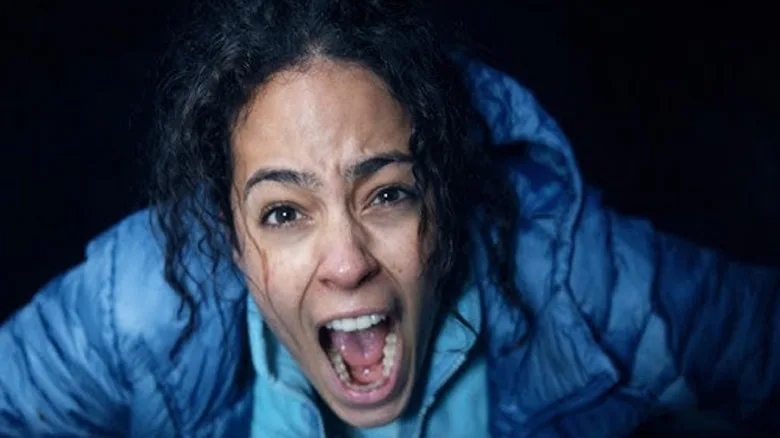
The most memorable horror films understand a fundamental truth: true terror doesn’t come from the completely unfamiliar, but from the everyday twisted just enough to make your skin crawl. Writer-director André Øvredal, the talented filmmaker behind 𝘚𝘤𝘢𝘳𝘺 𝘚𝘵𝘰𝘳𝘪𝘦𝘴 𝘵𝘰 𝘛𝘦𝘭𝘭 𝘪𝘯 𝘵𝘩𝘦 𝘋𝘢𝘳𝘬 and 𝘛𝘩𝘦 𝘓𝘢𝘴𝘵 𝘝𝘰𝘺𝘢𝘨𝘦 𝘰𝘧 𝘵𝘩𝘦 𝘋𝘦𝘮𝘦𝘵𝘦𝘳, returns with 𝘗𝘢𝘴𝘴𝘦𝘯𝘨𝘦𝘳, a film that transforms the romantic notion of an open-road adventure into something far more sinister. What begins as an ordinary journey across desert highways and quiet rest stops gradually mutates into an exercise in sustained anxiety. By the time the final credits appear, you may find yourself reconsidering that solo midnight drive.
What makes 𝘗𝘢𝘴𝘴𝘦𝘯𝘨𝘦𝘳 so effective lies in its understanding of vulnerability. There’s an inherent exposure in driving alone at night through empty stretches of highway where civilization feels miles away. The film weaponizes this exposure, tapping into those thoughts that creep into every driver’s mind: what happens if the car breaks down? What if something is following? These questions, when allowed to fester, create a foundation of dread that Øvredal builds upon masterfully throughout the runtime.
Synopsis
The narrative follows Maddie and Tyler, a couple whose road trip takes a catastrophic wrong turn somewhere between ordinary and terrifying. What makes the premise so unnerving is its mundanity at the start. These are two people you could know, driving somewhere you might have been, doing something millions do every day. The horror doesn’t arrive through supernatural intrusion or demonic invasion; it emerges organically from the isolation inherent in long-distance travel.
The entity pursuing our protagonists represents exactly the kind of antagonist that works best in contemporary horror. It’s not a villain you can reason with or understand through conventional logic. Instead, it functions more like an environmental force, omnipresent and inevitable. No matter how fast they drive or which direction they turn, the threat remains constant. That sense of inescapable doom permeates every frame, creating a suffocating atmosphere that refuses to lift even during the film’s quieter moments.
Performances
Lou Llobell and Jacob Scipio deliver performances that ground the horror in emotional reality. Before the terrifying events fully unfold, the film wisely invests time in establishing their relationship dynamics. They communicate an easy, authentic connection that feels genuine rather than constructed for the narrative’s purposes. When crisis arrives, you care about their survival because the film has already made you invest in who they are.
Midway through the story, there’s a notably effective scene grounded in intimate dialogue that reveals the cracks beneath their relationship surface. Without spoiling the specifics, the moment suggests fundamental desires that may ultimately drive them apart. It’s not profound character study by any stretch, but it provides enough emotional anchor to make their escalating danger feel personally urgent rather than abstractly threatening.
Behind the Lens
André Øvredal’s directorial choices elevate 𝘗𝘢𝘴𝘴𝘦𝘯𝘨𝘦𝘳 from competent genre exercise to genuinely unsettling experience. His visual approach favors extended takes and deliberate camera movements that create profound unease. The camera drifts and circles, forcing viewers to scrutinize every corner of the frame while simultaneously never quite revealing what lurks within those shadows. This technique induces paranoia through anticipation rather than revelation.
A particularly memorable sequence showcases this approach perfectly. Maddie approaches her vehicle alone in a nearly deserted parking lot late at night. It’s a scenario almost everyone has experienced, yet under Øvredal’s direction, it becomes agonizingly tense. The camera’s patient observation transforms ordinary shadow into potential threat and distant movement into harbinger of doom. This is the kind of scene that embeds itself in your subconscious, making the next visit to an empty parking lot feel slightly more treacherous.
The practical effects and makeup work deserve particular recognition. When the film does turn graphic, it does so with thoughtful restraint and visceral impact. The physical effects feel tactile and real without descending into gratuitous excess, proving once again that restraint often achieves greater psychological impact than limitless gore.
Final Verdict
Not every horror film needs to revolutionize the genre to succeed, and 𝘗𝘢𝘴𝘴𝘦𝘯𝘨𝘦𝘳 understands this perfectly. Its strength lies not in innovation but in execution. The film excels at creating sustained unease, understanding that suggestion often terrifies more than explicit revelation. It respects the audience’s intelligence by letting imagination do much of the heavy lifting.
The antagonist design, while generally effective, does occasionally draw from familiar horror iconography. As the climax approaches, the entity becomes slightly more defined, slightly more human, which risks diminishing the otherworldly mystique that made it so threatening earlier. This is a minor quibble in an otherwise carefully constructed horror experience, but it represents the film’s most notable concession to conventional storytelling.
In the end, 𝘗𝘢𝘴𝘴𝘦𝘯𝘨𝘦𝘳, released in theatres on May 22, 2026, succeeds because it lingers. It follows you out of the theater and creeps into your consciousness during subsequent nighttime drives. You’ll find yourself checking rearview mirrors more carefully and hesitating before stepping into empty lots. This transformation of mundane experience into source of anxiety represents the film’s greatest achievement. It takes freedom and adventure, those positive associations we attach to road travel, and recontextualizes them through a lens of vulnerability and threat. Once that fear takes root, it proves remarkably difficult to outrun.
Also Read:
Buckle Up for Terror: “Passenger” Trailer Promises a Truly Demonic Road Trip