

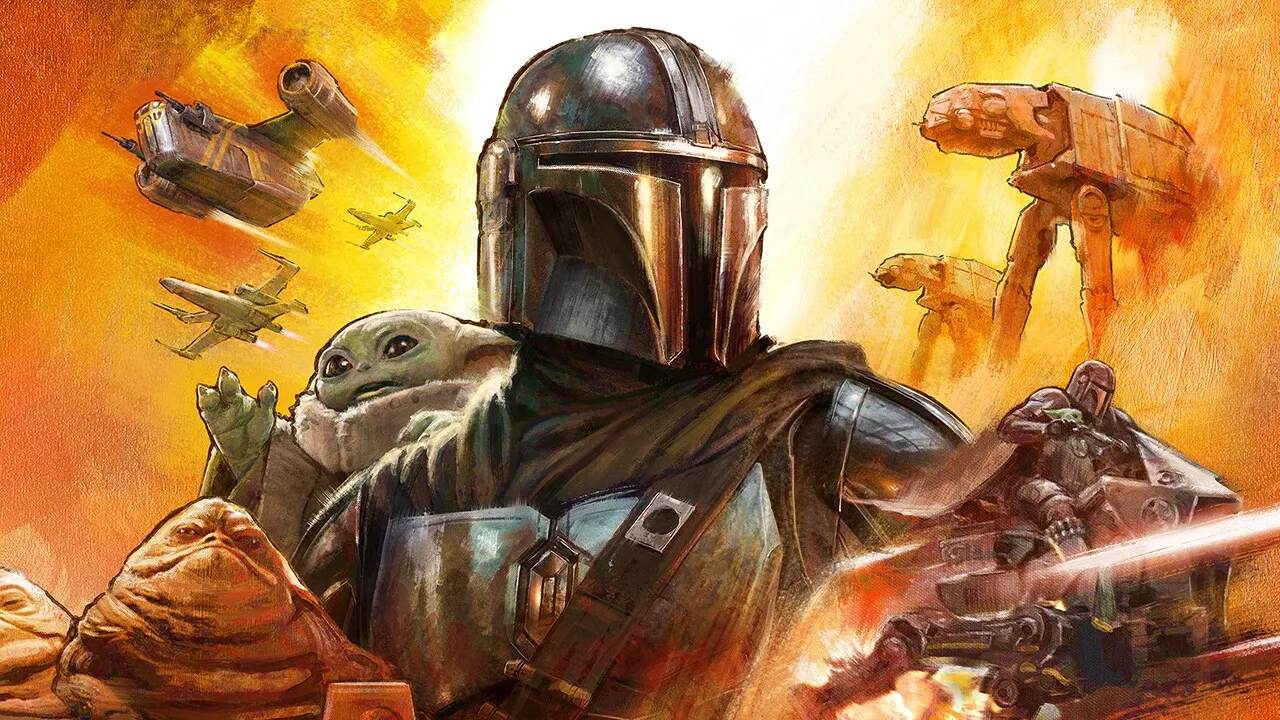
Jon Favreau’s decision to bring Din Djarin and his pint-sized Force-sensitive companion from the small screen to theatrical prominence represents one of the most intriguing experiments in contemporary franchise filmmaking. 𝘵𝘩𝘦 𝘔𝘢𝘯𝘥𝘢𝘭𝘰𝘳𝘪𝘢𝘯 𝘢𝘯𝘥 𝘎𝘳𝘰𝘨𝘶 arrived in cinemas carrying the considerable weight of audience expectations forged through three seasons of episodic excellence on streaming platforms. This theatrical transition asks a fundamental question that haunts many franchise expansions: can content designed for intimate viewing environments successfully scale upward without losing the intimate qualities that made audiences fall in love in the first place?
Synopsis
The narrative unfolds several years after the collapse of Imperial hegemony, finding Din Djarin and Grogu now operating within the institutional framework of the burgeoning New Republic. Under the command structure led by Colonel Ward, portrayed with steely authority by Sigourney Weaver, the dynamic duo accepts an assignment that promises both financial compensation and valuable intelligence regarding lingering Imperial sympathizers scattered across the galaxy.
Their mission centers on locating and extracting Rotta the Hutt, a character who represents one of the film’s most deliberately provocative creative choices. Rather than presenting Jabba’s offspring as the slug-like creature generations of Star Wars audiences might expect, the production reimagines Rotta as a muscular, gladiator-esque entity whose physical design immediately signals departures from established biological lore. This aesthetic gambit creates initial cognitive dissonance but ultimately contributes to the character’s unexpected emotional resonance.
The rescue operation unfolds primarily on Shakari, a planet rendered in neon-drenched visual style that evokes cyberpunk aesthetics while maintaining distinctly alien characteristics. The journey also takes our heroes to the swamp-ridden surfaces of Nal Hutta, where the criminal underworld maintains ancient traditions amid environmental decay. Throughout these diverse settings, a curious structural pattern emerges that reflects the production’s small-screen origins. Each distinct location functions almost as an independent television segment, complete with its own self-contained challenges and resolutions, rather than contributing to a unified cinematic arc that builds progressively toward climax.
The central relationship between the patient teacher and his eager learner remains the story’s emotional anchor, even as the surrounding plot concerns itself with questions of galactic political stability versus hyper-localized family drama. The screenplay deliberately constrains its scope around the immediate concerns of Jabba the Hutt’s lineage, isolating villains and conflicts in ways that prioritize comfortable familiarity over the sprawling significance that theatrical Star Wars entries typically embrace. This cautious approach prevents narrative overwhelm but also sacrifices the sense of consequence that distinguishes memorable cinematic experiences from extended television episodes.
Performances
The physical embodiment of Din Djarin presents unique challenges that the production addresses through remarkable choreographic precision. The character’s near-constant armor coverage demands exceptional synchronization between physical performance and post-production vocal layering, a technical requirement that Brendan Wayne and Lateef Crowder execute with admirable fluidity. Their collaborative effort establishes a distinctive combat vocabulary for the armored bounty hunter, one that combines calculated efficiency with moments of vicious efficiency that underscore the character’s fearsome reputation within the galactic community.
Pedro Pascal’s vocal performance provides the calm, steady presence that has defined the character across multiple seasons of streaming content. His delivery maintains the measured stoicism that audiences have come to expect, creating a reliable emotional anchor even when the screenplay offers limited opportunities for range expansion. Pascal’s challenge lies not in capability but in constraint, as the script rarely demands the emotional variation that would prevent the character from feeling somewhat static and unchanging throughout the feature runtime.
Jeremy Allen White’s portrayal of Rotta the Hutt represents the performative wild card that electrifies occasional moments while creating initial friction with the character’s unconventional design. White adopts a grounded, conversational approach that initially seems to clash with the visual absurdity of a muscular Hutt gladiator, creating a dissonance that the screenplay compounds through repetitive monologues about escaping paternal shadows and establishing independent identity. Yet the performance achieves unexpected tenderness precisely in moments of genuine connection with young Grogu, eventually justifying the character’s prominent screen time through emotional authenticity that transcends the clumsy dialogue he’s asked to deliver.
The supporting ensemble delivers mixed results that reflect the production’s tendency toward fan service over character development. Sigourney Weaver brings effortless authority to Colonel Ward, executing familiar military archetypes with the professionalism one expects from an actress of her caliber. However, appearances from animated universe favorites like Zeb Orrelios and the bounty hunter Embo function primarily as acknowledgment-winking cameos rather than fully realized participants in the narrative, their presence serving dedicated fans without earning their dramatic keep.
The true performance highlights arrive courtesy of the Anzellan modification crew, whose puppet-driven portrayal injects genuine humor and perspective shifts into the film’s middle passages. These diminutive mechanical experts provide not just comic relief but also demonstrate the continued relevance of practical puppetry in an era dominated by digital effects, grounding the massive production in tangible, artisanal charm that serves as welcome counterweight to the spectacle’s more overwhelming tendencies.
Behind the Lens
Jon Favreau’s directorial approach establishes clear visual demarcation between sequences designed to exploit theatrical grandeur and those that revert to the claustrophobic intimacy of the streaming era. This dual approach creates an inconsistent visual identity that mirrors the production’s broader structural uncertainty about its theatrical purpose. The open-air sequences, particularly the opening AT-AT confrontation, establish impressive technical standards that justify the big-screen investment while showcasing what premium presentation can accomplish when deliberately designed for scale.
However, this visual discipline erodes notably once the narrative retreats into tighter, darker environments. The Shakari fighting pit sequence, positioned as a centerpiece action set piece, suffers from cinematography that obscures rather than illuminates the physical performances beneath. Frantic editing rhythms flatten the visual distinction between combatants, rendering group skirmishes into illegible digital flurries where individual heroism becomes impossible to track. Favreau’s difficulty maintaining geographical clarity during ensemble conflicts forces reliance on rapid cutting that sacrifices the kinetic readability that distinguishes memorable action choreography from mere chaos.
The single creative highlight amid these visual confusions emerges through specialized choreography developed for Rotta’s muscular fighting style, a rolling maneuver that provides momentary visual distinction amid the surrounding combat illegibility. This isolated creative success underscores how the production’s technical achievements often arrive in brief, isolated moments rather than sustained sequences.
The third act quiet passages reveal the production’s genuine visual strengths when freed from action spectacle demands. Extended moments focusing on Grogu’s practical puppetry within swamp environments allow Legacy Effects’ meticulous craftsmanship to receive proper attention, with cameras capturing facial movements and weight shifts that digital animation typically sacrifices to more dynamic camera angles. These restrained sequences demonstrate that the production’s practical artistry achieves its most affecting results when permitted to operate without competing against kinetic excess.
Ludwig Göransson’s musical contributions provide crucial support during these tonal transitions, delivering synth-heavy variations on established themes that generate energy boosts precisely when the narrative struggles to maintain momentum. His electronic interpretations of classic character themes inject vitality into passages that might otherwise drift into the noncommittal narrative fakeouts that plague the third act’s resolution. The score functions as the production’s most consistently effective element, bridging gaps between visual inconsistencies and emotional shifts with professional efficiency.
The production’s awareness of commercial responsibilities manifests through deliberate deployment of franchise iconography designed to maintain audience engagement. X-wing dogfights, reconditioned Razor Crest appearances, and familiar spacecraft all receive reverent treatment that prioritizes comforting recognition over narrative originality. These elements integrate with slightly more sophistication than recent streaming seasons managed, though they simultaneously acknowledge an industrywide tendency to substitute nostalgic satisfaction for genuine storytelling ambition.
Final Verdict
The fundamental tension undermining 𝘵𝘩𝘦 𝘔𝘢𝘯𝘥𝘢𝘭𝘰𝘳𝘪𝘢𝘯 𝘢𝘯𝘥 𝘎𝘳𝘰𝘨𝑢 emerges from the conflict between theatrical expectations and structural reality. The production seems acutely aware of what multiplex audiences anticipate from a Star Wars cinematic experience while simultaneously constrained by content that functions more naturally as extended television. This awareness produces a viewing experience that occasionally feels like an elaborate apologize for not delivering the spectacle audiences might have expected, compensating through nostalgic deployment of familiar elements rather than embracing the narrative risks that distinguish memorable theatrical entries from comfortable retreads.
The film achieves its most profound emotional register precisely when it abandons these protective strategies and engages with deeper relationship realities. Brief contemplations of the long-term trajectory between immortal child and mortal protector offer glimpses of radically richer artistic territory than the surrounding narrative explores. These quiet moments of existential reflection regarding Grogu’s inevitable survival of his beloved guardian achieve genuine impact precisely because they suggest a braver version of this story, one willing to explore the melancholy beneath the adventure rather than retreating into explosive conventionality.
Ultimately, 𝘵𝘩𝘦 𝘔𝘢𝘯𝘥𝘢𝘭𝘰𝘳𝘪𝘢𝘯 𝘢𝘯𝘥 𝘎𝘳𝘰𝘨𝑢 functions as a perfectly competent entry in the ongoing Star Wars saga that occasionally hints at something more without ever fully committing to transformation. For general audiences seeking nostalgic comfort and established character dynamics, the theatrical outing delivers exactly what marketing promises. For viewers hoping that the leap to cinema would elevate source material toward new creative territory, the experience proves slightly disappointing through the consistent prioritization of profitable formula over emotional daring.
The movie released in theatres on Friday, May 22, 2026, inviting audiences to determine for themselves whether intimate dynamics truly benefit from expansive presentation or whether some stories remain most powerful when experienced in the intimacy originally intended.