

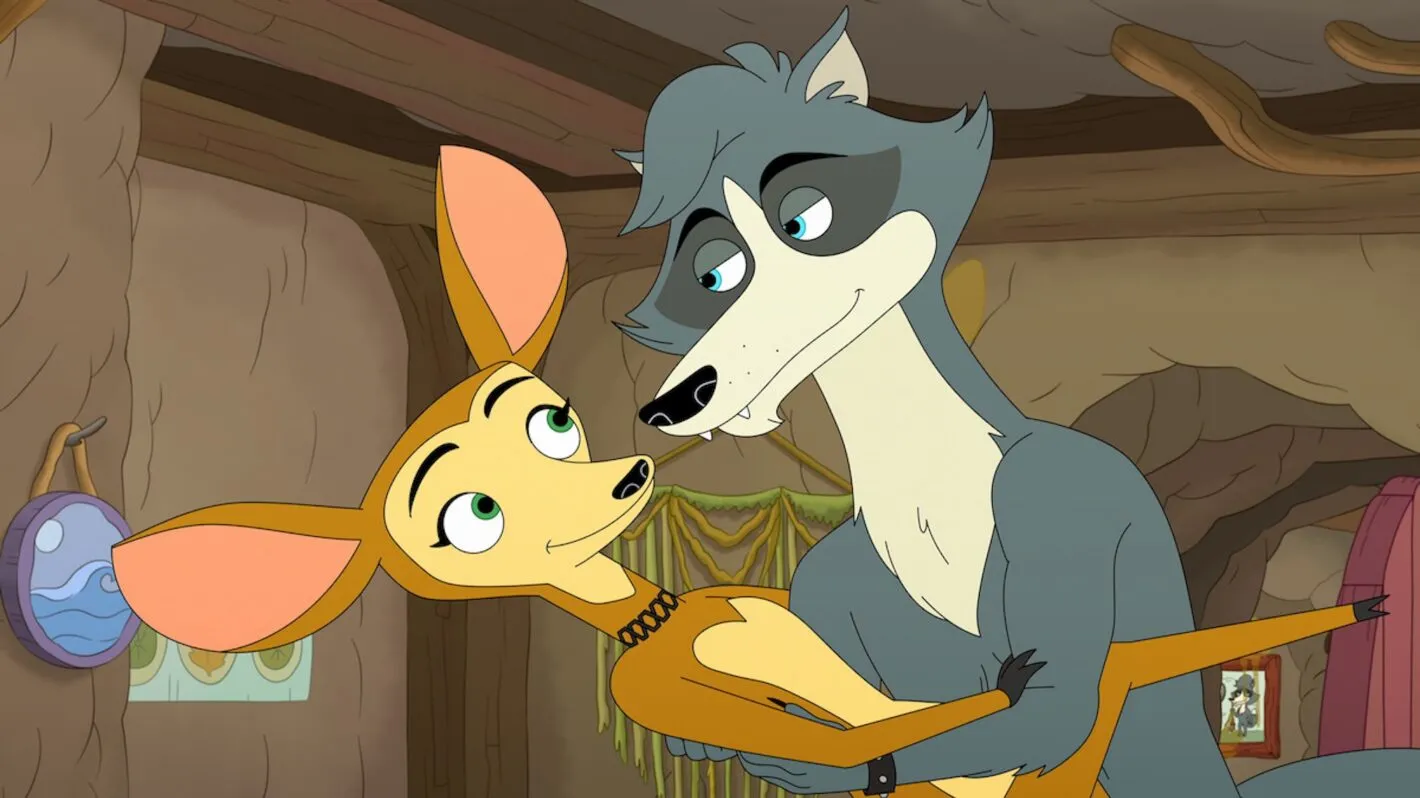
The creative team behind Netflix’s acclaimed animated comedy Big Mouth returns with another unapologetically bold exploration of desire, vulnerability, and the awkward realities of intimate life. Titled Mating Season, this latest series functions as a spiritual successor to its predecessor, maintaining the same irreverent approach to sexuality while transplanting the action from a middle school classroom to a sprawling forest civilization populated by anthropomorphized animals. The premise is undeniably ambitious—taking the frank sexual commentary that made Big Mouth so refreshing and filtering it through the peculiar lens of zoological behavior. Unfortunately, while the concept brims with potential, the execution frequently stumbles, resulting in a series that entertains without ever quite achieving the emotional resonance or boundary-pushing brilliance of its inspiration.
Synopsis
Mating Season unfolds in a world where woodland creatures have developed a society that mirrors human civilization in curious and frequently grotesque ways. The inhabitants speak complex languages, form nuclear families, patronize gay bars, and navigate the same romantic complications that plague humans everywhere. However, they remain firmly grounded in their animal nature, creating a fascinating friction between their sophisticated social structures and their primal biological instincts.
This unique setting allows the series to explore adult sexuality through an unconventional filter. Funerals in this world conclude with buzzards being ceremonially invited to consume the bodies of the deceased—a ritual that is treated with the same gravitas as any human memorial service. Romantic encounters between mammals result in the partners being physically bound together for extended periods as they wait for their reproductive systems to separate naturally. The series treats these bizarre customs with the same matter-of-fact acceptance it applies to human relationship milestones, blurring the lines between the animalistic and the civilized in ways that are simultaneously humorous and thought-provoking.
The narrative structure follows the template of classic sitcom construction, with multiple character threads weaving together around central themes and periodically intersecting at a local bar called the Watering Hole. This episodic approach provides ample opportunities for the ensemble cast to explore various facets of love, lust, and emotional connection while allowing individual storylines to develop distinct identities within the larger narrative framework.
Characters
The series centers on four central figures, each representing a different approach to romance and intimacy that will be immediately recognizable to anyone familiar with dating dynamics.
Josh, voiced by Zach Woods, serves as the emotional anchor of the group—a sensitive bear grappling with the aftermath of a devastating breakup. His storyline explores the experience of returning to one’s childhood home during times of personal crisis, capturing the peculiar mix of comfort and suffocation that accompanies such circumstances. Josh’s gentleness and self-awareness make him the series’ most sympathetic character, though his emotional journey occasionally threatens to overwhelm the comedic elements.
Ray, portrayed by series co-creator Nick Kroll, provides much of the show’s raunchier energy as an insatiable raccoon whose seemingly endless appetite for casual encounters may stem from deeper psychological issues. The series suggests his compulsive sexual behavior originates from an insecure attachment to his mother—a character who once attempted to eat his face, a behavior the show presents as both authentically disturbing and darkly funny given raccoons’ actual behavioral patterns.
Fawn, voiced by June Diane Raphael, embodies the confident exterior meets internal uncertainty archetype. As a strikingly attractive deer navigating the dating world, she confronts the particular disappointment that accompanies realizing physical attractiveness does not automatically translate to romantic satisfaction. Her episode “The Lull” centers on her daunting realization that she must initiate a romantic gesture for the first time, exposing the vulnerability behind her polished exterior.
Penelope, portrayed by Sabrina Jalee, rounds out the quartet as a shy fox nursing a broken heart. Her storyline involves processing past romantic wounds and confronting the ways unresolved emotional baggage continues to shape present behavior. A visit to a fortune teller in her arc serves as a catalyst for examining how childhood experiences continue to influence adult relationship patterns.
Behind the Lens
Mating Season carries an impressive creative pedigree, developed by the talented quartet of Nick Kroll, Andrew Goldberg, Jennifer Flackett, and Mark Levin. This team previously collaborated on Big Mouth, bringing their accumulated expertise in animated comedy and sexual education to this new project. Their experience is evident in the show’s confident pacing and willingness to tackle topics that most comedies would rather avoid.
The animation production embraces the series’ animal premise with enthusiasm, creating a visual world that feels both naturalistically grounded and absurdly humanized. The environmental design effectively communicates the civilization-building capabilities of these creatures while maintaining their essential animal characteristics. Settings range from the cozy warmth of the Watering Hole pub to the sprawling wilderness beyond, each environment reinforcing the series’ central tension between civilization and nature.
The writing staff demonstrates particular skill in constructing jokes that work on multiple levels—surface-level absurdity combined with more thoughtful observations about human behavior reflected through the animal lens. Episode three exemplifies this approach, with jokes about snail mucous serving as lubricant existing alongside genuine insights about social anxiety and the pressure of initiating romantic physical contact.
Final Verdict
Mating Season represents a fascinating creative experiment that partially succeeds despite its conceptual challenges. The decision to shift from teenage characters to animal protagonists fundamentally alters the series’ relationship with its audience. Big Mouth succeeded partly because its child characters with adult voices created a specific context for discussing uncomfortable truths about sexuality—the gap between how children experience the world and how adults understand that experience provided both comedy and genuine insight. Mating Season attempts to replicate this dynamic by wrapping adult voices in animal personas, but the parallel proves less fruitful. These are animals engaging in behaviors that happen to mirror human sexuality, rather than humans experiencing sexuality through the heightened awareness of childhood.
The series functions perfectly well as raunchy animated comedy, delivering consistent laughs through its rapid-fire jokes about biological absurdity, territorial marking, and the general indignities of mating behavior. The humor lands frequently enough to maintain viewer engagement, and the ensemble voice performances bring considerable charm to their respective characters.
However, Mating Season never quite achieves the uncomfortable honesty that made Big Mouth so memorable. The series explores themes of intimacy and vulnerability without ever truly confronting the viewer with repressed thoughts or uncomfortable truths about their own psycho-sexual development. The animal filter provides distance that simultaneously protects and diminishes—the comedy feels less dangerous, less likely to expose something the audience would prefer to keep hidden. The result is an entertaining but ultimately safe viewing experience, enjoyable but never essential.
For fans of the creative team’s previous work, Mating Season provides more of what made Big Mouth appealing while offering a fresh perspective on familiar themes. Just don’t expect it to achieve the revolutionary impact of its predecessor.