

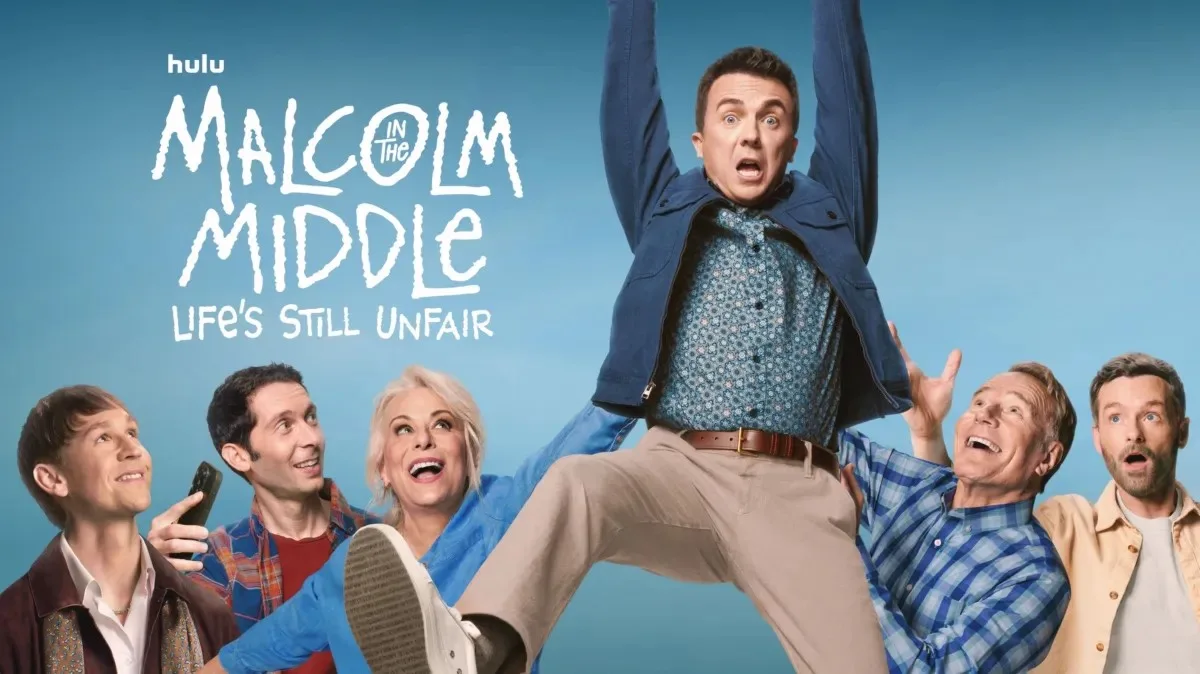
Bringing a beloved sitcom back from the dead is a high-stakes gamble in television. It requires the audience to accept that the characters we left behind decades ago have continued to exist in the shadows of our absence. From 2000 to 2006, Malcolm in the Middle was a masterclass in high-octane domestic warfare—a loud, frantic, and brutally honest depiction of its era. Now, through Hulu and Disney+, the Wilkerson clan returns in the four-part miniseries Life’s Still Unfair. This revival avoids the typical “reboot fatigue” by refusing to dilute the acidic wit and frantic energy that made the original a cult classic.
Story
The narrative logic of Life’s Still Unfair is rooted in the psychological fallout of being a “child genius” in a broken home. We find Malcolm, played by Frankie Muniz, living a life of structured altruism as the head of a major food bank charity. However, his professional success is a mask for a life built on carefully constructed seclusion. To protect his companion Tristan (Kiana Madeira) and his teenage daughter Leah (Keeley Karsten), Malcolm has effectively ghosted his family.
That isolation shatters when Hal and Lois arrive unannounced to celebrate their 40th wedding anniversary. What follows is a swift deconstruction of Malcolm’s orderly world. As the family converges, the show leans into its quintessential theme: no matter how much you evolve, your bloodline has an uncanny ability to drag you back into the mud of your past.
Performances
While the entire original cast returns—including a seamless performance by Caleb Ellsworth-Clark as a grown-up Dewey—the series remains anchored by Bryan Cranston. Returning to the role of Hal with an almost reckless intensity, Cranston proves he hasn’t lost his comedic timing. His standout moment occurs in the third installment, where a drug-induced existential crisis allows him to blend absurd slapstick with genuine pathos. He manages to make Hal both a figure of ridicule and a tragic hero.
Jane Kaczmarek is equally formidable as Lois, the matriarch who has spent forty years as the only thing standing between her family and total incarceration. The friction between her and the now middle-aged Francis (Christopher Masterson) feels as authentic as ever. Meanwhile, Justin Berfield provides some of the sharpest contemporary satire as Reese, who has pivoted his impulsive energy into a career as a “disaster vlogger,” monetizing his personal failures for a digital audience.
Behind the Lens
The decision to cap the revival at four episodes is a stroke of narrative genius. By trimming the fat, the creators ensure that every scene serves a purpose, escalating the tension from a tense reunion in episode one to a full-scale family “detonation” by episode three. The final chapter offers a resolution that feels earned through conflict rather than easy sentimentality.
Directorially, the show maintains its signature single-camera, fourth-wall-breaking style, but with a more mature palette. The humor is darker, the stakes are higher, and the inclusion of occasional profanity reflects the “adult damage” of the characters. A pivotal confrontation between Malcolm and Lois in a public restroom—interrupted by the sounds of a stranger’s digestive crisis—perfectly encapsulates the show’s philosophy: meaningful emotional breakthroughs are rarely granted a quiet or clean location.
Final Verdict
Life’s Still Unfair is not without its minor flaws; some legacy cameos feel a bit hollow, and a few running gags are stretched thin. However, it succeeds where most reboots fail because it prioritizes the central truth of the original: love in a working-class family is expressed through chaos.
The miniseries functions as a poignant coda to the original 151 episodes. It acknowledges the bitter necessity of family—the people most capable of hurting you are also the only ones who truly understand you. It is a sharp, unsentimental, and hilariously frantic epilogue that proves that while the children have grown up, the world remains as delightfully unjust as ever.