

A naked man, unconscious behind a fast food restaurant, claiming to have lost every memory of who he once was. What seemed like an open-and-shut case of medical mystery has transformed into something far more sinister, according to groundbreaking new documentary evidence. The man who called himself Benjamin Kyle, discovered in rural Georgia two decades ago, may have been running from something far more terrifying than a simple case of amnesia.
The Discovery That Started It All
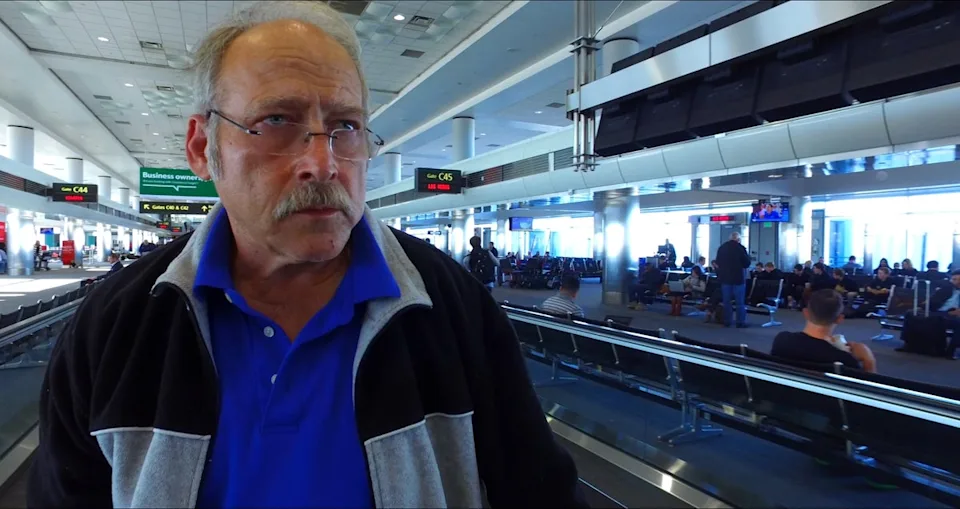
On a warm August evening in 2004, a Burger King employee in Richmond Hill, Georgia, made a discovery that would captivate investigators and the public alike. Lying naked and unconscious behind the fast food restaurant was a man in his mid-fiftes, with no wallet, no identification, and no recollection of his identity. When he eventually regained consciousness, hospital staff temporarily admitted him under the name “Burger King Doe,” which was later shortened to “B.K. Doe.”
Upon speaking with medical professionals, the man introduced himself as Benjaman, claiming his last name was Kyle because it corresponded with the BK initials of his temporary designation. He believed his birth date was August 29, 1948, and he had fragmented, blurred memories suggesting connections to Denver, Colorado, and Indiana. However, he could not explain how he ended up in Georgia or recall any other significant details about his former life. Physicians diagnosed him with dissociative amnesia, an extremely rare condition that had apparently erased nearly all memories connected to his past.
The mysterious figure settled in Jacksonville, Florida, but found himself unable to establish a normal life without a social security number or government-issued identification. His extraordinary story quickly attracted national attention, leading to television appearances on Dr. Phil and extensive media coverage as investigators, journalists, and curious citizens alike struggled to uncover his true identity.
A New Documentary Reveals Darker Secrets
More than twenty years after his discovery, Investigation Discovery is revisiting this baffling case in a provocative new two-night, four-part docuseries. The Many Lives of Benjaman Kyle premieres May 25 and May 26, promising to expose a narrative far darker than anyone originally suspected.
Filmmakers Shannon and Eric Evangelista, the founders of Hot Snakes Media, initially approached this story with purely compassionate intentions. Their goal was to help the mysterious stranger recover his lost identity and piece together the fragmented puzzle of his past. However, their investigation took an unexpected turn as they uncovered troubling inconsistencies in his story and gathered witness accounts suggesting connections to multiple cold cases spanning decades.
“We’re not trying to destroy this man,” Shannon Evangelista explained in interview footage featured in the documentary. “But the more we learned about him, the more he started getting defensive. He wants to control the flow of information, and that raised serious red flags for our team.”
The Identity Puzzle Finally Solved
In April 2015, genetic genealogists finally cracked the case that had stumped investigators for over a decade. A team led by CeCe Moore, who heads the Parabon NanoLabs genetic genealogical unit, identified the mystery man as William Burgess Powell, a native of Indiana who had vanished in 1976.
According to a missing persons report filed by Powell’s brother, William disappeared from his Indiana home in March 1976. His vehicle was discovered abandoned in a remote area of Battleground, Indiana, with the license plates removed. His family had long assumed he had died, never imagining he had been living under an assumed name nearly 1,000 miles away in Georgia.
At age sixty-seven, Powell was finally able to obtain legal identification and access government assistance. Yet according to the documentary filmmakers, identifying his name was merely the beginning of understanding a much more complex story. The question that continued to haunt investigators was: what happened between 1976 and 2004?
Cold Cases and Crime Family Connections
Armed with new determined curiosity, the investigative team accompanied Powell across the country, including a trip to Indiana where he was reunited with his brother and a return to Purdue University, where he had once worked as a janitor before his disappearance.
According to witness accounts featured in the documentary, Powell may have had connections to a powerful crime family operating in Lafayette, Indiana. Some sources suggest his dramatic disappearance in 1976 may have been a calculated escape—possibly a matter of survival rather than a genuine memory loss.
The docuseries examines in detail the story of George Keck, a figure investigators long suspected of connections to several unsolved Indiana cases before his death in 2020. Both Powell and Keck were employed as janitors at Purdue University at the time of the 1977 disappearance of Kristine Kozik, a student whose body was discovered two miles from a location called The Bar—a location the documentary claims served as a gathering place for the alleged crime family.
In extraordinary footage captured on camera, Evangelista confronts Keck about his knowledge of Powell. “It’s not the most comfortable thing knowing I’m going to speak with the prime suspect—whose own wife said he was responsible,” Evangelista admits in the documentary. “I’ll do it, but I’m not happy about it. I hope I don’t end up in a ditch.”
During that pointed conversation, Keck revealed disturbing details about Kozik’s death that investigators had never before made public. “They wanted me as a suspect, and I failed a lie detector test because I did know more than I was letting on,” Keck admitted. “I knew she was killed accidentally because I was told directly by someone who was there. The killer tried to get her to perform a sexual act, and when she refused, there was a struggle. She swung at him, he hit her, she fell and hit her head on a rock. I didn’t actually witness any of this, but that’s exactly what I was told.”
Kristine Kozik’s murder remains officially unsolved to this day, and the documentary suggests these new revelations could potentially breathe fresh life into cold case investigations that have languished for decades.
Why Did He Really Disappear?
According to Evangelista, Powell’s story contains numerous elements that simply do not add up if he was truly suffering from genuine amnesia. “He was not himself and lived completely off the grid between 1981 and 2004,” she stated. “I understand why he left and why he fled. I know where he went for most of that time. But I don’t know who he truly was or what he was capable of, and I need answers.”
Throughout the docuseries, investigators explore multiple cold cases in the Lafayette area that share curious connections to the timeline and locations of Powell’s movements. Evangelista has worked tirelessly to revive interest in these dormant investigations, though no formal charges have been filed in connection with any of the crimes documented in the series.
The filmmakers emphasize that Powell has not been charged in connection with any of the alleged crimes presented in the documentary, and he maintains his innocence regarding any involvement in criminal activity.
An Unfinished Investigation
Now seventy-seven years old, William Powell has largely retreated from the public eye and cut off communication with the investigative team and other researchers pursuing answers. This silence has only deepened the mystery and strengthened the resolve of those seeking truth.
“He thinks I’ve given up,” Evangelista declared. “I’m not giving up. I know too much to walk away now.”
The message from the documentary’s creators is clear: if investigators abandon this pursuit, the truth may be lost forever. Cold cases may remain forever cold, and alleged crimes may never see justice.
The Many Lives of Benjaman Kyle moves beyond its initial medical mystery premise into what filmmakers describe as a web of deception, unsolved crimes, and alleged organized crime connections. For viewers seeking a story that blends true crime investigation with psychological complexity, this docuseries offers a haunting reminder that some mysteries are deliberately protected—and those protection mechanisms often exist for devastating reasons.