

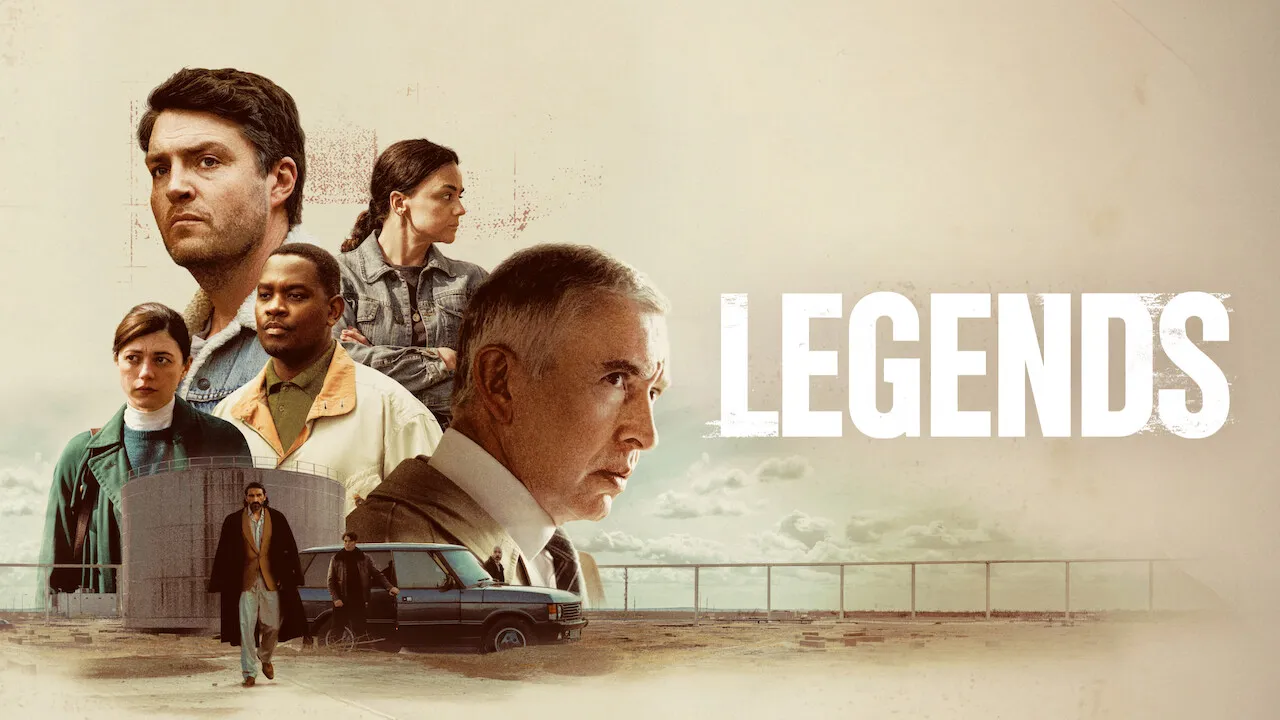
There’s something deeply frustrating about the way mainstream entertainment consistently portrays undercover operatives as modern-day saviors walking among us mere mortals. Neil Forsyth’s latest offering, now streaming on Netflix, unfortunately falls into this very trap, despite showing genuine promise in its opening chapters.Set against the gritty backdrop of 1990s Britain, when heroin had the nation in a chokehold, this series initially feels like a breath of fresh air.However, as the narrative unfolds, it gradually transforms into yet another hagiography of government agents operating in the shadows, making us question whether storytellers will ever escape this problematic glorification pattern.
From the outset, Legends presents itself as a character-driven crime drama that examines the human cost of infiltration work.Yet, somewhere between episode three and the series finale, it abandons its nuanced approach in favor of championing these “unsung heroes” whose stories supposedly need telling so we can compose celebratory songs in their honor.This tension between critical observation and unconditional praise forms the core of what makes this review both compelling and maddening in equal measure.
Story: A Tale of Two Halves and One Persistent Problem
The narrative setup for Legends is refreshingly straightforward, which works tremendously in its favor during the early episodes.The Thatcher administration’s Home Secretary directives set the stage, tasking Customs head Blake and his trusted lieutenant Don with assembling an elite unit capable of dismantling two major drug trafficking organizations operating on British soil.Carter, a domestic criminal element, and Hakan, whose Turkish connections bring an international dimension to the crisis, represent the twin threats the authorities hope to neutralize.
The recruitment process culminates in assembling a four-person task force comprising Guy, Kate, Bailey, and Erin.Kate and Bailey receive the assignment of monitoring Carter’s criminal enterprise, while Guy undertakes the most dangerous mission of all, infiltrating Hakan’s operation with assistance from Mylonas, a former associate turned informant.Erin, meanwhile, operates behind the scenes alongside Don, ensuring smooth coordination between field operations and official channels.The pressure comes from multiple directions: the Thatcher government demands visible results, while the drug barons grow increasingly bold, flooding British streets with deadly cargo.Time becomes the enemy, and failure carries consequences that extend far beyond professional embarrassment.
Performances: A True Ensemble Triumph That Demands Recognition
Where Legends absolutely excels lies in its casting choices and the extraordinary performances extracted by the production team.Steve Coogan, renowned for comedic excellence, delivers a surprisingly restrained turn as Don that demonstrates remarkable range beyond his established comfort zone. A particular moment involving his character’s surprise at officials knowing his mother’s middle name provides genuinely laugh-out-loud comedy that showcases Coogan’s underrated dramatic capabilities.Hayley Squires portrays Kate with such unwavering pragmatic intensity that viewers cannot help but become invested in her character’s survival and success.
Tom Hughes captures Carter’s essence perfectly, embodying the petulant child quality that makes the character’s criminal ambitions feel simultaneously threatening and pathetically human.Aml Ameen’s Bailey represents perhaps the show’s most socially conscious creation, his performance illuminating the unique struggles facing Black individuals navigating institutions that cannot decide whether to wage war on drugs or direct racism toward those fighting the war.Jasmine Blackborrow’s Erin provides essential warmth amid the series’ predominantly bleak atmosphere, creating emotional breathing room that prevents the viewing experience from becoming overwhelmingly oppressive.
Johnny Harris’s Eddie delivers genuinely heartbreaking work that lingers in the memory long after credits roll.Douglas Hodge’s Blake occasionally crosses into excessive moralizing territory, yet his overall impact remains powerful and memorable.Gerald Kyd’s Mylonas crackles with kinetic energy, while Numan Acar maintains deliciously mysterious presence as Hakan throughout his screen time.The supporting ensemble including Charlotte Ritchie, Joshua Samuels, Kem Hassan, Thomas Coombes, and Con O’Neill all contribute meaningfully to the production’s collective success.
However, Tom Burke’s Guy represents the clear standout achievement of the entire series.Burke’s portrayal achieves something rare: making us understand the psychological pull of criminality while never losing sympathy for the character’s fundamental humanity.
Behind the Lens: Technical Craftsmanship That Gradually Suffocates
Neil Forsyth’s writing demonstrates genuine ambition during Legends‘ opening act, when technical elements actively support the narrative rather than merely document it.The directorial efforts of Brady Hood and Julian Holmes collaborate to create visual language that occasionally achieves genuinely innovative results.Camera movements during initial episodes feel intentional and fresh, suggesting filmmakers who understand that challenging formal approaches can enhance story delivery.Editing maintains seamless momentum that keeps viewers engaged despite subject matter that could easily become ponderous.
The visual pacing establishes rhythm that distinguishes Legends from standard procedural content.Yet after approximately episode three, this technical ambition deflates considerably.One might argue stagnation serves thematic purpose, reflecting the unglamorous reality of surveillance work compared to James Bond, Jason Bourne, or Ethan Hunt’s hyperactive adventures.Perhaps the intended message involves deconstruction of undercover work’s tedious, grinding nature rather than celebration.However, when the narrative frames participation in this mission as profound sacrifice requiring audience reverence, the argument collapses beneath its own weight.
Final Verdict: Entertaining But Ultimately Flawed Hero Worship
Legends ultimately presents a contradiction that proves difficult to reconcile.The initial episodes demonstrate genuine understanding of how drug economies function and how infiltration work psychologically transforms participants.The character studies, particularly Guy’s seduction by criminal lifestyle, offer substantive commentary that elevates material far beyond typical genre fare.The performances universally impress, with Tom Burke’s central turn representing perhaps the year’s most underrated television work.
Yet the series cannot resist the gravitational pull of nationalistic glorification that has infested similar productions for decades.Undercover agents become deity-like figures deserving perpetual gratitude rather than ordinary employees performing specialized tasks under government direction.The messaging becomes increasingly propagandistic as the season progresses, transforming what began as promising critique into standard hero worship.
For viewers seeking quality entertainment within this specific niche, Legends merits recommendation primarily for its first half and its exceptional cast performances.Those with lower tolerance for uncritical militarism may find the second half increasingly difficult to tolerate.Given current trends favoring nationalist narratives in streaming content, this series represents relatively standard output within an oversaturated market.