

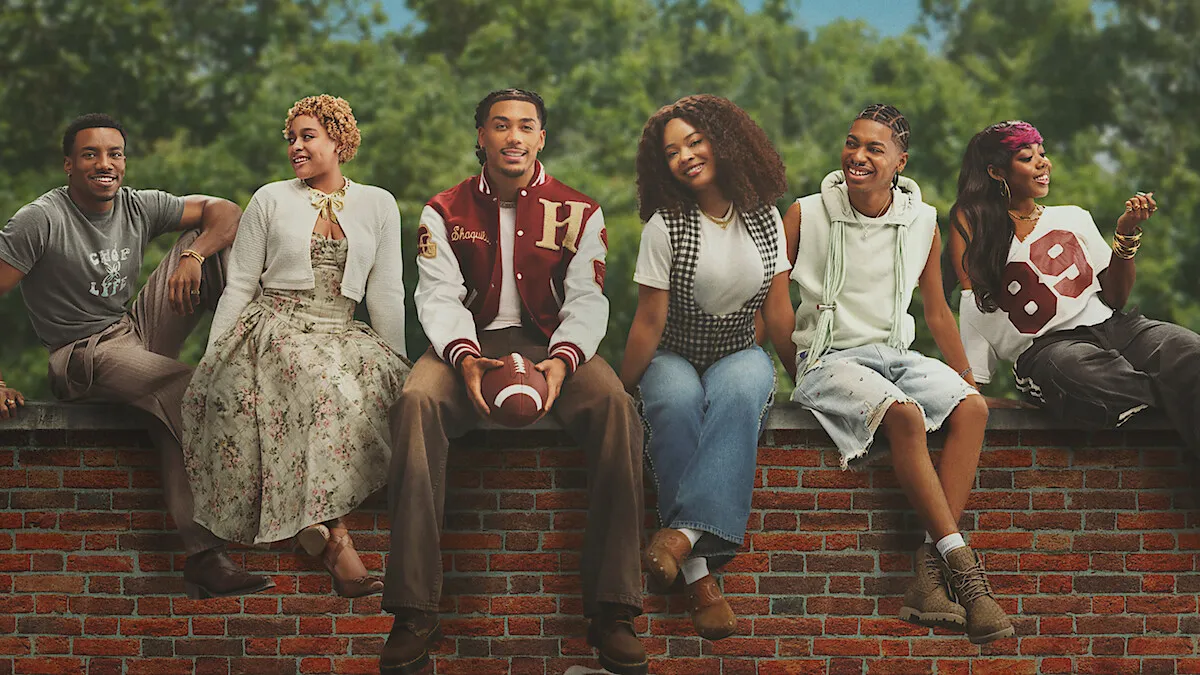
Netflix’s revival of the beloved sitcom A Different World arrived on Sept 24, 2026 with a fresh cast, updated storytelling, and a clear intention to honor its legacy while speaking directly to today’s viewers. Directed by a talented team—Tiffany Johnson, Angela Barnes, Nefertite Nguvu, Bille Woodruff, and Debbie Allen—and guided by creator‑showrunner Felicia Pride, the series re‑imagines Hillman College as a vibrant microcosm of contemporary social dynamics.
The show stars emerging talents such as Maleah Joi Moon, Alijah Kai, Cornell Young IV, Jordan Aaron Hall, Kennedi Reece, and Chibuikem Uche, while original icons Jasmine Guy, Kadeem Hardison, Darryl M. Bell, and Cree Summer return in pivotal roles. Spanning ten roughly‑thirty‑minute episodes, the first season attempts to weave together personal growth, cultural commentary, and the timeless charm of campus life.
Synopsis
Deborah Wayne, the privileged daughter of Whitley and Dwayne, finds herself at Hillman after being turned away from NYU Tisch’s prestigious arts program. Confident, artistic, and somewhat sheltered, she struggles to define an identity that isn’t merely a reflection of her parents’ expectations. Her roommate, Rashida Duvall—a driven student from Compton—offers a stark contrast: disciplined, financially conscious, and eager to prove herself in an environment where scholarships hang in the balance. Together, they navigate friendship, miscommunication, and mutual growth while a diverse ensemble—Hazel, Shaquille, Kojo, and Amir—grapple with their own challenges ranging from familial pressure and athletic expectations to cultural identity and LGBTQ+ self‑acceptance. The season touches on pressing topics such as financial aid insecurity, racial discourse, mental health, and the influence of social media, all set against the rhythmic backdrop of an HBCU experience.
Performances
Maleah Joi Moon delivers a nuanced portrayal of Deborah, swinging effortlessly from endearing spontaneity to frustrating impulsiveness, which makes the character feel authentically college‑aged. Alijah Kai’s Rashida grounds the series with a steadfast determination that never slips into caricature; her chemistry with Moon fuels the show’s emotional core. Cornell Young IV brings a palpable intensity to Shaquille, capturing the pressure of living up to a storied football legacy while seeking personal validation. Kennedi Reece’s Hazel offers a thoughtful exploration of questioning inherited beliefs, and Chibuikem Uche’s Kojo adds layers to the conversation about creativity within the African diaspora. Jordan Aaron Hall’s Amir handles his arc with sensitivity, presenting a gay storyline that feels integrated rather than tokenistic.
The returning legends—Guy, Hardison, Bell, and Summer—are given substantive arcs that allow them to evolve beyond nostalgia, enriching the narrative with lived‑in wisdom while still paying homage to their original incarnations.
Behind the Lens
The directorial quartet, under Allen’s seasoned oversight, balances sitcom pacing with dramatic depth, allowing each episode to breathe without sacrificing comedic timing. Felicia Pride’s showrunning vision ensures that modern elements— influencer culture, social‑media dynamics, and the realities of HBCU financing—are woven into the fabric rather than tacked on as afterthoughts. Cinematography captures the historic yet lively campus with warm tones that evoke both tradition and contemporary vigor.
The soundtrack, a curated mix of classic Motown nods and current hip‑hop inflections, reinforces the show’s claim that Hillman is more than an academic setting; it is a cultural hub. Notably, the series avoids merely replicating the original format; instead, it adopts a hybrid approach that blends half‑hour comedy beats with serialized storytelling, giving room for character arcs to develop over the season’s ten‑episode span.
Final Verdict
A Different World succeeds as a heartfelt reboot that respects its roots while fearlessly engaging with the issues shaping Generation Z. The strengths lie in its authentic performances, particularly the dynamic between Deborah and Rashida, and its willingness to let legacy characters grow alongside newcomers. The show’s greatest limitation is its brevity; ten thirty‑minute episodes struggle to accommodate the breadth of themes it aspires to explore—financial aid, sexual health, racial discrimination, deportation, mental health, LGBTQ+ concerns, social media influence, and institutional finances—all of which deserve deeper treatment. Consequently, some plot points feel rushed, and certain storylines intersect rather than coalesce. Nevertheless, the series shines when it allows the new Hillman to stand on its own, proving that a tribute need not be a carbon copy. For viewers seeking a blend of humor, heart, and timely conversation, A Different World offers a worthwhile revisit to a beloved campus, reminding us that while the walls may stay the same, the conversations within them continue to evolve.